Do you have cctv on your house and is it worth it?
Do you have cctv on your house and is it worth it?
Understanding the Different Types of CCTV Cameras for House Use
When we talk about cctv cameras for house security, we aren’t just talking about one-size-fits-all hardware. The market has exploded with specialized tech designed for every nook and cranny of your Michigan home. Whether you live in a historic Royal Oak bungalow or a sprawling estate in Bloomfield Hills, the “right” camera depends on how you plan to power it and where you want to put it.
Wired vs. Wireless
This is usually the first fork in the road for homeowners.
- Wireless (Battery-Powered): These are the ultimate in convenience. Many consumer-grade systems offer 100% wire-free options that you can literally screw into a fence post in five minutes. They are perfect for renters or those who don’t want to drill through their siding.
- Wired (Plug-in or Hardwired): These cameras require a power outlet or a physical connection to a recording box. While the installation is more involved, you never have to worry about a battery dying in the middle of a cold Farmington Hills winter.
Indoor vs. Outdoor
You might be tempted to point an indoor camera out a window, but we generally advise against it. Window glare from glass can blind the camera’s infrared sensors at night.
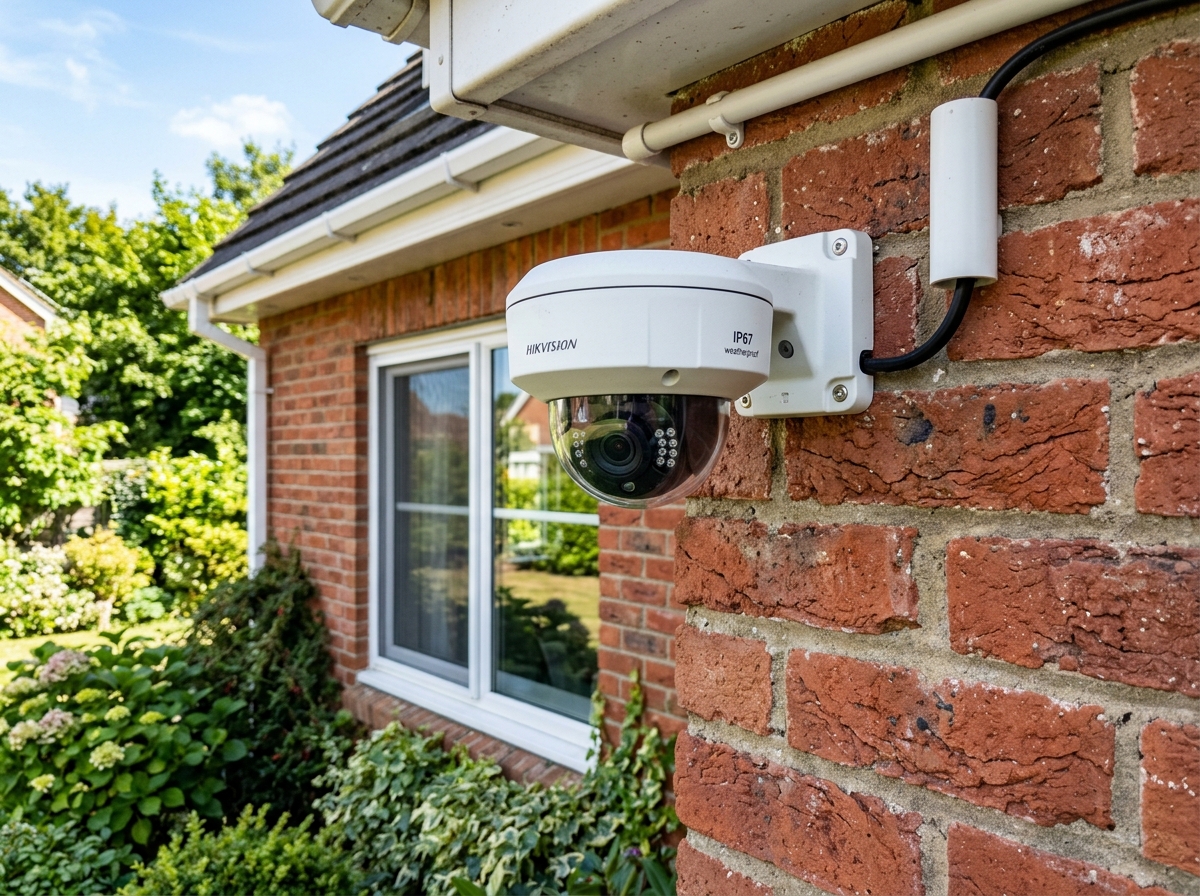
- Outdoor Cameras: These must be rugged. Look for an IP65 or IP66 weatherproof rating to ensure they can handle Michigan’s rain, snow, and humidity.
- Indoor Cameras: These are often smaller and more aesthetic. Many now include physical privacy shutters—a mechanical lid that covers the lens when you’re home so you know for a fact nobody is watching.
Powering Your Security: Battery, Solar, and PoE
- Battery-Powered: Extremely flexible. Some high-efficiency models claim up to a two-year battery life using clever sensors that only “wake up” the camera when motion is detected.
- Solar-Powered: If you’re mounting a camera high up on a gutter in Rochester Hills, you don’t want to climb a ladder every few months to charge it. Adding a small solar panel can provide “endless” power.
- Power-over-Ethernet (PoE): This is the gold standard for reliability. A single internet cable provides both the data connection and the power. It’s stable, fast, and used in professional residential security setups.
Advanced Connectivity
Interestingly, the tech used to trigger these cameras is evolving. For instance, wireless occupancy sensors originally designed for lighting are now being integrated into broader home ecosystems to help cameras understand when a person is actually in a room versus just a curtain moving in the breeze.
Key Features to Look for in Home Surveillance Systems
Not all cctv cameras for house use are created equal. When comparing models, don’t just look at the price tag; look at the “brain” inside the camera.
Video Resolution: 1080p vs. 2K vs. 4K
Resolution determines how much you can “zoom in” on a recorded video before it becomes a blurry mess of pixels.
- 1080p (Full HD): The standard. It’s great for seeing that a person is on your porch in Troy.
- 2K & 4K (Ultra HD): These higher resolutions are vital if you need to read a license plate on a car at the end of your driveway or identify specific facial features. However, keep in mind that 4K video uses much more storage space and requires stronger Wi-Fi.
Night Vision: Infrared vs. Color
Old-school CCTV was famous for grainy, black-and-white “ghost” footage. Today, we have options:
- Infrared (IR): Uses invisible lights to see in total darkness. The image is black and white but very crisp.
- Color Night Vision: Some cameras use “Starlight” sensors or built-in spotlights to provide full-color video even at 2 AM. This is a huge advantage for identifying the color of a getaway vehicle or a person’s clothing.
Smart Detection and Two-Way Audio
Modern AI can now distinguish between a person, a pet, a vehicle, or even a package being dropped off. This means you won’t get a notification every time a squirrel runs across your lawn in Bloomfield Township. Additionally, two-way audio allows you to speak through the camera—perfect for telling a delivery driver where to hide a box or scaring off a trespasser.
| Resolution | Quality Level | Best Use Case | Storage Need |
|---|---|---|---|
| 1080p | Standard HD | Indoor monitoring / Small rooms | Low |
| 2K (4MP) | High Definition | Front doors / Backyards | Medium |
| 4K (8MP) | Ultra HD | Large driveways / Perimeter | High |
Storage and Subscription Models: Local vs. Cloud
Where does all that video go? This is perhaps the most important financial decision you’ll make regarding your cctv cameras for house security.
Cloud Storage (Subscription-Based)
Many mainstream security brands primarily use the cloud. Your footage is uploaded to their servers.
- Pros: You can access it from anywhere; if a thief steals the camera, the footage is still safe in the cloud.
- Cons: It requires a monthly fee (usually $3 to $10 per month). Without a subscription, many of these cameras become “dumb” devices that only show live video but don’t record anything.
Local Storage (Subscription-Free)
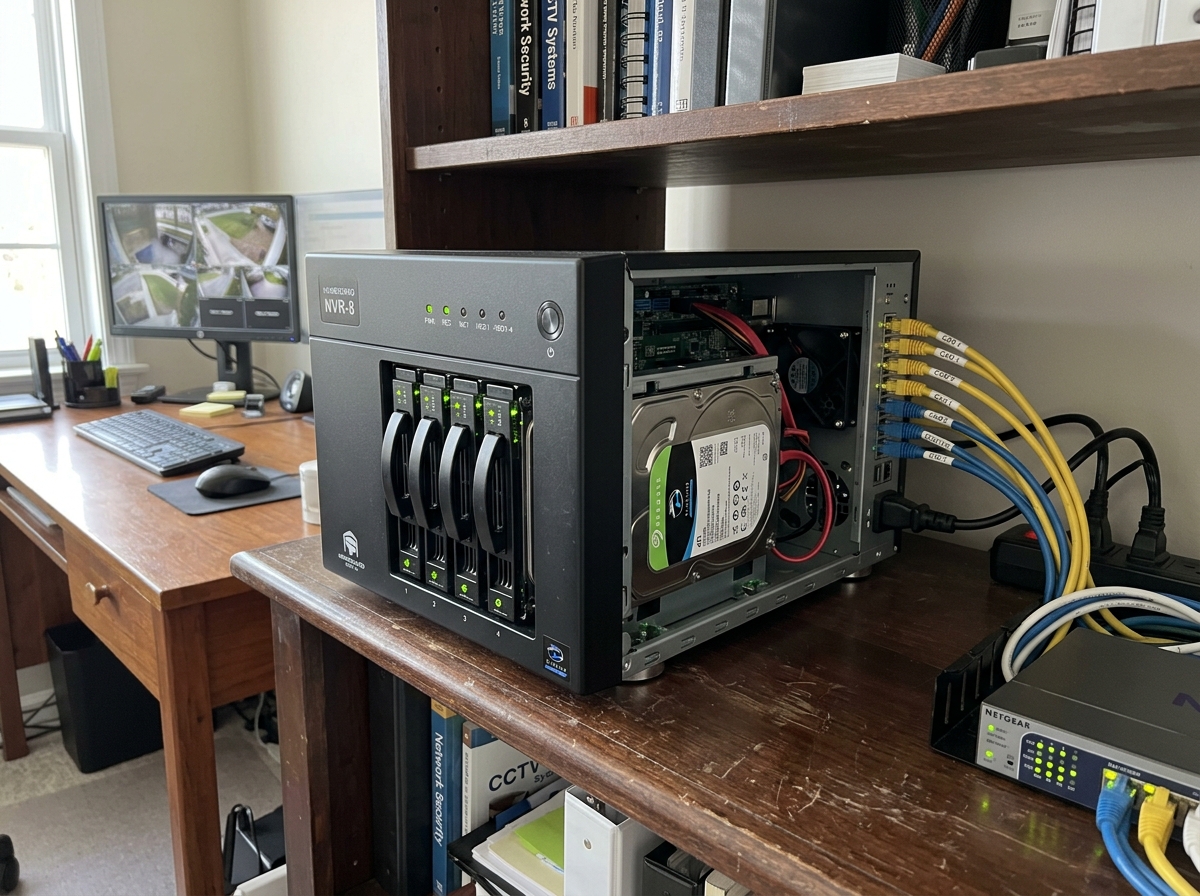
If you prefer to own your data, look for cameras with a MicroSD card slot or systems that use a Network Video Recorder (NVR).
- Pros: No monthly fees. Your data stays on your property.
- Cons: If a burglar finds the recording box or pulls the SD card out of the camera, your evidence is gone.
Data Privacy and AI Accuracy
We often get asked about the security of these feeds. Most reputable brands use 128-bit AES encryption to keep your “eyes” private. There is also significant research on facial recognition accuracy that helps these systems get better at identifying familiar faces while respecting privacy boundaries. For more details on the hardware involved, check out our deep dive into security cameras.
Installation and Smart Home Integration
At SmartMait, we believe a security camera shouldn’t live in a silo. It should be a team player in your smart home.
DIY vs. Professional Mounting
Most battery-powered cameras are designed for DIY. However, if you are installing a multi-camera PoE system in Rochester Hills or need cameras mounted 20 feet high on a commercial-grade gable, professional installation is the way to go. We ensure the wiring is hidden and the viewing angles are optimized to eliminate blind spots.
The Power of Integration
The real magic happens when your cctv cameras for house security talk to your other devices:
- Voice Control: “Alexa, show me the front door” or “Hey Google, show the backyard on the kitchen display.”
- Smart Hubs: While many cameras use Wi-Fi, we specialize in Z-Wave technology. This allows your security system to trigger other actions. For example, if your outdoor camera detects a person after midnight, your Z-Wave smart lights in the hallway can automatically turn on to make it look like someone is awake.
- WiFi 6 Support: Newer cameras support Wi-Fi 6, which handles multiple devices much better, reducing the “lag” you sometimes see when trying to view a live feed.
Frequently Asked Questions about CCTV Cameras for House
Is a 4K CCTV camera for house worth the extra cost?
In our experience, it depends on the distance. If the camera is 30 feet away from the area you want to monitor (like a long driveway in West Bloomfield), 4K is absolutely worth it. It allows for digital zoom that can capture a license plate or a face that would be a blur on a 1080p camera. If the camera is just for a small indoor entryway, 1080p or 2K is usually plenty.
Can I use a wireless CCTV camera for house without a subscription?
Yes! Many high-quality camera systems offer robust local storage options via SD cards. You still get motion alerts on your phone and can view the live feed for free; you just store the actual video files on the device itself rather than paying a monthly “rent” to a cloud provider.
What is the best placement for outdoor CCTV cameras for house security?
We recommend a “layered” approach:
- The Front Door: At eye level if possible (like a doorbell camera) to catch clear facial features.
- The Driveway: High enough to see the entire vehicle and the street.
- First-Floor Entry Points: Rear doors and side windows are the most common entry points for intruders.
- Height: Aim for 8 to 10 feet. This is high enough to prevent tampering but low enough to still get a good look at a person’s face rather than just the top of their hat.
Conclusion: Is Home CCTV Worth the Investment?
When you look at the facts—thousands of cameras bought every month by your neighbors in Macomb and Oakland County—it’s clear that homeowners find value in these systems. Beyond just catching “bad guys,” cctv cameras for house use provide “peace of mind” dividends. You can check if a package arrived in Birmingham, see if the kids got home safe in Livonia, or verify that the dog walker actually showed up in Clarkston.
At SmartMait, we specialize in making these complex systems simple. We don’t just “hang cameras”; we integrate them into a seamless smart home experience using Z-Wave and high-speed WiFi to ensure your home is as intelligent as it is secure. Whether you’re in Bloomfield Hills or Oak Park, we’re here to help you build a system that works for you.
Ready to secure your home? Visit SmartMait today to see how we can integrate professional-grade surveillance into your Michigan residence.