How to Master Your Residential Audio Visual Installation Without Losing Your Mind
How to Master Your Residential Audio Visual Installation Without Losing Your Mind
Why Residential Audio Visual Installation Can Make or Break Your Home Experience
Residential audio visual installation is the process of professionally designing, wiring, and setting up audio and video systems throughout your home — from a single home theater room to speakers and screens in every room.
Here’s what it typically includes:
- Home theater setup — surround sound, display screens, projectors, and seating optimization
- Whole-home audio — music streamed to multiple rooms simultaneously, including outdoor spaces
- TV mounting — safe, length-optimized wall installation with hidden wiring
- Smart home integration — AV systems linked to lighting, climate, security, and voice control
- Structured cabling — low-voltage pre-wiring that keeps everything fast and reliable
Most homeowners discover that the difference between a frustrating tangle of cables and a seamless entertainment experience comes down to one thing: planning and professional execution.
Think about it this way. You’ve invested in a beautiful home. Mismatched speakers, visible wires, and a stack of remotes on the coffee table undermine all of that. A well-designed AV system should be nearly invisible — until you turn it on.
The good news? Whether you’re building new or retrofitting an existing home, there’s a clear path to getting it right.
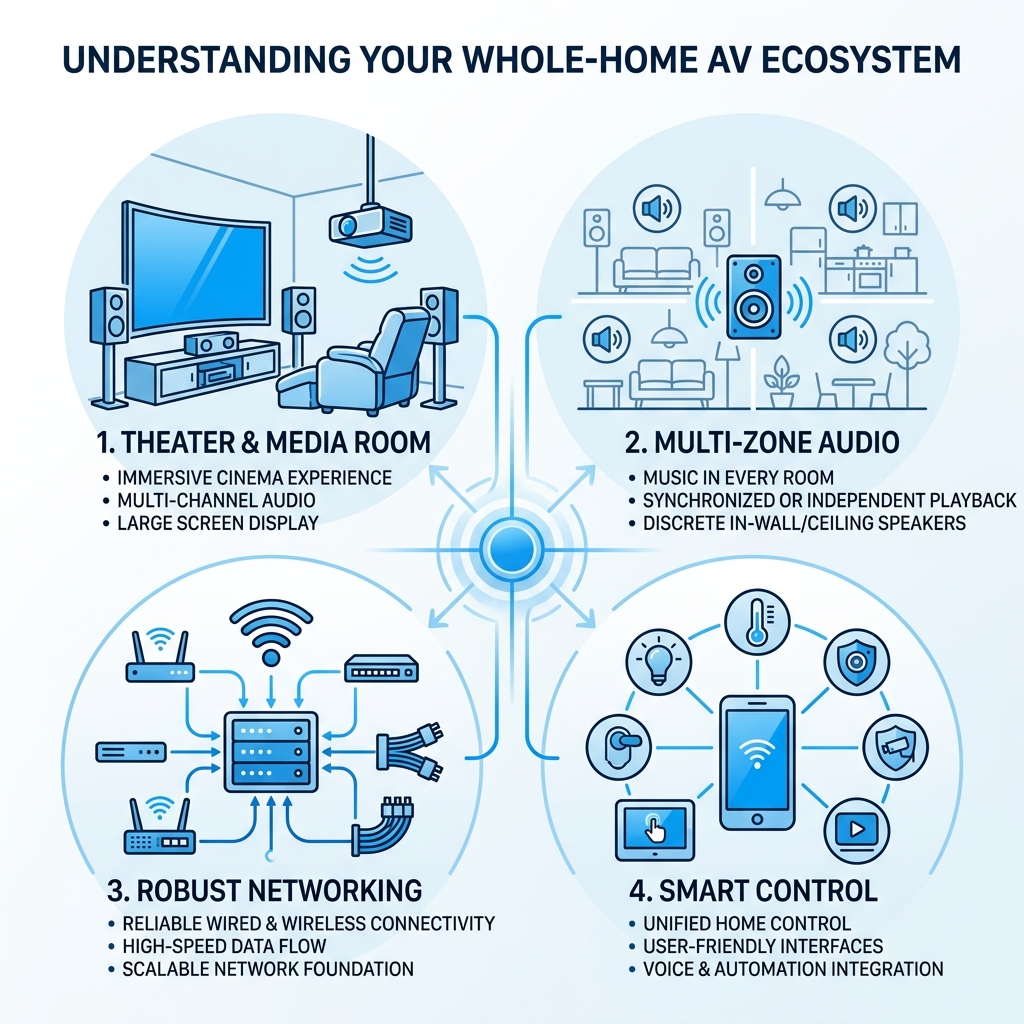
What to Expect from Professional Residential Audio Visual Installation
When we talk about professional residential audio visual installation, we aren’t just talking about plugging in a soundbar and hoping for the best. A professional approach involves a comprehensive look at your home’s architecture, your family’s lifestyle, and the technical requirements of modern high-bandwidth media.
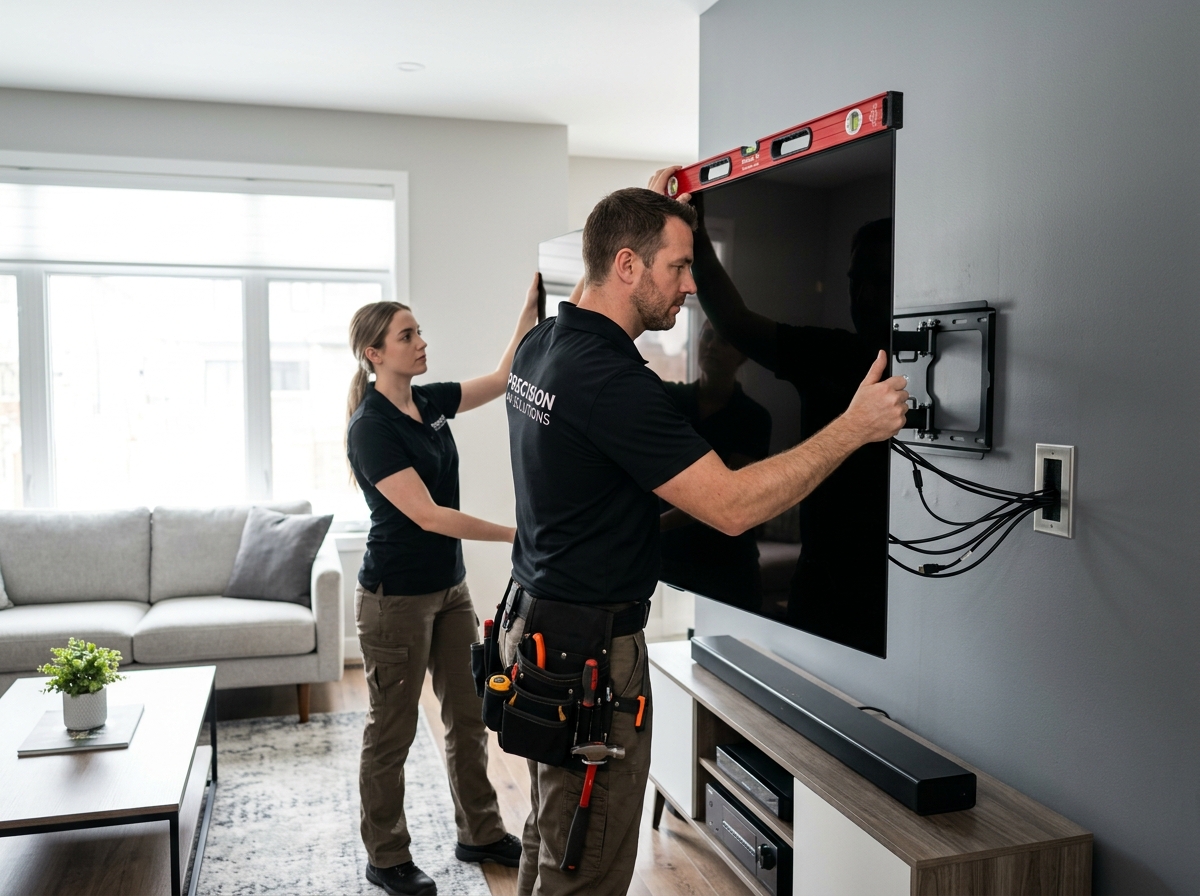
A professional team ensures that every component—from the 4K projector in the basement to the discreet architectural speakers in the kitchen—works in harmony. This includes expert calibration, where we adjust audio frequencies to match the specific “signature” of your room, and acoustic treatments that prevent sound from bouncing off hard surfaces and ruining your movie night.
For those in Michigan, from the quiet streets of Bloomfield Hills to the bustling neighborhoods of Royal Oak and Troy, local expertise matters. We understand the specific construction styles of homes in Oakland and Wayne Counties, allowing us to provide residential services that feel like a natural extension of your living space.
Key Services in Residential Audio Visual Installation
A full-scale installation covers several specialized areas:
- TV Mounting and Display Setup: This goes beyond just putting a bracket on the wall. It involves ensuring the mount is secured to studs, managing heat dissipation, and concealing all power and HDMI cables within the wall for a “floating” aesthetic.
- Immersive Surround Sound: Whether it’s a standard 5.1 setup or a complex Dolby Atmos configuration with overhead speakers, we position every driver to create a “sweet spot” for the listener.
- Multi-Zone Audio: This allows you to play jazz in the dining room while the kids listen to a podcast in the playroom, all controlled from a single interface.
- Outdoor Entertainment: We install weather-rated displays and landscape speakers (often disguised as rocks or garden lights) so your patio becomes the ultimate summer hangout.
- Hidden Wiring and Equipment Racks: We move the “brains” of your system—receivers, amplifiers, and streamers—into a ventilated closet or rack, leaving your living areas clutter-free.
Enhancing Home Value and Lifestyle
Investing in a custom AV system isn’t just about entertainment; it’s about property appreciation. Modern buyers in areas like Birmingham and West Bloomfield increasingly look for “move-in ready” smart homes. A home pre-wired with high-quality custom installation infrastructure is a significant selling point.
Beyond the financial aspect, the lifestyle upgrade is massive. Imagine a “Movie Night” button that dims the lights, lowers the shades, and starts the projector simultaneously. This seamless living experience removes the friction of technology, letting you focus on the moments that matter.
Designing Your System: Wired vs. Wireless and New Construction
One of the most common debates in residential audio visual installation is whether to go wired or wireless. While wireless technology has improved leaps and bounds, the “gold standard” for reliability remains a hardwired backbone.
| Feature | Wired Solutions | Wireless Solutions |
|---|---|---|
| Signal Reliability | Extremely High; no interference | Subject to Wi-Fi congestion |
| Bandwidth | Supports 8K and Lossless Audio | Limited by network speed |
| Aesthetics | Invisible (cables behind walls) | Visible power cords usually required |
| Installation | Best for new builds/renovations | Ideal for quick retrofits |
| Longevity | Decades; easy to upgrade ends | 5-7 years before tech shifts |
Planning Your Residential Audio Visual Installation for New Construction
If you are currently building a home in places like Rochester Hills or Farmington Hills, you have a golden opportunity. This is the time for “pre-wiring.” Before the drywall goes up, we can run structured cabling—high-speed Ethernet (Cat6 or Cat7) and specialized speaker wire—to every corner of the house.
By placing conduits in strategic locations, we “future-proof” your home. If a new cable standard comes out in ten years, we can simply pull the new wire through the existing conduit without cutting into your walls. This is also the time to choose your top AV brands to ensure the dimensions of in-wall speakers and recessed screens are accounted for in the architectural plans.
Retrofitting Existing Homes
Live in a beautiful historic home in Detroit or a classic build in Walled Lake? Don’t worry—you aren’t stuck with messy wires. We specialize in “wall fishing,” a technique where we use specialized tools to navigate wires through existing wall cavities with minimal to no damage to your paint or plaster. In cases where wiring is truly impossible, we utilize advanced wireless mesh networks and signal boosters to ensure your streaming remains buffer-free.
The Cost of Residential Audio Visual Installation and How to Budget
Budgeting for AV can feel like a moving target because the range of equipment is so vast. You can buy a TV for $500 or $50,000. However, the factors influencing AV distribution costs usually fall into three buckets: hardware, infrastructure (wiring), and labor/programming.
Factors Influencing Your Total Investment
- Zone Count: How many rooms do you want audio or video in? A single-room home theater is much different than an 8-zone whole-home system.
- Display Technology: OLED and QLED panels offer incredible clarity, but large-format projectors or “Micro-LED” walls can increase costs significantly.
- Speaker Quality: From entry-level architectural speakers to audiophile-grade floor-standing towers, the sky is the limit.
- Control Complexity: A system that integrates lighting, climate, and security requires more sophisticated programming than a standalone media room.
For a mid-range project in Oakland County, many homeowners find that starting with a solid foundation (good wiring and a versatile receiver) allows them to add more “zones” over time as their budget allows.
Maintenance and Long-Term Support
A common mistake is thinking the project ends when the last screw is tightened. Modern AV systems are essentially computers. They require firmware updates to stay compatible with new streaming services and periodic recalibration to ensure the speakers haven’t shifted out of tune. We offer remote troubleshooting and hardware upgrade paths to ensure your system doesn’t become a dinosaur in three years.
Integrating AV with Smart Home Automation and Security
This is where the magic happens. At SmartMait, we believe your AV system shouldn’t live on an island. By using the Z-Wave protocol, we create a unified ecosystem where your audio, video, lighting, and security all talk to each other.
Unified Control Systems
Gone are the days of the “basket of remotes.” With a unified control system, you use a single app, a dedicated touch panel, or even voice commands to manage your entire home.
- Lighting Scenes: When you press “Play,” the lights in the room can automatically dim to 10%, while the hallway lights stay at 30% for safety.
- Climate Control: Your system can sense when the home theater is getting too warm from the equipment and automatically kick on the AC.
- Automated Sequences: A “Good Morning” scene could slowly fade in your favorite radio station, raise the motorized shades, and turn on the kitchen TV to the news.
Security and Surveillance Synergy
Your AV system can also be your home’s most effective security tool. We provide security camera integration that allows you to pull up your camera feeds on any TV in the house.
If someone rings your doorbell in the middle of a movie, the system can automatically pause the film and show the front porch feed on the screen. You can even use your distributed audio system as an intercom or to play “audio alerts”—such as a chime when a gate is opened or a barking dog sound if an intruder is detected on the perimeter.
Avoiding Common Pitfalls and Choosing the Right Partner
Even with the best intentions, DIY residential audio visual installation often hits snags. Here are the most common mistakes we see:
- Improper Ventilation: Stuffing high-powered amplifiers into a closed cabinet without airflow is a recipe for a fire or, at the very least, a very short lifespan for your gear.
- Network Bottlenecks: Trying to stream 4K video over a cheap, consumer-grade router often leads to stuttering and frustration. A robust network is the foundation of any smart home.
- Poor Calibration: Buying expensive speakers but not “tuning” them to the room is like buying a Ferrari and never taking it out of first gear.
- Ignoring Aesthetics: Visible wires and bulky equipment can clutter a room, making it feel less like a home and more like a laboratory.
How to Select a Qualified AV Professional
When searching for a partner in Michigan—whether you’re in Warren, Livonia, or Farmington—look for these indicators of quality:
- Portfolio Review: Do they have photos of clean, finished racks and hidden wiring?
- Client Testimonials: Look for long-term satisfaction, not just “they showed up on time.”
- Service Warranties: A professional stands by their work and offers support after the check has cleared.
- Integration Expertise: Can they handle more than just the TV? You want a partner who understands networking, security, and automation.
Future-Proofing Your Entertainment Investment
Technology moves fast. To protect your investment, we recommend a modular approach. Use high-quality architectural speakers (which can last 20+ years) and invest in a scalable network. While 4K is the current standard, we are already preparing our clients for 8K readiness by ensuring their cabling can handle the massive data loads required for the next generation of displays.
Frequently Asked Questions about Residential Audio Visual Installation
How much does a basic residential AV installation cost?
While every project is unique, a professional TV mounting and basic surround sound setup in a single room typically starts in the $1,500 to $3,000 range, including labor and mid-range equipment. Whole-home systems scale upward based on the number of zones and complexity.
What is the difference between 7.1 and Dolby Atmos surround sound?
A 7.1 system uses seven speakers at ear level and one subwoofer. Dolby Atmos adds “height” channels—either in-ceiling or upward-firing speakers—to create a 3D audio environment where sounds can move above and around you, rather than just side-to-side.
Can I integrate my existing speakers into a new smart home system?
In most cases, yes! We can often use specialized amplifiers or streaming bridges to bring high-quality older speakers into a modern, app-controlled ecosystem. This is a great way to save money while upgrading your control interface.
Conclusion
Mastering your residential audio visual installation doesn’t have to be a headache. By focusing on a solid wired foundation, choosing the right integration protocols like Z-Wave, and partnering with experts who understand the Michigan landscape—from Oakland to Macomb County—you can create an entertainment haven that adds real value to your life.
At SmartMait, we specialize in making complex technology feel simple. Whether you want a dedicated cinema in Bloomfield Township or a seamless multi-room audio system in Ferndale, we are here to help.
Ready to transform your home? Start your custom AV journey today and let us handle the wires while you enjoy the show.