Secure Your Space Without Losing Your Security Deposit
Why Renters in High-End Apartments Need to Think Seriously About Security
Apartment living comes with a specific kind of security problem — and it’s one that most security companies aren’t built to solve.
You can’t drill. You can’t hardwire. And you’re often one lease clause away from losing your security deposit if something goes wrong. But that doesn’t mean you’re without options. It means you need smarter ones.
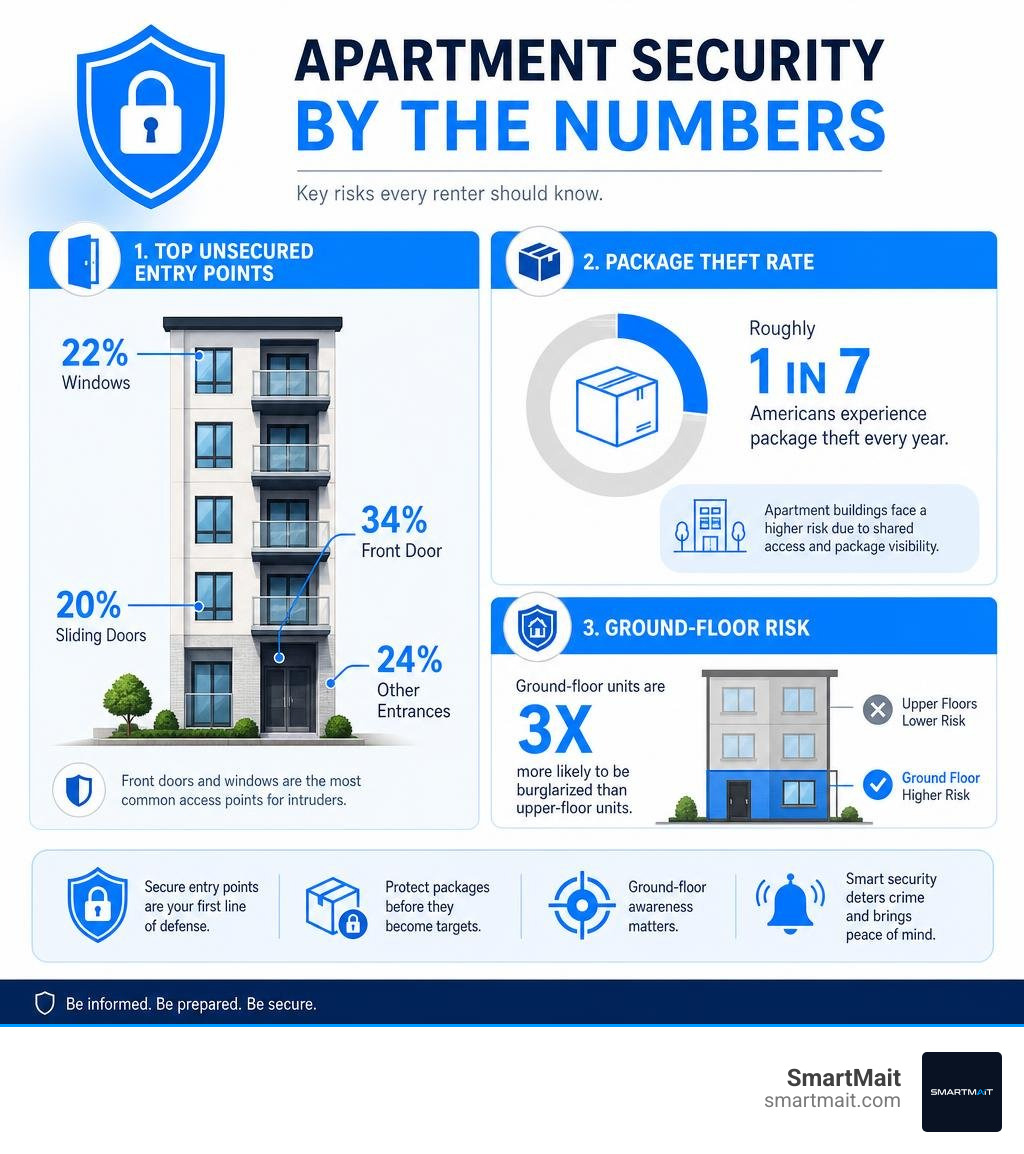
The risks are real. Ground-floor units are statistically more vulnerable to break-in. Package theft affects roughly 1 in 7 Americans every year, with apartment buildings taking a disproportionate hit. And despite what many renters assume, most burglaries happen during the day — between 10am and 3pm on weekdays — when you’re at the office and your building’s shared entrance offers little protection.
At the same time, the best modern alarm systems have quietly closed the gap between what homeowners and renters can access. Wireless sensors, cellular backup, professional monitoring, and smart home integration are all available without a single hole in the wall.
But not all systems are created equal — and for renters in higher-end buildings, the difference between a consumer-grade kit from a big-box store and a professionally integrated system is significant.
I’m Dominic Hesano, founder of SmartMait and a low voltage installation specialist serving Southeast Michigan — and helping clients find the best alarm system for an apartment without compromising their lease or their security deposit is something I’ve done across dozens of projects. In this guide, I’ll walk you through exactly what to look for, which systems hold up under real conditions, and how to protect your space the right way.
Best alarm system for apartment definitions:
What to Look For in the Best Alarm System for Apartment Security
When seeking out the best alarm system for an apartment, you have to evaluate security through a different lens than a traditional suburban homeowner would. In a multi-family building, your primary vulnerabilities are highly concentrated. You do not need to secure a sprawling perimeter, a detached garage, or multiple side entryways. Instead, your focus must be on primary entry points, shared-wall vulnerabilities, and patio access.
Particularly for ground-floor or lower-level apartments, sliding glass doors and patio windows represent the highest risk areas. Statistics show that 72% of apartment break-ins occur through these easily accessible first-floor openings. Even on upper floors, shared hallways mean that your front door is your main line of defense, making robust entry sensors and video verification essential.
To understand how to approach this, you can read The Definitive Guide to Buying the Best Security Alarms. When we evaluate systems for luxury properties, we look at how the technology communicates, how it is powered, and how it handles potential interference from neighboring units.
Below is a direct comparison showing the differences between typical retail DIY systems and a professionally integrated Z-Wave platform tailored for apartments:
| Feature | Consumer-Grade Retail DIY | Professional Z-Wave Apartment Security |
|---|---|---|
| Wireless Protocol | Standard Wi-Fi (Highly prone to interference) | Z-Wave Plus (Dedicated, interference-resistant) |
| Power Source | Plug-in with basic battery backup | Built-in long-term battery backups & supervised power |
| Aesthetics | Bulky, plastic, standard white sensors | Ultra-slim, architectural profiles, custom finishes |
| Smart Integration | Limited to basic Alexa/Google voice commands | Deep integration with lighting, HVAC, and smart locks |
| System Lifespan | 2–3 years before hardware lag | 10+ years with professional maintenance |
Why Wireless Technology is Essential for the Best Alarm System for Apartment Renters
If there is one non-negotiable rule for apartment security, it is that the hardware must be wireless. Traditional security setups require drilling through drywall, running low-voltage lines behind baseboards, and anchoring heavy keypads into studs. For renters, this is a fast track to losing a security deposit.
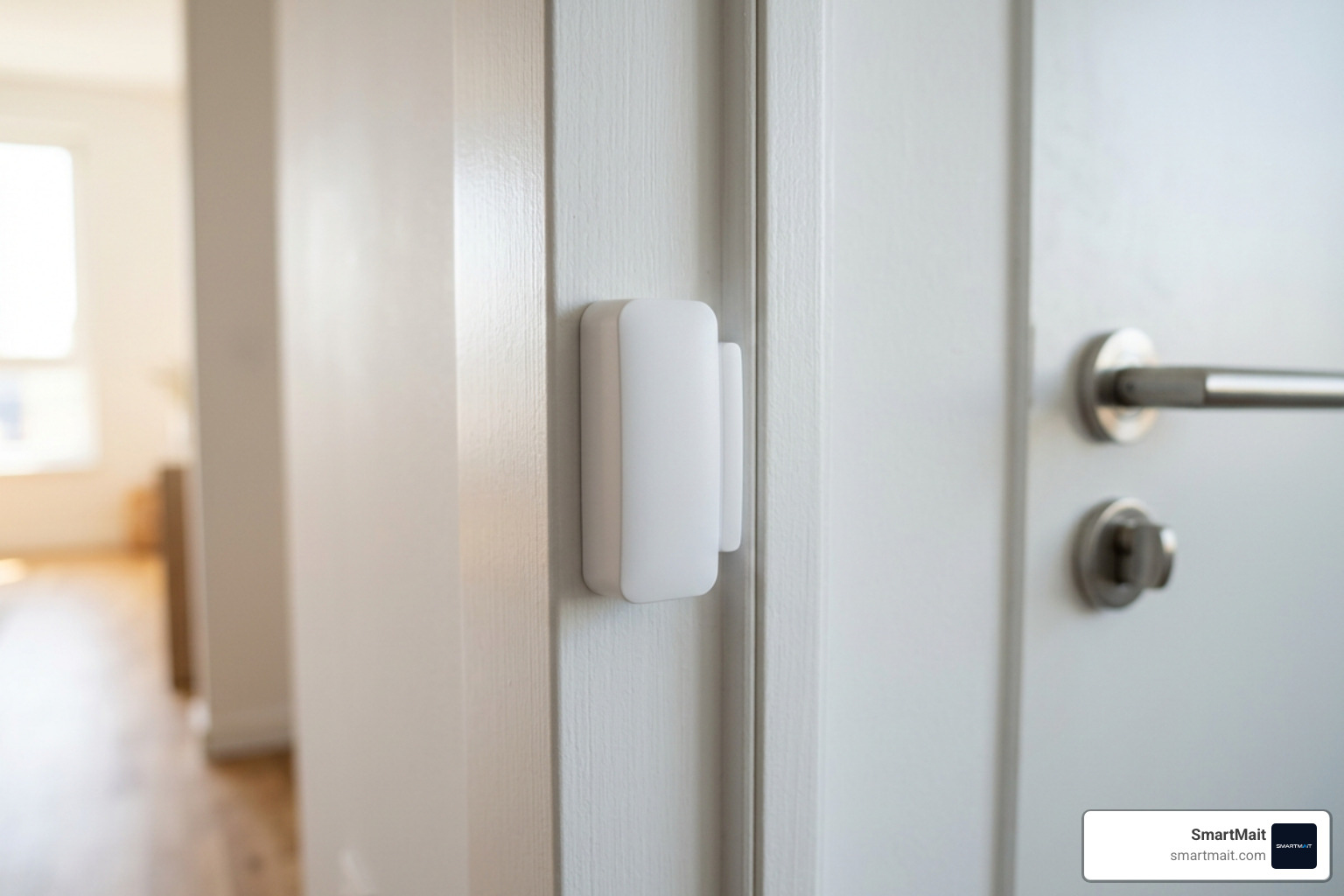
Fortunately, modern high-end wireless hardware provides the exact same level of physical security without a single drill bit touching your walls. By utilizing commercial-grade, non-damaging adhesives, we can mount high-performance entry and motion sensors that hold fast for years but peel away cleanly when your lease ends.
Additionally, top-tier wireless systems do not rely on your landlord’s building internet to stay online. They feature dedicated cellular backup. If a power outage hits or your building’s Wi-Fi drops, the system seamlessly transitions to a cellular network to send signals to the monitoring station.
In dense apartment buildings, standard Wi-Fi systems often struggle because dozens of neighboring routers compete for the same wireless channels. This is why we rely on dedicated wireless protocols like Z-Wave, which run on entirely different radio frequencies, ensuring your sensors never drop offline due to a neighbor’s heavy streaming habits. You can read more about these lease-friendly setups in this guide on Best Home Security for Apartments — No Drilling and see how they compare in 6 Apartment Alarm Systems Tested 2026: No Drilling Required .
How Smart Home Integration Enhances the Best Alarm System for Apartment Dwellers
A great apartment security system should do more than just scream when a door opens. It should act as the central brain of your living space. When you integrate your alarm system with a professional Z-Wave ecosystem, you unlock automation capabilities that make your apartment both safer and more convenient to live in.
For example, a smart lock can be programmed to auto-lock 30 seconds after you close the door, ensuring you never leave your home vulnerable when rushing out. We can also set up automated lighting scenes. If your alarm detects motion during away hours, your smart lighting can instantly flash throughout the unit to deter the intruder before they step further inside.
Furthermore, environmental protection is just as critical as physical security in multi-family buildings. A burst pipe in the unit above you can destroy your belongings in minutes. By placing low-profile Z-Wave water leak sensors near your water heater, washing machine, and under sinks, you get instant mobile alerts the second moisture is detected.
To explore camera options that complement this setup, check out The Best Security Cameras for Every Budget and Need and read about Why Your Home Needs an Alarm System with Video Surveillance Right Now. To understand how to tie all of these pieces together into a unified shield, check out our guide on how to Secure Your Perimeter with Top Alarm Systems and Monitoring.
Lease-Friendly Installation: Securing Your Rental Without Drilling
The biggest hurdle for most renters is the fear of damaging the property. Landlords in luxury buildings are notoriously strict about modifications. Even minor drywall damage or paint chips can result in hundreds of dollars deducted from your security deposit.
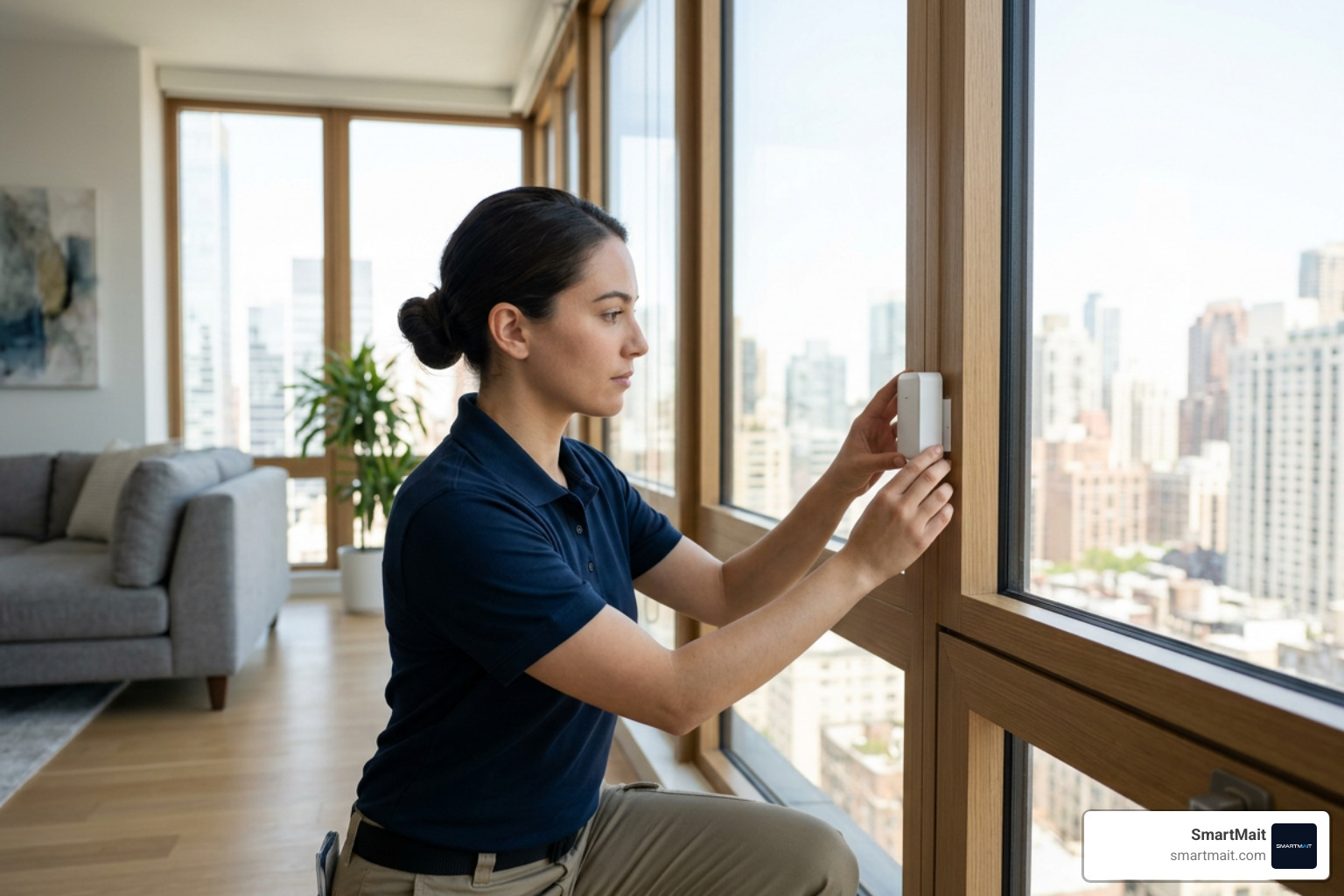
This is why professional, non-invasive installation is the ultimate solution. While many retail brands market themselves as “easy DIY,” the reality is that poorly applied adhesive strips often fail, causing heavy sensors to fall in the middle of the night, triggering false alarms and damaging baseboards.
By opting for professional installation, you ensure that every sensor is placed with mathematical precision, using the correct high-bond adhesives that are rated for your specific wall type (whether it is painted drywall, plaster, or concrete). To understand the trade-offs between trying to handle this yourself versus bringing in an expert, take a look at our analysis of Professional Alarm Installation vs DIY: What You Need to Know.
Damage-Free Mounting Techniques
To keep your security deposit completely intact, we utilize professional-grade, high-bond double-sided adhesives that are engineered specifically for clean removal. Unlike standard retail tape, these materials distribute the weight of the sensor evenly across the mounting surface.
When we install sensors, we also take into account the environmental conditions of your apartment. For instance, high-humidity areas like bathrooms or kitchens require moisture-resistant adhesive backings so sensors don’t slip over time.
If your apartment features historic molding or delicate wallpaper where adhesives cannot be safely used, we employ custom, non-invasive mounting brackets. These brackets slip over door hinges or clamp onto window tracks without requiring screws or leaving sticky residues.
When it is time to move, these professional mounts can be cleanly removed with a drop of isopropyl alcohol and a steady hand, leaving the premium paint finishes of your apartment completely untouched. For a deeper look at protecting your rental property’s structural integrity, read about how to Secure Your Castle with Expert Residential Security System Installation.
Portability and Moving Your System
One of the greatest financial benefits of a high-quality wireless alarm system is its portability. When you buy a wired system, you are essentially donating that equipment to the landlord when you move out. A wireless system, however, is an asset that travels with you.
With our systems, transitioning to a new home is simple. You don’t have to worry about leaving expensive hardware behind or trying to scrape sensors off the walls yourself.
As part of our dedicated service, we can assist with the entire relocation process. We will carefully dismount your sensors, pack them securely, update your monitoring address with the central station, and reinstall the entire ecosystem in your new residence. This ensures your smart home intelligence moves with you, whether you are relocating down the street in Birmingham or moving to a new property in Bloomfield Hills.
Professional vs. Self-Monitoring for Apartments
Once your hardware is in place, you face another critical choice: should you monitor the system yourself via smartphone notifications, or pay for a professional monitoring service?
Self-monitoring sounds appealing because it saves on monthly fees, but it places a massive burden on your shoulders. If your alarm triggers while you are in a meeting, asleep, or hiking in an area with poor cellular service, you will miss the alert.
Professional monitoring means a dedicated team of dispatchers is watching your system 24/7. To understand the full scope of how these systems protect you around the clock, read Everything You Need to Know About 24-Hour Home Security and explore our recommendations for The Best 24-Hour Home Security Systems for Your Family.
How Professional Monitoring Works for Renters
When a sensor is triggered, your system instantly sends a signal to a central monitoring station via its primary internet connection or cellular backup. Within seconds, a trained operator attempts to contact you to verify if it is a true emergency or a false alarm.
If you do not answer or if you confirm an intrusion, the operator immediately contacts local emergency dispatch. In many municipalities, police departments require “video verification” before they will dispatch officers to an unverified alarm.
By integrating smart indoor cameras with your professional monitoring plan, operators can securely view a short clip of the trigger event. This video verification proves to dispatchers that an active break-in is occurring, which drastically reduces false alarm fines and ensures the fastest possible emergency response times.
For renters in our local Southeast Michigan communities, having a system integrated with professional monitoring compliance is incredibly important. You can review the local guidelines for your area, such as the official Alarm Monitoring | Bloomfield Hills, MI requirements. To see a broad overview of how these services rank nationally, check out the Best Apartment Security Systems 2026 | SafeWise and the Best Security Systems for Apartments & Renters in 2026 .
Renters Insurance Discounts and Financial Benefits
Many renters view professional monitoring as a pure expense, but it actually offers a direct return on investment. Because monitored alarms significantly reduce the risk of extensive theft and property damage, almost all major insurance carriers offer premium discounts for rentals with active, professionally monitored security systems.
These discounts typically range from 5% to 20% off your renters insurance premiums. When we install and configure your system, we provide you with an official certificate of professional monitoring. You simply pass this document to your insurance agent, and they will apply the discount directly to your policy. Over the course of a year, these savings can offset a substantial portion of your monitoring costs. To learn more about optimizing your security budget, check out our guide on How to Secure Your Home Without Breaking the Bank.
Frequently Asked Questions About Apartment Security
Navigating lease agreements and building rules can be confusing. Here are the answers to the most common questions renters ask when looking for the best alarm system for an apartment.
Do I need my landlord’s permission to install a wireless alarm system?
If you are using a completely wireless, adhesive-mounted system that requires zero drilling or physical modification to the property, you generally do not need formal landlord permission. These systems do not alter the structure of the apartment, making them fully lease-compliant.
However, we always recommend reviewing your lease for any specific clauses regarding security devices. Presenting a professional, non-invasive integration plan to your landlord is a great way to build goodwill. You can show them that you are actively protecting their property from intrusion and water damage without causing any structural wear and tear. For more advice on choosing the right setup, you can read the 8 Best Security Systems for Apartments (June 2026) Complete Guide .
Can pet-friendly motion sensors prevent false alarms in small spaces?
Yes, but placement is key. Modern professional motion sensors use passive infrared (PIR) technology to detect heat signatures. Most of these sensors feature built-in pet immunity thresholds, meaning they are designed to ignore heat signatures from animals under a certain weight (usually 40 to 50 pounds).
In smaller apartment spaces, however, active pets can still trigger false alarms if they climb onto furniture, bringing them closer to the sensor’s field of view. We solve this by strategically placing sensors at optimal heights and angling them away from stairs, couches, or climbing towers, ensuring your pets can roam freely without triggering false dispatches.
What happens to my security system if the power or Wi-Fi goes down?
A professionally integrated security system will not leave you vulnerable during an outage. Our control panels feature built-in backup batteries that keep the system fully operational for up to 24 hours without power.
If your Wi-Fi router goes offline, the system immediately switches to its dedicated cellular backup to transmit alarm signals. Because Z-Wave devices communicate locally with the central hub, your door sensors, motion detectors, and smart locks will continue to talk to each other and execute local automations even if the external internet connection is completely severed.
Conclusion
Finding the best alarm system for an apartment doesn’t have to mean compromising with cheap, plastic DIY sensors that fall off your walls. You can have professional-grade, Z-Wave security that protects your home, integrates with your lifestyle, and keeps your landlord completely happy.
At SmartMait, we specialize in high-end residential and light commercial security integrations across Southeast Michigan’s premier communities, including Bloomfield Hills, Troy, Rochester Hills, Farmington Hills, and Birmingham. We don’t believe in one-size-fits-all retail boxes. We design custom, architect-grade security and automation ecosystems tailored to your specific space.
What truly sets us apart is our SmartService concierge maintenance program. We don’t just install your system and walk away. We build ongoing relationships with our clients, providing continuous support, hardware updates, and seamless relocation services when you decide to move to your next residence.
Ready to secure your space the smart way? Secure your apartment with SmartMait today, and let’s build a system that gives you ultimate peace of mind.