The Best Ways to Secure Your Small Apartment
Key Factors When Choosing the Best Security Cameras for Apartments
The best security cameras for apartments combine wire-free battery doorbells or compact tabletop pan-and-tilt units with non-damaging adhesive or clamp mounts, 2K video resolution, and wide vertical fields of view. This setup provides high-definition entry monitoring and interior surveillance without drilling holes or violating lease terms.
The three primary considerations for renters are video resolution, vertical field of view (FOV), and how the camera connects and powers itself. Today, 1080p Full HD (roughly 2 million pixels) is considered the absolute minimum standard. Moving to 2K (or even 4K with 8 million pixels) allows you to zoom in on vital details, such as reading badges on delivery personnel or identifying license plates across a ground-floor patio.
Equally important is the camera’s aspect ratio. Narrow apartment hallways demand a tall, square aspect ratio (like 1:1 or 16:9 expanded vertical views) with at least a 150° vertical FOV. This head-to-toe perspective guarantees that you capture packages resting flat on the welcome mat right beneath the camera lens, rather than just the visitor’s forehead.
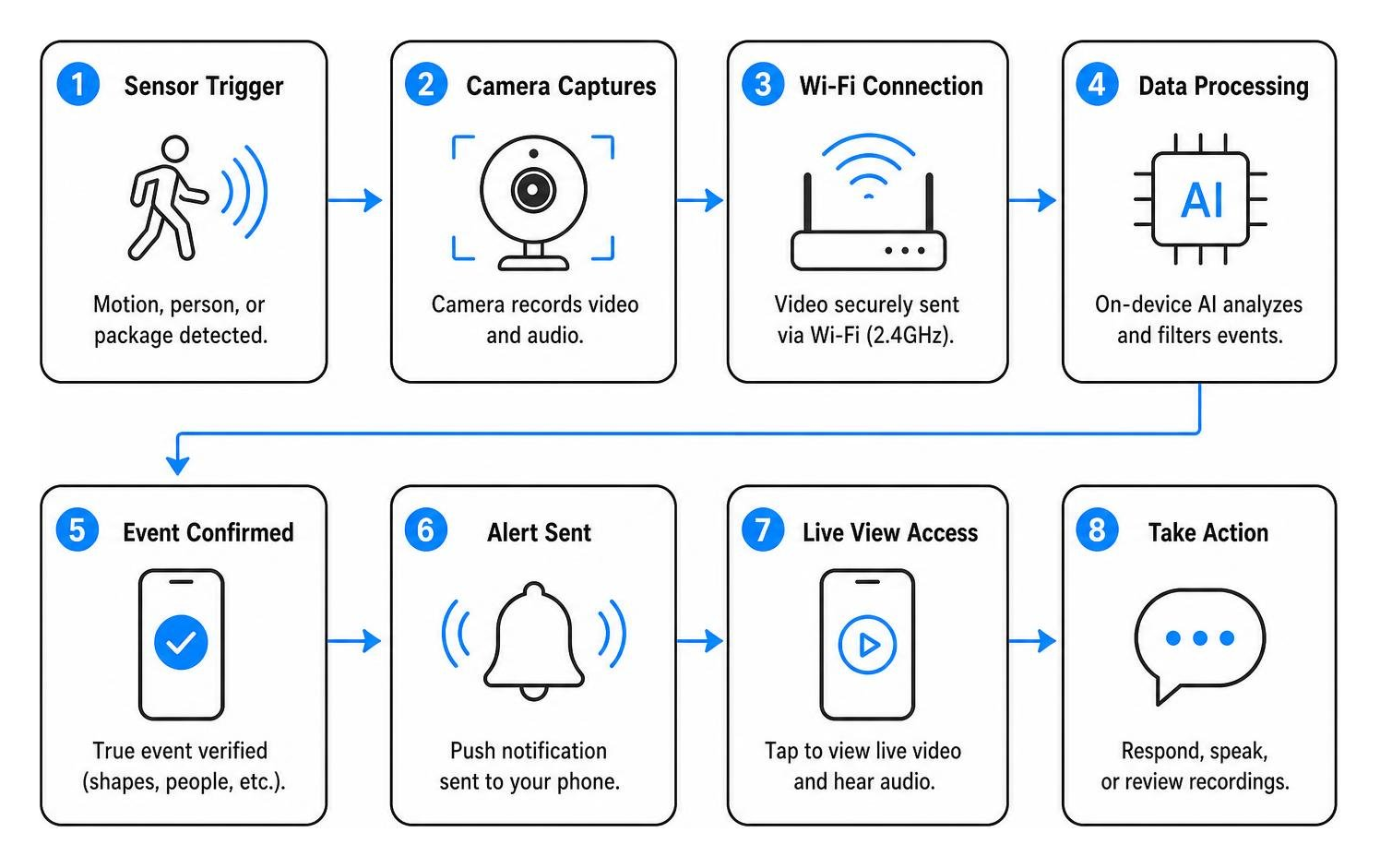
Modern audio video security cameras also incorporate intelligent motion detection and two-way talk, transforming passive recording devices into active communication tools.
| Camera Type | Power Source | Connectivity | Installation Complexity | Best Renter Use Case |
|---|---|---|---|---|
| Wired | Continuous AC plug-in or low-voltage line | Wi-Fi / Ethernet | Low to Moderate (near outlets) | Main living areas, continuous 24/7 indoor monitoring |
| Wireless | AC plug-in or hardwired power | Wi-Fi | Low | Interior entryways and high-traffic common rooms |
| Wire-Free | Rechargeable onboard lithium battery | Wi-Fi | Very Low (no cords needed) | Apartment front doors, exterior balconies, breezeways |
Evaluating Wireless Hardware and Renter-Friendly Features
When outfitting a rental, navigating network stability is often the biggest hurdle. Dense apartment buildings are crowded with competing radio frequencies. Finding the best camera for security with WiFi means choosing hardware that operates seamlessly across the 2.4GHz band, which offers superior wall penetration through drywall and concrete compared to shorter-range 5GHz signals. A stable 2K video stream typically requires 2 to 4 Mbps upload bandwidth per active camera, so allocating bandwidth properly is essential.
Selecting renter-friendly smart security devices also means prioritizing hardware designed around personal privacy and convenience. Key features include:
- On-Device AI Detection: Advanced filtering isolates human shape, pet movement, and package delivery from benign motions like ceiling fans or hallway shadows, dramatically reducing alert fatigue.
- Physical Privacy Shutters: For indoor cameras, motorized lenses or physical shutters automatically roll closed when you return home, ensuring absolute visual privacy inside your living quarters.
- Standalone Wi-Fi Chimes: If your rental lacks built-in doorbell wiring, wireless indoor chimes pair with battery-powered doorbells to sound alerts throughout your home.
- Matter & Ecosystem Interoperability: Modern units supporting standard smart protocols make it easy to transition devices across platforms if you switch ecosystems down the road.
Cloud vs. Local Storage Options for Apartment Security Cameras
Video storage models heavily dictate long-term costs. While an entry-level camera may appear inexpensive up front, cloud subscription fees can add up over time. If you are looking for a wireless indoor security camera without a subscription, on-device storage options provide a dependable alternative.
Local storage relies on onboard microSD cards (supporting 32GB up to 256GB) or localized base station hubs. This configuration enables continuous 24/7 timeline scrubbing and retains recorded security clips even if your apartment internet goes offline.
In contrast, cloud storage services store motion-activated clips on remote servers, providing rolling event history (typically 30 to 180 days) and automated off-site redundancy if the camera is physically taken. Evaluating your appetite for ongoing monthly fees versus private on-premises storage is a critical step when tailoring an apartment surveillance system.
Non-Damaging Installation and Lease Compliance Strategies
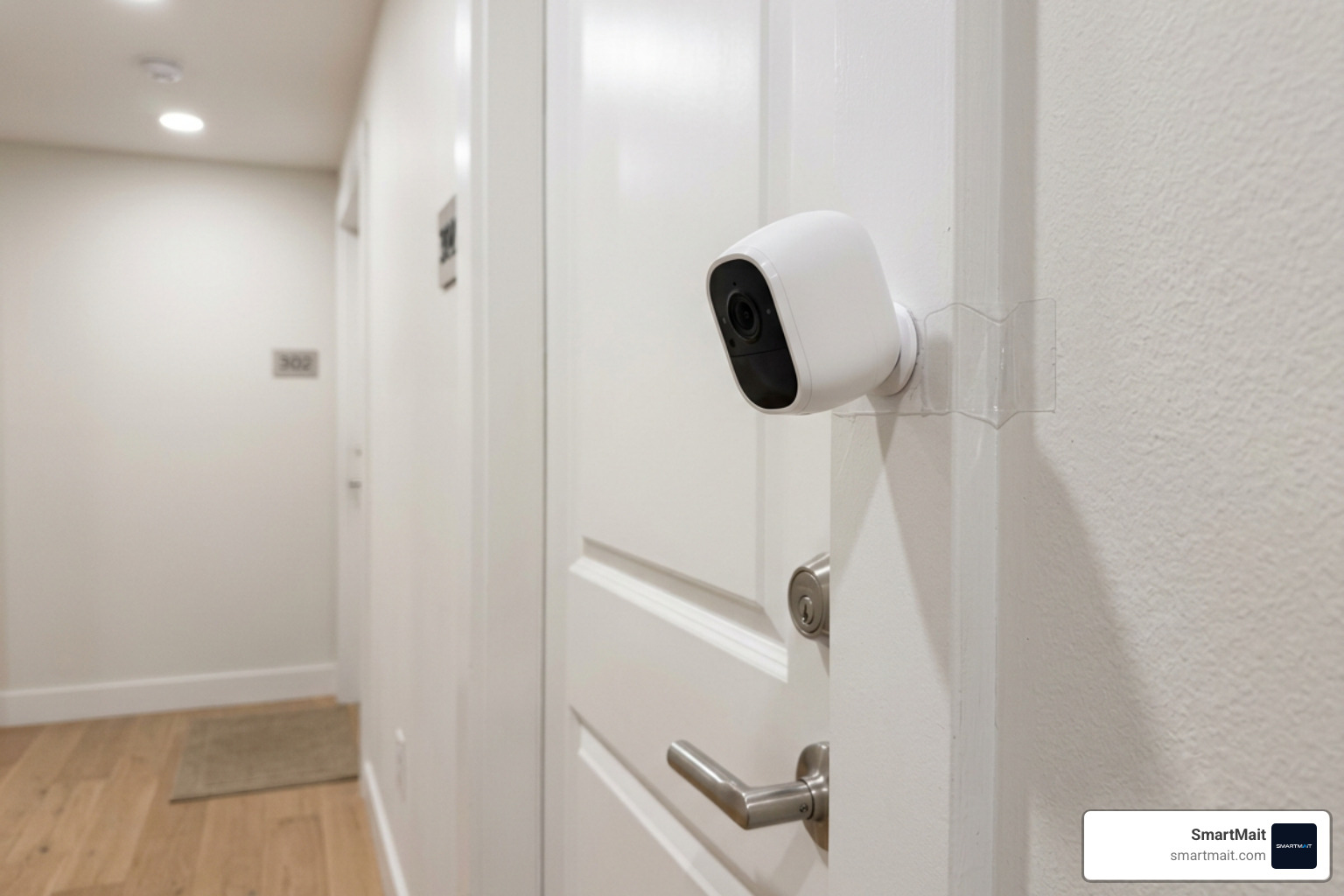
Protecting your rental security deposit requires thoughtful hardware deployment. Standard US residential leases classify non-permanent, cleanly removable additions as personal property rather than prohibited property alterations. However, drilling a single 3/16″ masonry anchor hole into a shared exterior breezeway wall can lead to patch fees ranging from $50 to $150 upon move-out.
Renter-friendly installation relies on non-invasive mounting hardware, including:
- Heavy-Duty Double-Sided Foam Tapes: Commercial-grade 3M VHB adhesive strips hold up to 8 lbs of shear load on smooth, non-porous surfaces.
- Magnetic Mounting Plates: Adhesive-backed magnetic base plates let you easily detach the camera body for quick battery recharging without pulling adhesive off the wall.
- Railing Strap Brackets: Reinforced nylon straps with ratchet buckles secure exterior cameras to apartment balcony railings or metal posts without adhesives or drilling.
- Tension & Over-the-Door Brackets: Steel tension brackets clamp directly onto apartment entry doors without piercing the metal or wood frame.
When removing adhesive hardware at the end of your lease, apply gentle heat with a hairdryer on low for 20 to 30 seconds to soften the bond, then slowly peel the tape at a sharp angle to avoid lifting interior paint or drywall paper.
How to Position the Best Security Cameras for Apartments Without Drilling
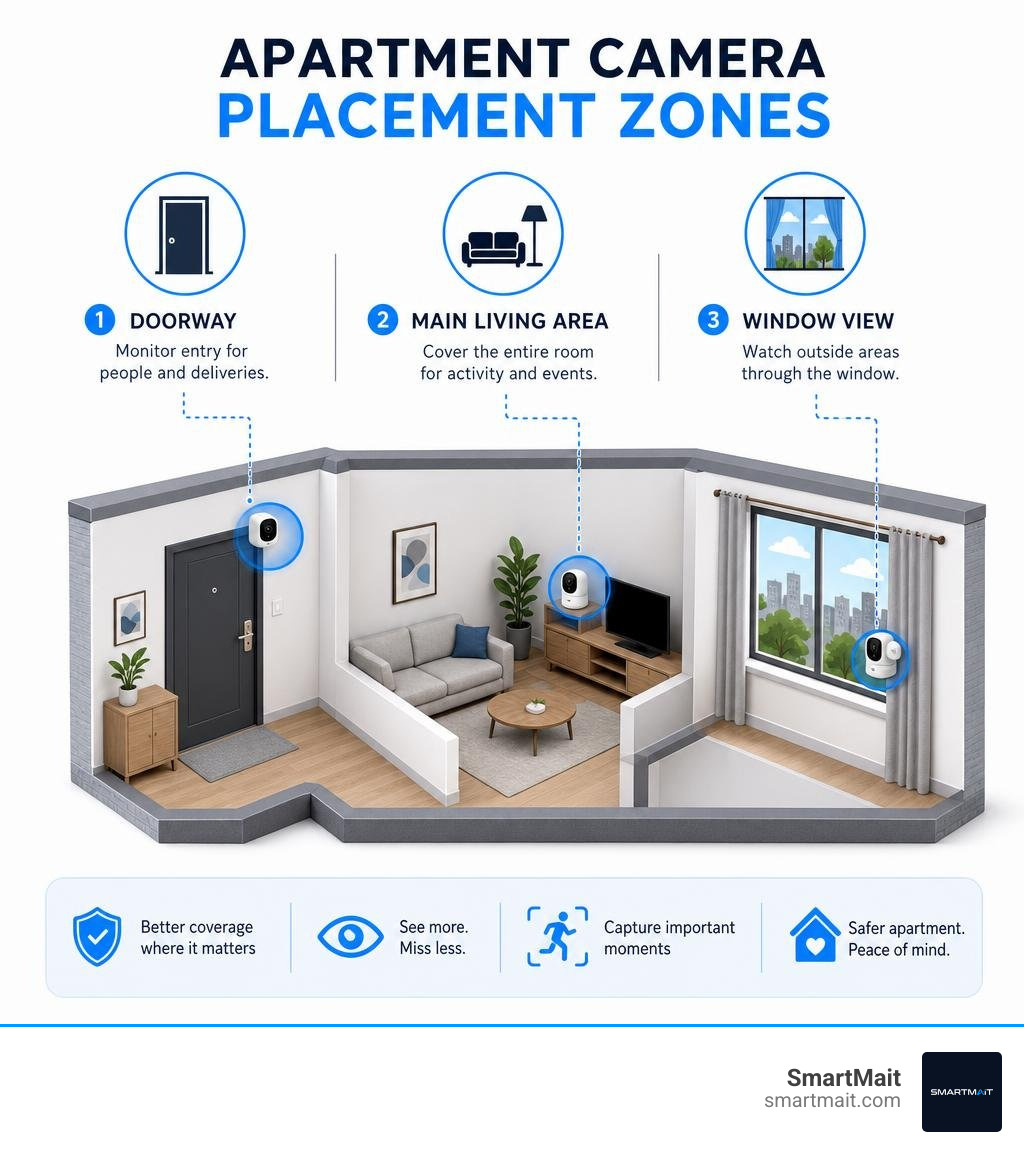
Proper placement ensures comprehensive property coverage without risking lease violations. Consulting the ultimate guide to building a home security camera setup highlights that elevation and viewing angles dictate surveillance effectiveness.
Rather than mounting high on drywall, position freestanding indoor pan-and-tilt cameras on bookshelves, consoles, or mantels near primary entryways. This elevates the lens to capture broad room views while keeping power cords near ground outlets.
For exterior monitoring where outdoor mounting is prohibited, specialized indoor window brackets hold compact cameras flush against interior window glass to record through the pane. Furthermore, comprehensive no-drill wireless camera testing shows that balcony railing straps provide stable, wind-resistant viewpoints to monitor private parking spaces or patio entries.
Shared Hallway Privacy Laws and Tenant Rights
Tenants maintain a strong legal expectation of privacy within their leased interior living space. However, installing cameras facing outward into communal hallways requires extra care. Hallways, elevators, stairwells, and shared breezeways are considered common areas with reduced expectations of privacy, but local regulations govern how cameras interact with these spaces.
To maintain compliance and avoid neighbor disputes:
- Point doorway lenses strictly downward toward your immediate doorstep and threshold rather than straight across into a neighbor’s open doorway or private window.
- Review lease documents for specific restrictions regarding exterior door modifications, hanging fixtures, or common-area recording.
- Check state audio recording statutes; in two-party consent jurisdictions, disabling continuous audio recording on exterior cameras helps avoid legal friction.
- Communicate politely with property managers or direct neighbors before mounting external hardware to ensure expectations are clear.
Top Hardware Categories and Configurations for Rental Properties

Selecting hardware tailored to your specific apartment layout ensures your living area and entry points are properly monitored without excess clutter.
Selecting the Best Security Cameras for Apartments: Doorbell vs. Standalone Indoor Cameras
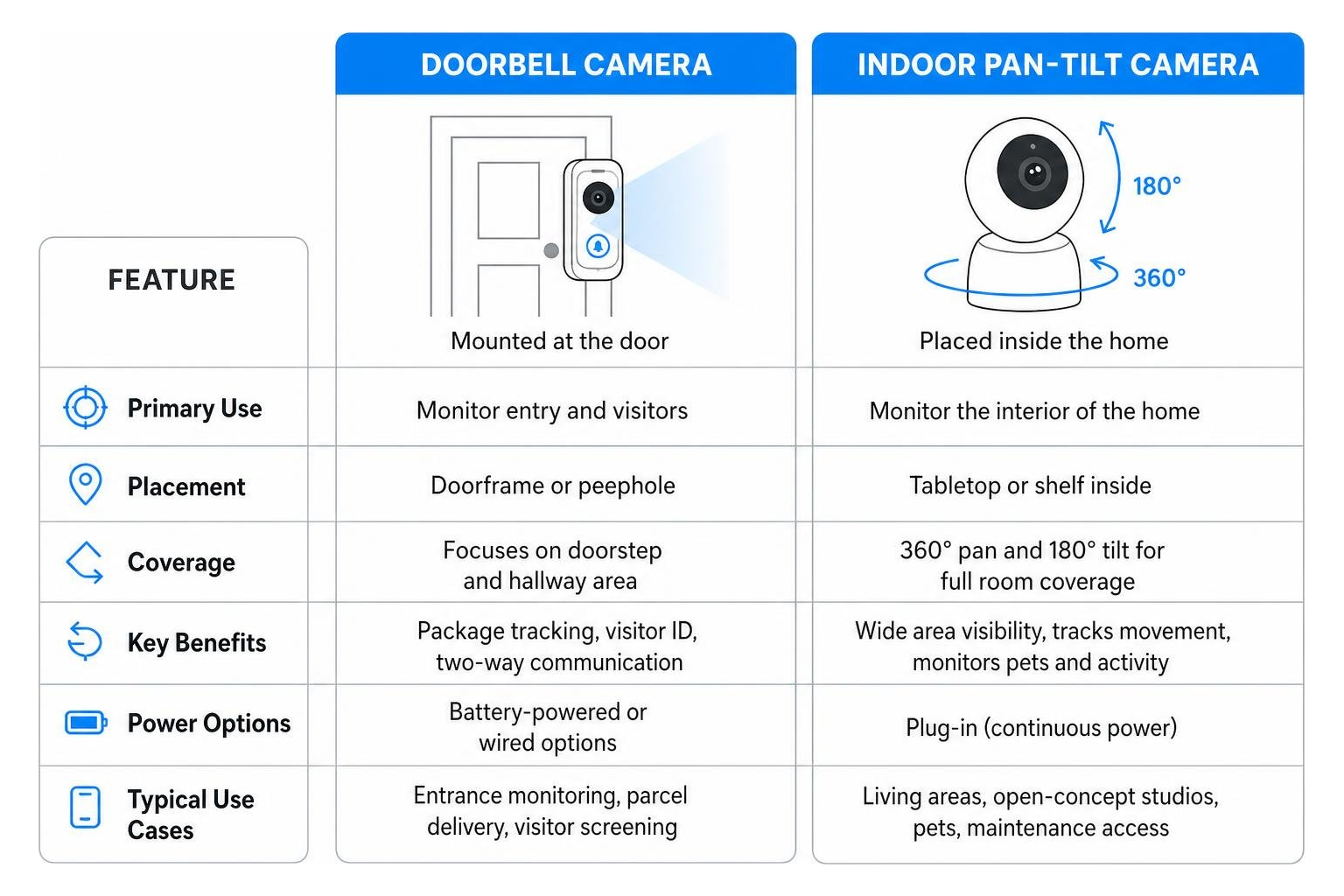
Balancing front door coverage with interior peace of mind often comes down to choosing between a dedicated video doorbell and an indoor companion camera. Exploring practical apartment door camera security reveals distinct advantages for each setup:
- Video Doorbells: Positioned directly on the doorframe or peephole, doorbells excel at package tracking, courier communication, and visitor identification before unlocking the door.
- Indoor Pan-and-Tilt Cameras: Placed centrally inside the apartment, a single 360° pan and 180° tilt unit can cover an entire open-concept studio, tracking pet activity and monitoring internal maintenance personnel.
- Bundled Starter Packages: Renters often combine a battery-powered front doorbell with one or two interior tabletop cameras, providing end-to-end coverage across both perimeter access and indoor living spaces.
Self-Monitored vs. Professionally Monitored Systems
Another key architectural choice is whether to self-monitor or subscribe to professional dispatch services.
Self-monitoring allows you to receive instant smartphone notifications when motion is detected, review live video feeds, and speak through two-way audio without ongoing operational overhead.
Professionally monitored solutions connect your camera and sensor network to dedicated monitoring centers. If an alarm triggers while you are unreachable, monitoring agents can verify events through live intruder deterrence features, speak directly through camera sirens to deter intruders, and dispatch emergency responders. For renters desiring elevated security, month-to-month monitoring plans provide professional protection without long-term contract lock-in.
For property owners seeking broader perimeter defense beyond apartment interiors, comparing the best outdoor security cameras for a residential home or reviewing the best security cameras for every budget and need provides helpful perspective on expanding equipment footprints.
Frequently Asked Questions About Apartment Security
Can my landlord prohibit me from using indoor security cameras?
In general, landlords cannot legally prohibit you from placing security cameras entirely inside your private leased apartment. Tenants have a reasonable expectation of privacy and personal safety within their private living quarters.
However, landlords can enforce reasonable rules regarding physical damage (such as banning drilling into walls or running permanent electrical wiring) and restrict exterior equipment mounted to shared structural surfaces. Using freestanding or damage-free adhesive devices inside your unit avoids these lease restrictions.
Do apartment security cameras work during Wi-Fi outages?
Cameras that rely exclusively on cloud processing will lose live remote viewing, push notifications, and cloud recording if your Wi-Fi drops. However, cameras equipped with local microSD cards or localized hub storage will continue to capture, process, and record motion-activated video clips locally to onboard memory. Once your network connection is restored, you can review the saved footage through your mobile app.
How do I prevent false alerts in high-traffic apartment hallways?
To prevent phone notifications every time a neighbor walks past your door, configure your camera’s motion detection settings within its management app:
- Adjust Motion Activity Zones: Draw specific activity zones that exclude the main hallway corridor and focus solely on your front welcome mat.
- Enable AI Human Filtering: Turn on person-only detection algorithms to ignore passing shadows, lighting changes, or distant background movement.
- Lower Detection Sensitivity: Reduce motion sensitivity thresholds so the camera only triggers when subjects approach within close proximity (such as 3 to 5 feet from your door).
Conclusion
Securing an apartment does not require sacrificing your security deposit or undertaking permanent construction. By pairing wire-free video doorbells with compact, high-resolution indoor cameras and non-damaging mounting solutions, renters can establish reliable protection that adapts easily whenever moving day arrives.
For residential properties, condominium owners, and luxury residences throughout Oakland, Macomb, and Wayne counties in Southeast Michigan—including communities in Bloomfield Hills, Troy, Rochester Hills, Farmington Hills, and Birmingham—elevating security often means looking beyond standalone consumer devices.
At SmartMait, we design, integrate, and maintain architect-grade smart home automation, structured Wi-Fi, and access control systems built on stable Z-Wave infrastructure. Our exclusive SmartService concierge maintenance program provides ongoing system optimization, proactive support, and white-glove device management to ensure your property remains protected year after year.