The No-Nonsense Guide to Back to Base Security Systems
Why a Back to Base Security System Is Worth Understanding Before You Buy
A back to base security system is one of the most effective ways to protect a property — but most homeowners don’t fully understand what separates it from a standard alarm until something goes wrong.
Here’s the short answer:
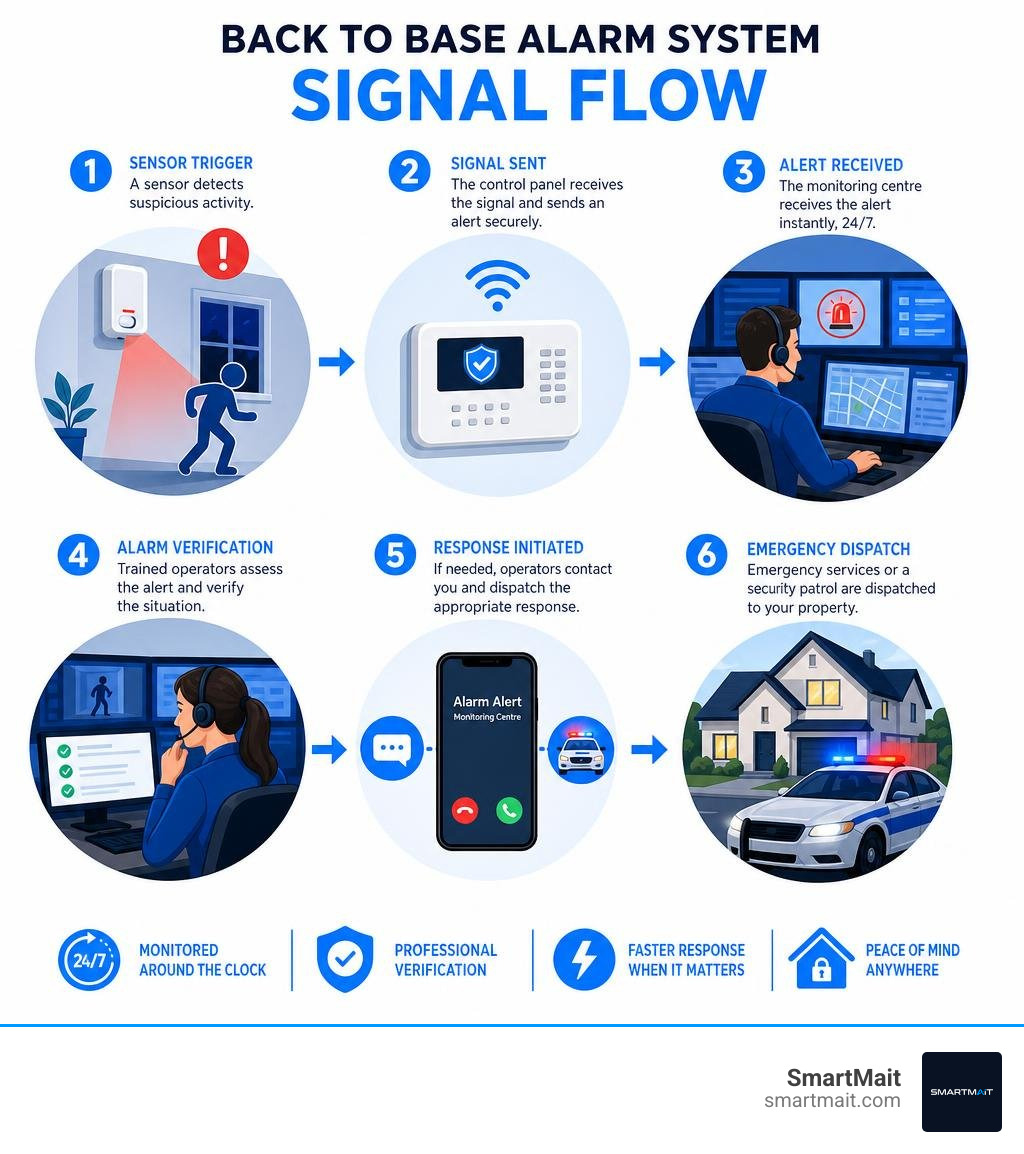
A back to base security system connects your alarm directly to a professional 24/7 monitoring centre. When a sensor triggers, trained staff assess the situation and contact you, dispatch emergency services, or send a security security patrol — automatically, even if you’re asleep or on the other side of the world.
What makes it different from a regular alarm:
- A standard alarm sounds a siren and hopes someone nearby notices
- A back to base system calls for help on your behalf, whether you’re home or not
- Monitoring centres operate around the clock, every day of the year
- Response is faster because professionals are already engaged before you even pick up your phone
In Sydney alone, over 125,000 cases of theft from premises are reported annually. That number makes one thing clear: a siren that no one acts on isn’t a security strategy — it’s a noise complaint.
For homeowners in Oakland County, the stakes aren’t just statistical. A property worth $800K or more deserves a system that actually responds, not one that blinks and beeps while a break-in happens.
I’m Dominic Hesano, founder of SmartMait, and I’ve spent years designing and installing back to base security systems across Southeast Michigan — troubleshooting setups that other installers left half-finished and building systems that work the way homeowners actually need them to. This guide will walk you through everything you need to know to make a confident, informed decision.
Back to base security system terms to learn:
What is a Back to Base Security System and How Does It Work?

At its core, a back to base security system bridges the gap between your physical property and a rapid, professional response. When an event occurs at your home or business, the system doesn’t just make noise locally; it sends an encrypted, real-time data packet to a central monitoring station.
This communication happens in seconds over dedicated cellular networks (such as 4G or 5G LTE) and high-speed internet lines, ensuring that even if an intruder cuts your physical phone or cable lines, the signal still gets through.
To understand the full scope of how these central hubs operate and keep watch over your property, take a look at Who Is Listening A Guide to Alarm Central Monitoring.
Key Components of a Monitored Alarm
A robust back to base security system relies on a network of specialized hardware working in perfect harmony. These components include:
- The Control Panel: The “brain” of your system. It processes signals from all sensors and communicates directly with the monitoring base.
- Motion Sensors (PIR): Passive Infrared sensors that detect changes in heat signatures and movement within designated zones.
- Door and Window Contacts: Magnetic sensors that trigger an instant alert the moment a protected entry point is opened.
- Glass Break Detectors: Audio-frequency sensors calibrated to recognize the specific sound of shattering glass, protecting large window expanses.
- Communication Module: The cellular and IP transmitters that send the alarm signals to the monitoring station.
- Backup Power Supply: High-capacity backup batteries that keep the system fully operational during power outages.
How the Monitoring Centre Responds to a Triggered Back to Base Security System
When a sensor is tripped, the sequence of events that follows is highly coordinated, swift, and designed to eliminate human error.
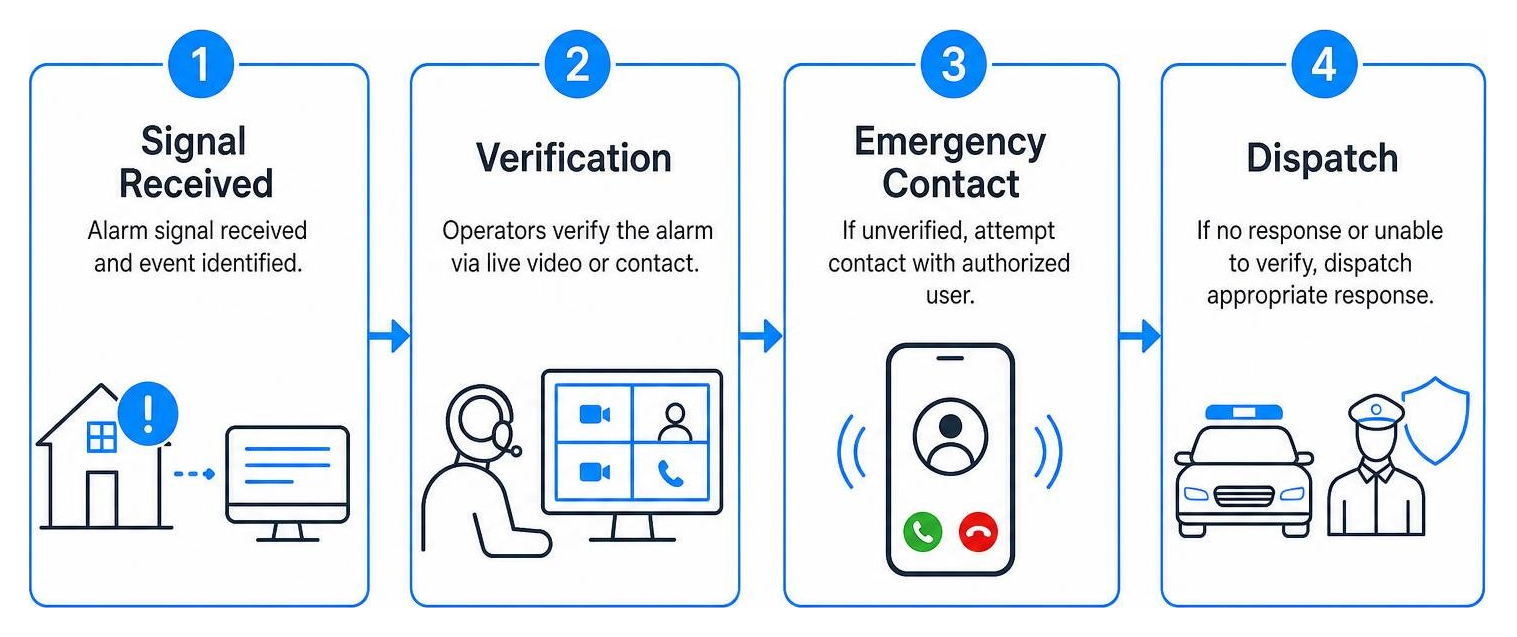
- Signal Received: The central monitoring station receives the alarm packet, identifying the exact sensor that was triggered (e.g., “Living Room Glass Break”).
- Verification: Operators immediately check live camera feeds (if video verification is integrated) or call your designated contact number to verify if it is a false alarm.
- Emergency Contact: If you do not answer or cannot provide the correct disarm passcode, the monitoring team initiates the pre-established emergency protocol.
- Dispatch: Depending on your location and preferences, the operator will dispatch local law enforcement, emergency services, or a private security patrol to secure the perimeter.
For residents in areas like Oakland County, local municipalities often have specific guidelines regarding alarm response. For example, you can learn more about how local authorities coordinate with security systems by reviewing the guidelines for Alarm Monitoring | Bloomfield Hills, MI .
Back to Base Monitoring vs. Standard Local Alarms
Many property owners wonder if they can get by with a standard, unmonitored alarm system. While a local siren might startle a novice trespasser, it relies entirely on the hope that a neighbor will hear the noise, care enough to investigate, and call the police. In modern neighborhoods, local sirens are frequently ignored as nuisance alarms.
Here is a side-by-side comparison of how these two approaches stack up:
| Feature | Standard Local Alarm | Back to Base Security System |
|---|---|---|
| Primary Alert Method | Loud external/internal siren | Silent or audible alert sent to monitoring centre |
| Response Initiation | Relies on neighbors or passerby action | Automated professional dispatch within seconds |
| Power Outage Protection | Limited local battery | Comprehensive battery + cellular network backup |
| System Health Tracking | None (unnoticed component failures) | 24/7 remote diagnostic monitoring |
| Smartphone Integration | Basic self-monitored app alerts | Fully integrated professional & self-monitoring |
If you are looking to compare various monitoring styles, read our guide on the Best Alarm and Monitoring Services to Keep Intruders at Bay.
The Core Benefits of Professional Monitoring
Investing in a professionally managed back to base security system offers several distinct advantages over consumer-grade, self-monitored setups:
- True 24/7 Protection: You cannot always look at your phone. Whether you are on an international flight, in a business meeting, or asleep, trained professionals are watching over your property.
- Significant Crime Deterrent: Intruders actively avoid properties displaying signs and decals of professional, back-to-base monitoring. They know their window of opportunity is cut down to minutes.
- Lower Insurance Premiums: Because monitored systems drastically reduce the risk of extensive theft or fire damage, most premium insurance providers offer substantial discounts on property insurance.
- Environmental Hazard Monitoring: Modern systems can monitor for smoke, carbon monoxide, water leaks, and extreme temperature drops, dispatching the fire department before major property damage occurs.
For practical advice on maximizing your physical property security, you can explore these actionable Security | Alarm Monitoring System | Back-To-Base recommendations.
Selecting, Installing, and Maintaining Your System

A security system is only as reliable as its physical installation. While DIY kits have flooded the market, they often leave critical blind spots, suffer from frequent false alarms due to poor sensor placement, and lack the robust communication channels required for high-end properties.
To understand the critical differences in execution, read our analysis on Professional Alarm Installation vs DIY What You Need to Know.
Choosing the Right Back to Base Security System for Your Property
Every property has a unique architectural layout and specific vulnerabilities. A cookie-cutter security package rarely provides adequate protection for custom-built homes or light commercial spaces. When designing a system, we evaluate:
- Entry Points & Perimeter Vulnerabilities: Mapping out all windows, doors, skylights, and basement entries.
- Environmental Layout: Ensuring large pets do not trigger motion detectors by utilizing pet-immune PIR sensors.
- Scalability: Choosing a system architecture that can easily expand to accommodate future renovations, outbuildings, or additional smart home technologies.
While basic consumer-focused packages serve a purpose for standard apartments, custom estates and small businesses require a more tailored, commercial-grade approach. High-end properties in Southeast Michigan demand dedicated, professional installations that integrate seamlessly with the home’s architecture and provide robust, long-term reliability.
Installation and Ongoing Maintenance
A security system is not a “set-and-forget” appliance. Sensors run on batteries, firmware needs patching, and physical components can drift out of alignment over time.
At SmartMait, we address this with our SmartService concierge maintenance program. Instead of installing a system and disappearing, we build long-term relationships with our clients across Oakland, Macomb, and Wayne counties. We handle routine system testing, proactively swap out aging batteries, and perform regular firmware updates to keep your system secure against modern cyber threats.
To keep your equipment running at peak performance, check out our guide on how to Keep Your Alarm Alert with Professional Servicing.
The Role of Modern Technology: Z-Wave, AI, and Smart Integration
The days of clunky, isolated alarm keypads are over. Modern security systems are fully integrated into the broader smart home ecosystem.
At SmartMait, our core platform relies on the Z-Wave ecosystem. Unlike consumer-grade Wi-Fi systems that clog your home network and are susceptible to interference, Z-Wave operates on a dedicated, low-power radio frequency. This creates a highly secure, encrypted mesh network where every device acts as a repeater, ensuring absolute reliability across large properties in Bloomfield Hills, Birmingham, or Rochester Hills.
For a deeper look into modern perimeter security technologies, read Secure Your Perimeter with Top Alarm Systems and Monitoring.
Integrating CCTV and Access Control
A truly cohesive smart home or business security plan integrates your back to base security system with high-definition surveillance and keyless access control.
This integration allows for advanced features like video verification: when an alarm is triggered, the monitoring station instantly receives a 10-second video clip from the nearest camera, allowing them to confirm an active intruder and upgrade the police dispatch priority.
For light commercial applications and high-end residential estates in Southeast Michigan, replacing physical keys with smart access control is a game-changer. These systems operate on a commercial scale to restrict unauthorized entry while providing detailed audit logs of who enters and exits. Additionally, understanding professional monitoring standards and strict protocols ensures your property is backed by a highly responsive and reliable network.
Frequently Asked Questions about Monitored Alarms
Do back to base systems work during power outages?
Yes. Professionally installed systems feature robust internal backup batteries designed to keep the control panel and all local sensors fully operational for 24 hours or more during a power failure. Furthermore, because the primary communication path utilizes cellular networks rather than local Wi-Fi, your system will continue to communicate with the monitoring centre even if the entire neighborhood loses power and internet connectivity.
Can I integrate my existing smart home devices with a monitored alarm?
If your existing smart home devices operate on professional, open-standard protocols like Z-Wave, they can typically be integrated into a unified smart security ecosystem. This allows your lighting, climate control, AV systems, and security monitoring to work together. For instance, you can program your system so that arming your security alarm automatically locks your doors, shuts off the lights, and sets the thermostat to an energy-saving mode.
How do monitored security systems reduce insurance premiums?
Insurance companies operate on risk assessment. An unmonitored home is a high-risk asset because a fire or break-in can go unnoticed for hours. A certified back to base security system guarantees a rapid response, drastically limiting potential losses. When you provide your insurance broker with a Certificate of Monitoring from a certified installation provider like SmartMait, you can often secure premium discounts ranging from 10% to 20%.
Conclusion
A back to base security system is the ultimate foundation of property protection and personal peace of mind. But a security system is only as good as the team that stands behind it.
At SmartMait, we don’t believe in fragmented, DIY setups or “install-and-vanish” business models. We provide a complete, architect-grade integration of security, smart automation, structured networking, AV, and lighting. Serving the premier suburbs of Southeast Michigan — including Bloomfield Hills, Troy, Rochester Hills, Farmington Hills, and Birmingham — we back every project with our signature SmartService concierge maintenance program to ensure your home remains safe, smart, and fully operational for years to come.
Ready to secure your property with a professionally integrated, monitored system? Secure your property with SmartMait today.