Why Door Entry Systems are Your First Line of Defense
Why Door Entry Systems Are Your First Line of Defense
Door entry systems are the first barrier between your home or business and everyone outside it. Before diving into the full guide, here’s a quick answer to what you need to know:
| Type | Best For | Key Credential Options |
|---|---|---|
| Audio intercom | Small residential buildings | PIN, RFID |
| Video intercom | Homes, offices, multi-unit buildings | PIN, RFID, mobile app |
| IP-based system | Large properties, commercial sites | Mobile, biometric, QR code, RFID |
| Standalone kit | Single doors, light commercial | PIN, RFID, remote fob |
| Networked system | Multi-door, scalable deployments | All of the above |
Nearly 90% of organizations report a rise in physical security threats. Yet many homeowners and business owners are still relying on a brass key and a hope for the best.
A modern door entry system does three things a key never could:
- It verifies who is at the door before you open it
- It logs every entry and exit automatically
- It lets you manage access remotely — from your phone, from a meeting, from anywhere
That’s the difference between security that looks good and security that actually works.
I’m Dominic Hesano, founder of SmartMait and a low voltage installation specialist with years of hands-on experience designing and installing door entry systems across Southeast Michigan — from single-family homes in Bloomfield Hills to light commercial properties in Oakland County. In this guide, I’ll walk you through everything you need to know to choose, plan, and install a system that performs the way your property demands.
Door entry systems terms to know:
Understanding Modern Door Entry Systems and How They Work
At its core, a door entry system is an electronic security solution designed to manage who can enter a specific building or room. Unlike traditional locks that require a physical key, electronic entry systems rely on digital communication to grant or deny access. Think of it as a digital gatekeeper that never sleeps, never takes a coffee break, and doesn’t get distracted by a smartphone screen.
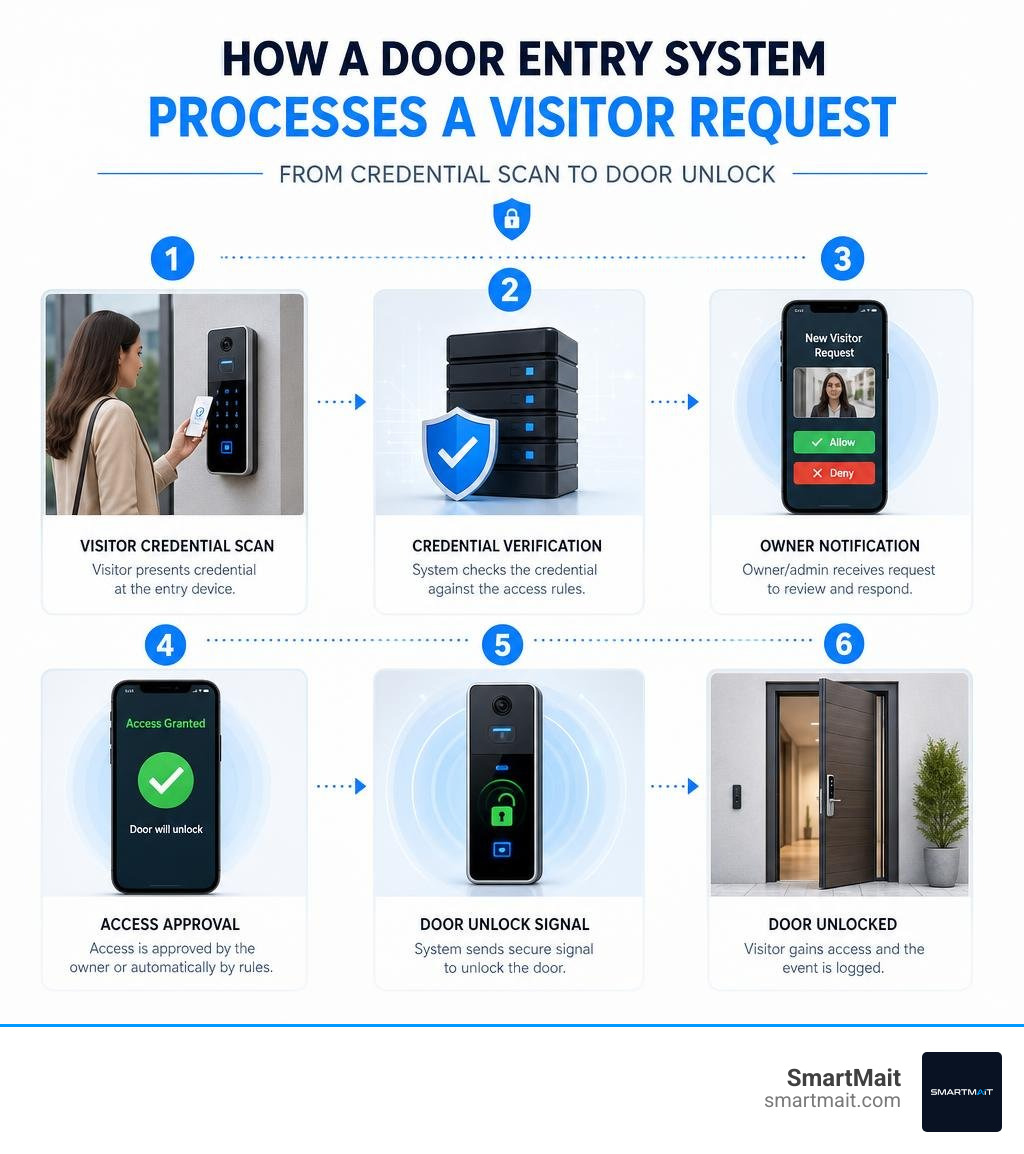
Every time someone approaches your property, a structured three-step process occurs:
- Entry Verification: The visitor presents a credential (like a key fob, a mobile app signal, or their face) or calls the occupant via an intercom panel.
- Authorization: The system checks the database to see if the credential is valid for that specific time and door. If it’s a visitor call, the occupant manually authorizes entry by pressing a button.
- Logging: The system records the transaction. You get a clear, unalterable digital log showing exactly who entered, which door they used, and the precise timestamp.
For properties in high-end suburbs like Birmingham or Troy, securing the perimeter isn’t just about keeping the bad guys out; it’s about managing deliveries, service staff, and guests without turning your home or office into a fortress. By replacing mechanical keys with smart, programmable technology, you can Secure Your Perimeter With These Top Building Entry Systems while maintaining a welcoming, streamlined entryway.
Key Components of a Secure Entryway
To understand how these systems operate, it helps to look at the individual pieces of the puzzle. A robust door entry setup consists of five main physical and digital components:
- The Credential: This is the “key” the user carries. It can be physical (like an RFID card or key fob), digital (a smartphone app or QR code), or biological (fingerprints and facial recognition).
- The Reader: Mounted next to the door, this device communicates with the credential. It reads the data and sends it instantly to the brain of the system.
- The Controller: The controller is the physical control panel—the brain of the operation. Usually tucked away in a secure low-voltage cabinet inside the building, it stores the access permissions and makes the split-second decision to unlock the door.
- The Door Lock: Electronic locks, such as electromagnetic locks (maglocks) or electric strikes, physically secure the door. When the controller approves an entry, it cuts or applies power to the lock, releasing the door. You can explore the hardware options further by looking into how to Lock It Down With These Top Rated Door Lock Controllers.
- The Software: This is the management interface. Whether it is cloud-based or hosted on a local server, the software allows you to add or delete users, set time schedules, and review access logs.
Types of Entry Systems and Choosing the Right Credentials
Choosing the right type of system is all about matching the hardware to your daily routine and security requirements.
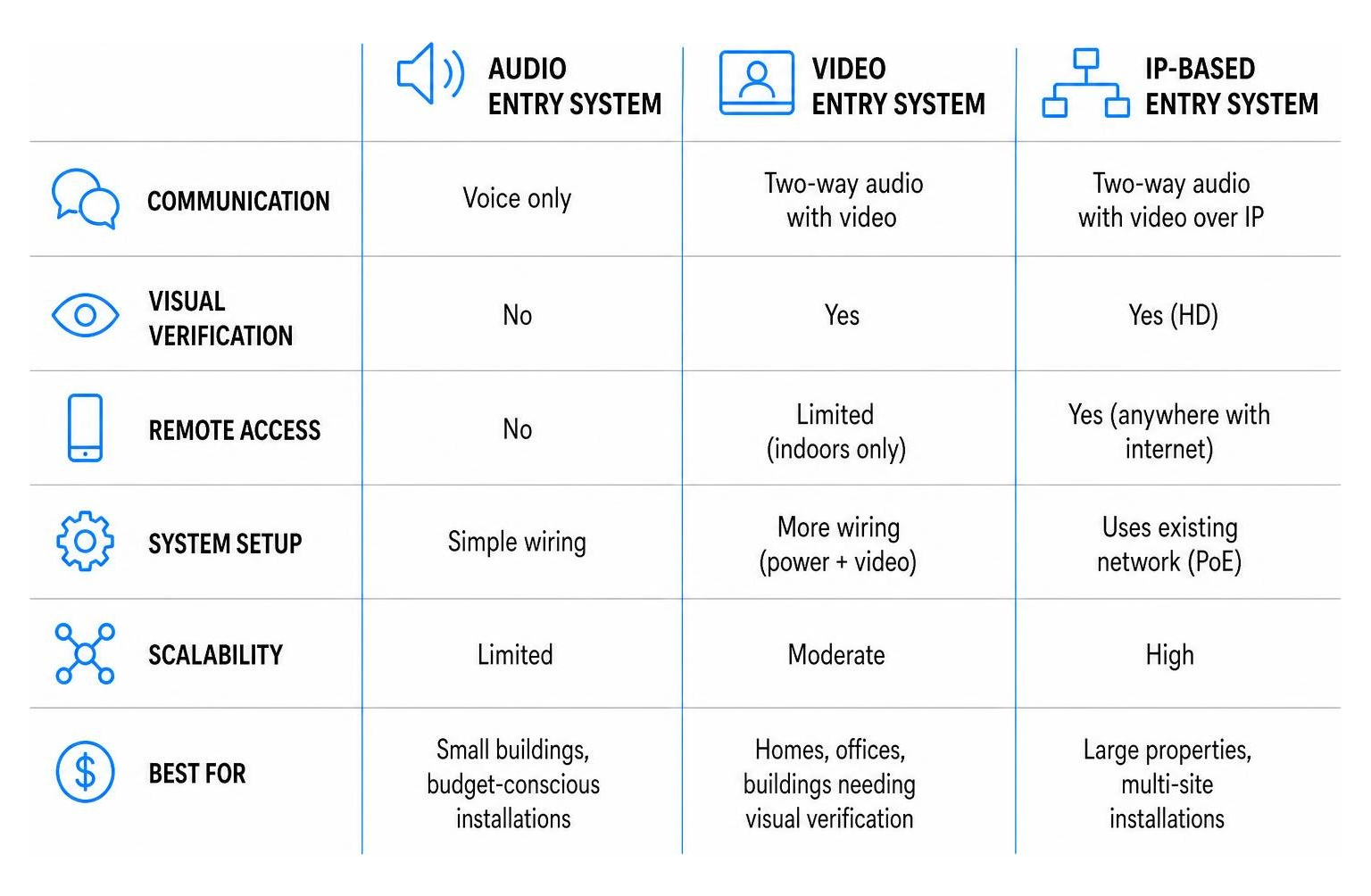
If you are upgrading an estate in Bloomfield Hills, your needs will differ significantly from a small medical office in Rochester Hills. To help you visual the options, let’s look at how the primary types of door entry systems stack up.
Audio, Video, and IP-Based Door Entry Systems
Traditional systems were purely acoustic. Audio entry systems allow you to speak with a visitor at the door before pressing a button to buzz them in. While budget-friendly and highly reliable, they lack visual verification. In an era where package delivery scams are common, relying solely on voice is a security blind spot.
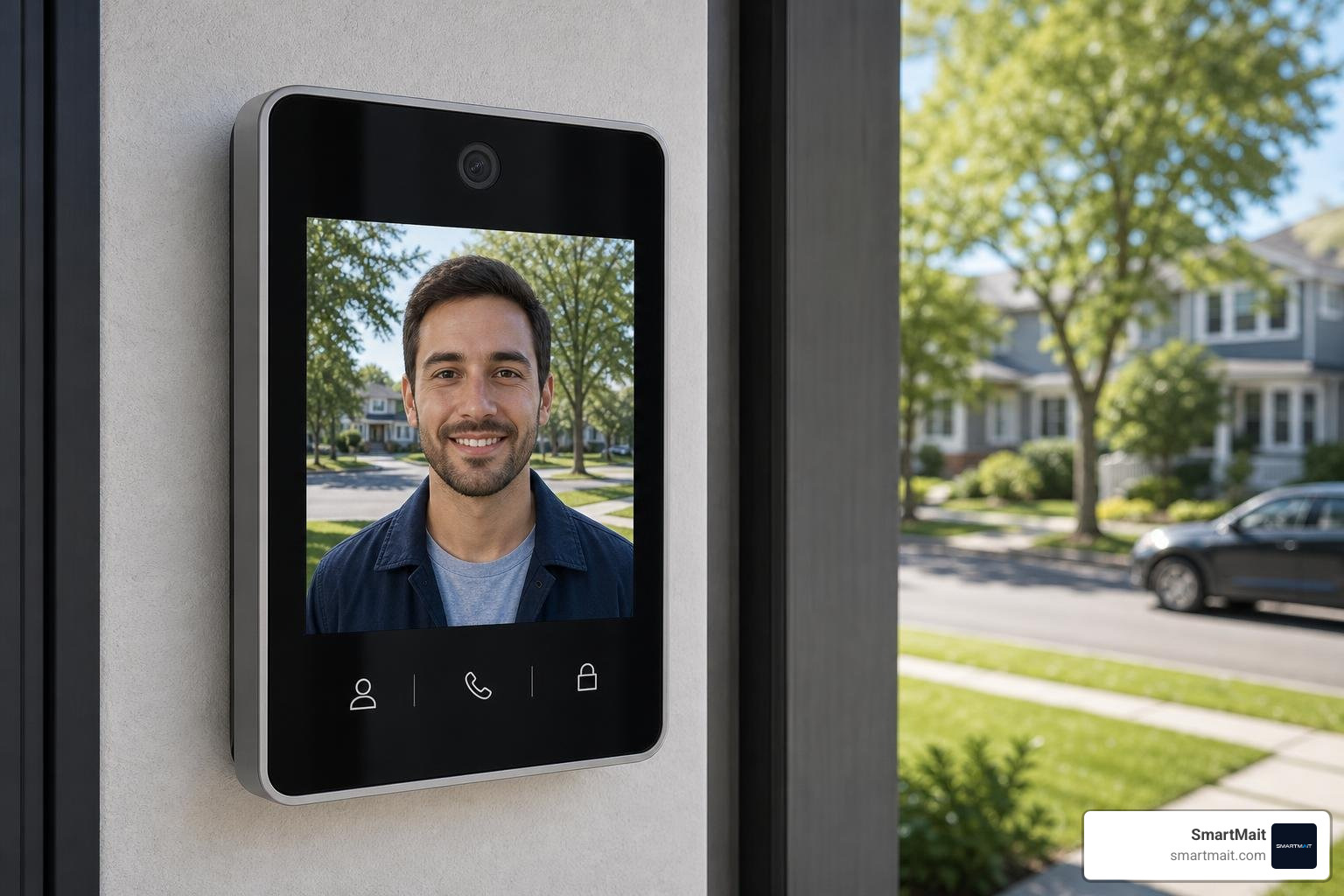
For a modern upgrade, most homeowners and businesses choose to Upgrade Your Entryway With A Residential Video Intercom System. Video intercoms add a high-definition camera to the outdoor panel, giving you a crystal-clear look at who is standing on your porch or at your loading dock.
When you step up to IP-based door entry systems, you enter the realm of true digital networking. These systems run on your local network and the internet, sending high-definition video and audio straight to dedicated indoor monitors, tablets, or your smartphone.
Several premium manufacturers lead this space:
- The IP Door Entry System | Features | BTicino International is a top-tier choice for large residential complexes or multi-family buildings. It guarantees high performance over long distances and delivers exceptional video signal quality, ensuring that a multi-tenant layout functions flawlessly.
- For those who value architectural design as much as security, the Gira System 106: modular design, digitally networked offers a sleek, modular design that can be customized with various modules (keypads, cameras, or fingerprint readers) and finished in beautiful metallic surfaces like brushed stainless steel or matte black.
- If you are managing a low-rise apartment building or a small corporate office, the Elite | CAME ENTROTEC system is a highly reliable, Secured by Design-approved option designed specifically for properties with up to 16 apartments and 2 entrance doors.
Selecting the Best Credentials for Your Property
Once you have chosen your system architecture, you need to decide how your daily users will unlock the door.
- PIN Codes: Simple and cost-effective, but codes can be shared, and physical keypads can wear down over time, revealing the active digits.
- RFID Cards and Fobs: The classic commercial choice. Users tap a plastic card or key fob against the reader. Implementing a Fob Door Entry System The Key To A Productive Office makes managing employee transitions seamless and secure.
- Mobile Credentials: The gold standard for modern convenience. Using Bluetooth or NFC, your smartphone becomes your key. You don’t even have to take your phone out of your pocket; the reader detects your device as you approach.
- Biometrics: Fingerprint scanners and facial recognition systems offer the highest level of security because credentials cannot be lost, stolen, or shared. Modern facial recognition units even use 3D dual-camera technology with “liveness” sensors to prevent people from holding up a photo to fool the system.
Before making a final decision, it is wise to review a comprehensive guide on a Key Entry System What You Need To Know Before You Lock Up to ensure you are selecting a credential type that balances ease of use with the physical security your property deserves.
Planning and Installing Your Access Infrastructure
Designing a door entry system on paper is one thing; pulling cables, mounting hardware, and configuring controllers is another. Proper planning prevents a host of headaches down the road.

When preparing for installation, you must look closely at your physical doors and frames. Are they wood, hollow metal, or glass? A glass door, for example, might require a specialized magnetic lock, whereas a standard commercial metal door is perfect for an electric strike. Understanding these physical parameters is the first step in learning How To Install A Door Access Control System Without Breaking Things.
Key Installation Considerations for Door Entry Systems
There are several critical technical considerations that will dictate the success of your installation:
- Power Requirements and the 20% Rule: Electronic locks draw continuous power (especially magnetic locks). When calculating your power supply requirements, always add a 20% buffer capacity. If your locks and controllers draw a total of 4 Amps, choose a 5-Amp power supply. This prevents overheating, system crashes, and premature hardware failure.
- Power over Ethernet (PoE): Modern IP systems, like the Gira System 106, use Power over Ethernet (PoE) to run both power and network data through a single Cat5e or Cat6 cable. This drastically simplifies wiring, reduces installation labor, and provides a cleaner aesthetic.
- Fail-Safe vs. Fail-Secure: This is a critical life-safety decision.
- Fail-Safe locks (like magnetic locks) require power to stay locked. If the power goes out or a fire alarm is triggered, the lock loses power and unlocks automatically, allowing safe egress.
- Fail-Secure locks (like many electric strikes) require power to unlock. If power is lost, the door remains locked from the outside, keeping the building secure, though mechanical crash bars or handles still allow people to exit from the inside.
- Compliance and Safety: All installations must comply with local building and fire codes. Working with high-quality, ADA-compliant hardware, such as those detailed by Access Control Systems & Door Controls | ADA/TAA Compliant …, ensures your entryways are accessible and legally compliant.
Cost Factors and Budgeting for Your System
When budgeting for door entry systems, it helps to look at the total cost of ownership. The primary cost drivers include:
- Hardware: The cost of the physical outdoor stations, indoor monitors, controllers, and electronic locks. Pre-packaged single-door or multi-door kits are often priced up to 10% below the cost of purchasing individual components separately, making them a cost-effective starting point for light commercial or residential projects.
- Cabling and Infrastructure: Running low-voltage wiring through finished walls in older homes or commercial buildings requires skill and labor.
- Software Licensing: Some enterprise-grade systems require monthly or annual SaaS fees for cloud management.
- Ongoing Maintenance: Like any digital system, door entry hardware requires regular firmware updates, backup battery testing, and physical adjustments.
To avoid overspending on features you don’t need, or underspending on a system that won’t scale, read our detailed breakdown on How To Choose Your Next Door Access Control System to align your budget with your security goals.
Avoiding Common Mistakes and Maximizing Modern Features
Over my years installing these systems across Metro Detroit, I have seen the same mistakes repeated by well-meaning property owners.
The single most common mistake is an inadequate risk assessment. Property owners often buy a basic consumer-grade kit online, only to realize it doesn’t integrate with their existing security system, cannot withstand Michigan’s freezing winters, or lacks the power to control their heavy commercial doors. To get the best results, you should Upgrade Your Office With Better Door Entry Systems For Business using commercial-grade, weatherproof hardware designed for long-term durability.
Another frequent failure is overlooking power supply backups. If your building loses power during a summer storm and you do not have a battery backup system installed, your fail-safe doors will swing wide open, leaving your property completely vulnerable.
Essential Features of a Future-Proof System
If you are investing in a new system in July 2026, you should look for features that ensure your system remains useful and secure for the next decade:
- Cloud-Based Management: Manage your doors, update user permissions, and view live video feeds from a web browser or mobile app, anywhere in the world.
- Real-Time Alerts: Receive instant push notifications on your phone if a door is forced open, held open too long, or if someone attempts to use an invalid credential.
- Lockdown Capabilities: In an emergency, a single tap on your smartphone or a physical panic button should instantly lock every door on the property.
- Automated Audit Trails: Maintain a secure, searchable log of every entry event, which is invaluable for compliance and post-incident investigations.
By pairing your door controller with The Best Door Alarm Sensors To Alert Your Phone Instantly, you can create a multi-layered security ring that keeps you informed of any unusual activity around your perimeter.
Integrating Entry Systems with Broader Security Ecosystems
A door entry system shouldn’t live on an island. It is far more effective when it communicates directly with your video surveillance, fire alarm, and smart automation systems.
Modern security platforms allow for a completely unified approach. For example, AXIS Camera Station Secure Entry | Axis Communications can manage up to 1,000 doors per server, 64 servers in a multi-server system, and up to 50,000 credentials. This software unifies access control and video surveillance into a single, intuitive dashboard.
When you pair this software with hardware like the AXIS A8207-VE Mk II Network Video Door Station | Axis Communications, you get three top-of-the-line security solutions in one: a high-performing 6 MP IP camera, a high-quality two-way audio intercom, and an integrated RFID reader with a keypad. This eliminates the need for multiple cluttered devices around your entrance.
The Power of Unified Video and Access Control
When your cameras and door locks are integrated, your security posture changes from reactive to proactive:
- Visual Cross-Verification: When a user presents a credential, the system can display their pre-recorded database photo side-by-side with the live camera feed, allowing security personnel to verify that the person holding the card is its actual owner.
- Anti-Passback: This feature prevents a user from tapping their card to enter a building and then passing that same card back to a friend outside. The system knows the card is already “inside” and will deny entry to the second user.
- Duress PINs: If an employee is forced to open a door under threat, they can enter a specialized “duress PIN.” This unlocks the door normally so as not to alert the intruder, but silently sends an emergency alarm to monitoring personnel or local police.
- Tailgating Prevention: By linking door sensors with video analytics, the system can detect if two people walked through a door when only one credential was tapped, instantly triggering an alert.
Investing in these integrations allows you to Secure Your Workspace With Modern Door Access Control Solutions that protect your staff, your physical assets, and your sensitive intellectual property.
Frequently Asked Questions about Security Access
What is the difference between fail-safe and fail-secure locks?
The difference comes down to what happens when physical power is lost. A fail-safe lock (such as a magnetic lock) requires electrical power to stay locked. If power is cut (during an outage or when a fire alarm is triggered), the lock automatically releases, ensuring that people can exit the building safely.
A fail-secure lock (such as an electric strike) requires power to unlock. If power is lost, the lock remains physically locked from the outside. This maintains building security during a blackout, while mechanical escape mechanisms on the inside of the door still allow safe egress for anyone inside.
Can door entry systems integrate with smart home automation?
Absolutely. In the premium residential space, we specialize in integrating door entry hardware with whole-home automation platforms. By utilizing the Z-Wave ecosystem, we can connect your electronic door locks, video intercoms, smart lighting, and security sensors into a single, unified system.
When a visitor rings your video door station, your interior lights can automatically adjust, your TV can pause, and a live video feed can pop up on your wall-mounted touchscreens or your smartphone. This is not a basic, consumer-grade setup; it is architect-grade, whole-home intelligence.
Why are IP-based entry systems preferred over traditional analog systems?
IP-based systems offer several major advantages:
- Superior Video Quality: They support high-definition video (up to 1080p or higher), making it easy to identify visitors.
- Remote Management: You can answer calls, talk to visitors, and unlock doors from anywhere in the world using a smartphone app.
- Simplified Cabling: By utilizing Power over Ethernet (PoE), a single network cable provides both power and high-speed data.
- Scalability: Adding a new door or a new user to an IP system is a matter of software configuration, rather than running extensive new analog trunk lines.
Conclusion
Your entryway is the literal and figurative threshold of your property. Relying on outdated locks and keys in July 2026 is a risk you don’t need to take. Whether you are looking to secure a luxury estate in Bloomfield Hills, a corporate office in Troy, or a multi-family building in Rochester Hills, a modern door entry system provides the control, visibility, and peace of mind you need.
At SmartMait, we don’t believe in one-and-done transactions. We are a full-ecosystem integrator, meaning we handle everything—from the low-voltage cabling and physical lock installation to Z-Wave smart home integration and structured enterprise WiFi.
What truly sets us apart is our SmartService concierge maintenance program. While other integrators install a system and disappear, we stay. Our ongoing relationship model ensures your hardware is regularly tested, your software is updated, and your property remains secure year after year.
Ready to elevate your property’s security with a professional, custom-designed system? Get a professional consultation for your commercial property or home today, and let us build your first line of defense.