How Much Does a Home Security System Really Cost in 2026?
Understanding the Home Security System Price Structure
? Here’s the Short Answer
Understanding the home security system price before you sign anything is the smartest move you can make. Costs vary more than most people expect – and the difference between a basic setup and a system that actually protects a home like yours can be significant.
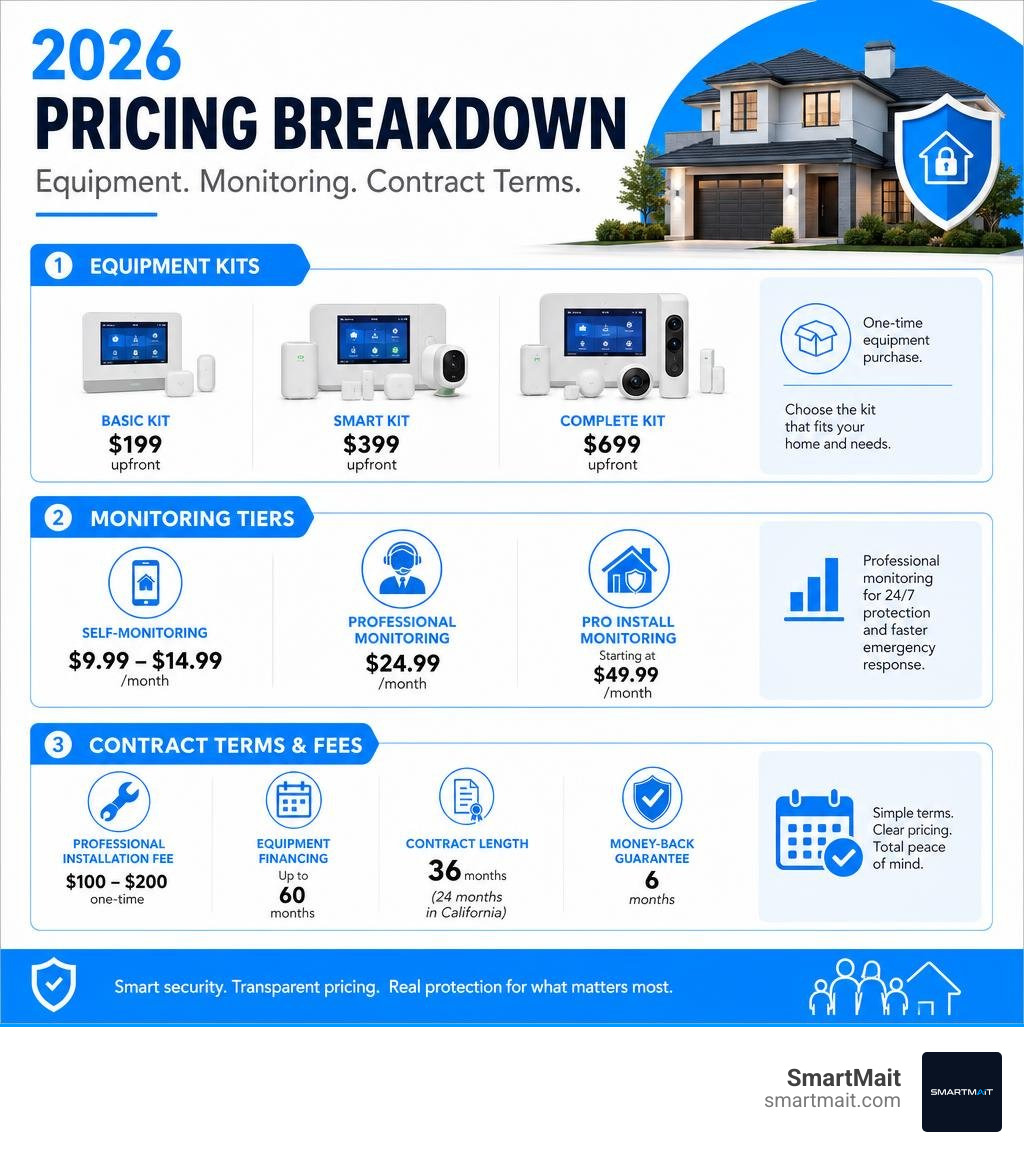
Here’s a quick breakdown of what professionally monitored security systems typically cost in 2026:
| Cost Category | Price Range |
|---|---|
| DIY equipment kits | $199 – $699 upfront |
| DIY self-monitoring | $9.99 – $14.99/month |
| DIY professional monitoring | Around $24.99/month |
| Professionally installed monitoring | Starting around $49.99/month |
| Professional installation fee | $100 – $200 one-time |
| Equipment financing | Up to 60 months |
| Contract length for many national providers | Often 36 months, with shorter terms in some states |
| Money-back guarantee | Often up to 6 months, depending on provider terms |
Most national alarm companies split their offerings into two broad categories: DIY security systems with lower upfront costs and flexible terms, and professionally installed systems with higher monthly monitoring, more complete setup, and longer service agreements. The right choice depends on your home, your lifestyle, and how seriously you take what’s behind the monitoring.
For a luxury home in Oakland County – where the property value, the contents, and the family inside are all worth protecting properly – the $9.99/month self-monitoring option isn’t really the conversation. The real question is what professional protection actually costs, and whether the system behind it is built to last.
That’s exactly what this guide breaks down.
I’m Dominic Hesano, founder of SmartMait and a low voltage and smart home integration specialist serving Southeast Michigan. I’ve evaluated and installed security systems across hundreds of homes in this region, and I understand how home security system pricing can look straightforward on paper but get complicated fast once you factor in equipment quality, integration needs, and long-term reliability. Let’s walk through what you actually need to know before making this decision.
Quick home security pricing terms:
When you begin researching the home security system price, it is easy to get overwhelmed by the sheer variety of numbers thrown your way. Most providers do not operate on a one-size-fits-all pricing model. Instead, your total cost is built from three distinct pillars: upfront equipment costs, professional installation fees, and ongoing monthly monitoring subscriptions.
Generally, national alarm providers break their offerings into two separate ecosystems:
- DIY security systems: Consumer-grade, self-installed smart security systems designed for quick setups, apartments, or smaller homes. These often feature no long-term contracts and lower upfront equipment costs starting around $199 for starter kits.
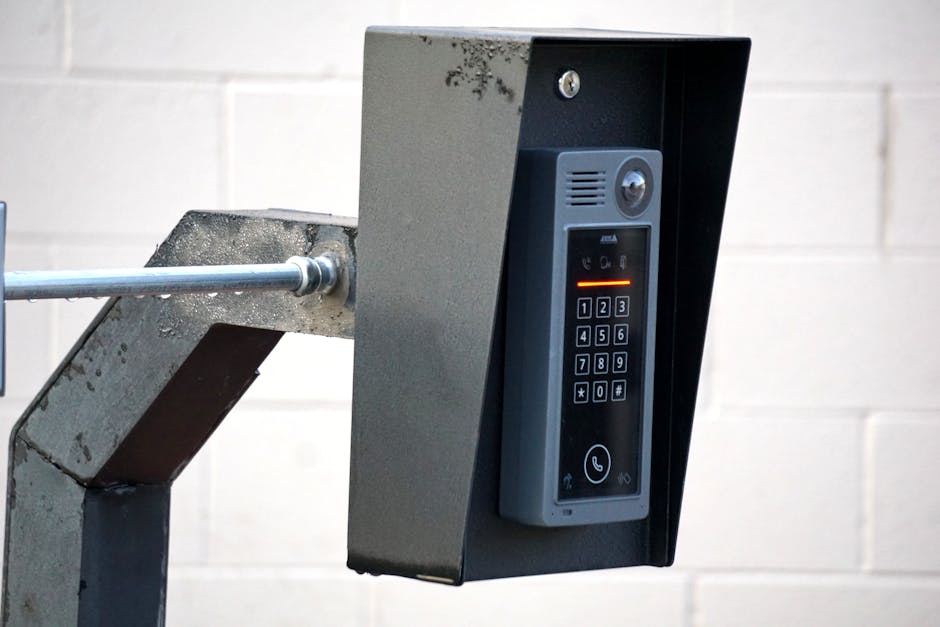
- Professionally installed security systems: Traditional, technician-installed systems that require a certified installer to mount, configure, and activate. These systems usually include more robust hardware, mandatory monitoring plans, and a more structured service model.
To help put these options into perspective, let’s look at how standard national packages compare to custom professional integration services like the ones we design for estates in Bloomfield Hills and Troy:
| Feature | DIY Security Package | Professionally Installed Package | SmartMait Custom Integration |
|---|---|---|---|
| Upfront Equipment | $199 – $699 | $600 – $1,500+ | Project-based premium hardware |
| Installation Cost | $0 DIY | $100 – $200 | Included in project scope |
| Contract Requirement | Often none | Often 36 months | No restrictive long-term lock-ins |
| Primary Protocol | Wi-Fi / proprietary | Proprietary / Wi-Fi | Z-Wave professional standard |
| Ongoing Maintenance | Self-managed | Support-call based | SmartService concierge program |
Understanding this structure is key. If you are looking for a quick promotional deal, a standard package may be enough for a basic suburban home. However, if you own a larger estate with complex smart home, audio/visual, and networking requirements, a pre-packaged security bundle may leave significant gaps in your coverage.
Professional Monitoring Plans and Monthly Fees
The heart of any security system is the monitoring service. Without it, your high-tech sensors are just expensive noisemakers that alert nobody but your immediate neighbors.
With many professionally installed systems, professional monitoring starts around $49.99 per month. For this fee, homeowners typically gain access to 24/7 monitoring centers designed to receive alarm signals, verify events, and contact emergency responders when needed. Redundant monitoring infrastructure matters because if one facility is affected by a regional outage or weather event, alarm signals can be routed elsewhere to prevent downtime.
Modern monitoring also relies on cellular networks and digital verification. Cellular backup helps transmit emergency signals when home internet service fails, while text-based alarm verification tools can help reduce false alarm events and prevent unnecessary dispatches.
For a deeper look at what these monthly fees cover, read our detailed breakdown on monthly security monitoring prices.
Additionally, these monitoring plans do more than watch for intruders. They can integrate environmental safety sensors to protect your home from sudden disasters. To understand how monitored heat, smoke, and freeze sensors safeguard your property, check out monitored fire and life safety systems.
Upfront Equipment Costs and the True Home Security System Price
While the monthly fee is a recurring line item, the upfront equipment cost is where many homeowners experience sticker shock. A standard, mid-sized professionally installed security system typically starts around $600 and can easily exceed $1,500 as you add smart cameras, motion detectors, and specialty environmental sensors.
For those who prefer to spread out these costs, many national providers allow equipment packages to be financed for up to 60 months with 0% APR on qualifying tiers.
- Total safety-style kits: Often retail around $699 upfront or can be financed.
- Video essentials-style kits: Often retail around $339 upfront.
- Compatible smart cameras: Commonly range from $99 to $279 per camera depending on whether you choose indoor, outdoor, or floodlight models.
While financing makes the home security system price more accessible, it can bind your equipment payments to your monitoring contract, creating a long-term financial commitment that may be difficult to break without paying substantial early termination fees.
Professional Installation Fees vs. Custom Integration Value
For many professionally installed alarm systems, a one-time installation fee typically ranges between $100 and $200. During this appointment, a technician visits your home, mounts the sensors, optimizes camera angles, and connects the main panel to your local network.
While national technician networks can be capable, their primary objective is usually to install a standardized security system as quickly as possible. They are not always smart home integrators. They may not optimize your structured Wi-Fi network to ensure your outdoor cameras never drop their signals, and they may not integrate your security system into an architectural lighting scene that flashes your exterior lights during an emergency.
This is where the difference between a mass-market installation and custom integration becomes clear. For high-end properties in Rochester Hills, Farmington Hills, and West Bloomfield, a standard installation often falls short. At SmartMait, we look at security as one piece of a larger, unified ecosystem. We don’t just mount sensors; we design a bulletproof Z-Wave network that seamlessly links your security hardware, smart locks, motor control, and architectural mood lighting into a single, cohesive experience.
Traditional Professional Installation vs. Custom Smart Home Integration: Cost and Feature Comparison
For many homeowners, the choice comes down to convenience versus absolute reliability. Mass-market security systems from national providers such as ADT, Vivint, SimpliSafe, and Ring are built on proprietary wireless protocols, consumer Wi-Fi, or simplified DIY hardware. While this can keep the initial home security system price lower, it may introduce tradeoffs around reliability, customization, long-term service flexibility, and whole-home integration.
Furthermore, traditional security packages can be rigid. They may lock you into specific hardware ecosystems and multi-year monitoring agreements. If you decide to cancel your service early, you may be responsible for a significant portion of the remaining contract balance.
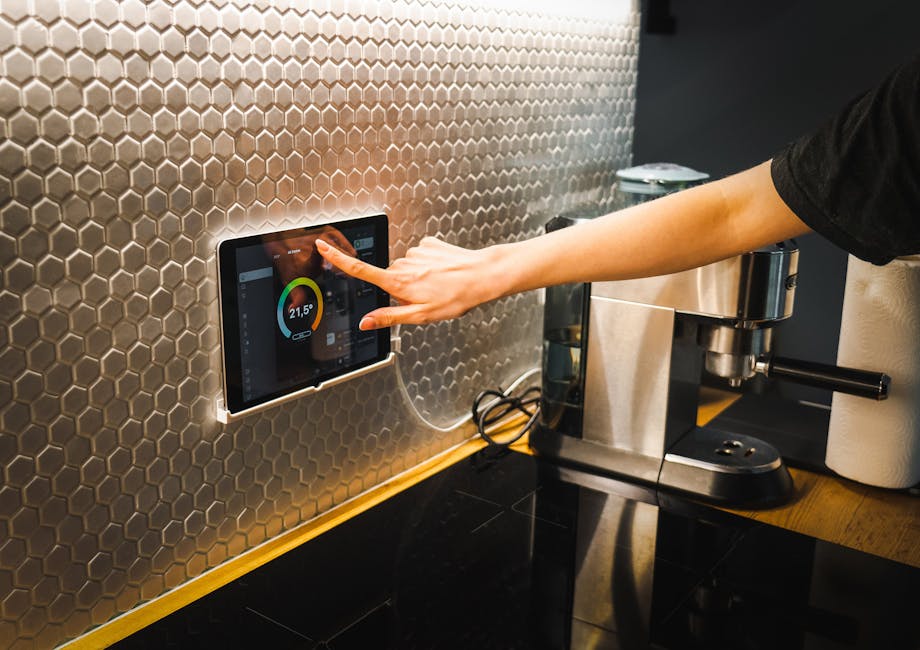
Custom smart home integration offers a completely different class of service. By utilizing the Z-Wave ecosystem, we build a dedicated, local mesh network specifically for your home’s smart communications. Z-Wave operates on an entirely different radio frequency than your Wi-Fi, meaning your security sensors, smart locks, and lighting controls will never compete with your family’s video streaming or remote work traffic.
This level of bulletproof reliability is especially critical when designing systems for vulnerable family members. If you are looking to secure a home for aging parents, you can learn more about specialized configurations in our guide: Peace of Mind for Seniors: How Professional Monitoring Works.
How Customization Affects Your Total Home Security System Price
As you customize a security system, the price scales based on the size of your home and the complexity of your security goals. A small home in Royal Oak might only require a front door sensor, a motion detector, and a single doorbell camera. However, an expansive estate in Bloomfield Hills or Franklin requires a much more comprehensive layout:
- Entryway Coverage: Sensors on every single first-floor door and window, plus accessible second-story windows.
- Environmental Protection: Water leak and freeze sensors placed near water heaters, sump pumps, and luxury appliances to prevent catastrophic water damage.
- Advanced Video Verification: Strategically placed outdoor and driveway cameras that feed directly into high-speed local network video recorders (NVRs) for continuous 24/7 local storage, bypassing restrictive cloud subscription limits.
Every added sensor, smart lock, or camera increases your upfront equipment cost. While national packages are often grouped into basic security, smart home, and video tiers, a truly customized system requires a professional assessment to ensure there are no blind spots or communication bottlenecks.
Contract Terms, Early Termination, and Hidden Fees
If you choose a traditional professional installation route, you may be required to sign a mandatory 36-month monitoring contract, with shorter terms in certain states. Some providers also offer a money-back guarantee that covers equipment and monitoring costs if you are unsatisfied and they are unable to resolve your system issues. Certain plans may include theft protection benefits that help reimburse part of an insurance deductible if a burglary occurs while the system is armed.
However, if you need to cancel your contract early for reasons other than relocation, and even relocation can be tricky if your new home is outside the provider’s service area, you may face steep early termination fees. You will typically be required to pay a significant portion of the remaining monthly balance on your contract term.
Additionally, homeowners should watch out for hidden fees such as:
- System Activation Fees: Sometimes charged upfront to initialize your account.
- Service Call Fees: If a sensor malfunctions outside of the initial warranty period, a technician visit can cost upwards of $100 per call.
- Camera Cloud Storage Subscriptions: Storing video history in the cloud often requires an upgraded monthly monitoring tier.
At SmartMait, we believe in a relationship built on service, not restrictive contracts. Our project-based installations are designed to give you complete ownership of your hardware, and our ongoing relationship is maintained through our elite SmartService concierge maintenance program rather than a punitive legal contract.
Smart Home Automation and Z-Wave Integration Value
In 2026, a security system should not exist in a vacuum. True security is achieved when your alarm system, smart lighting, climate control, and access points work together as a single, intelligent ecosystem.
By integrating your security with the professional Z-Wave standard, we can program sophisticated automation events that standard consumer systems simply cannot replicate:
- The “Away” Scene: When you arm your system to “Away” as you leave your Troy estate, your Z-Wave smart thermostat automatically adjusts to an energy-saving profile, your motorized shades lower to protect your hardwood floors from UV damage, and all interior lights turn off while select exterior lights activate.
- Emergency Lighting: If a smoke detector is triggered in the middle of the night, your HVAC system instantly shuts down to prevent smoke from circulating through the house, while your interior pathway lights illuminate at 30% brightness to guide your family safely outside.
- Architect-Grade Security Deterrence: If an outdoor motion sensor detects an intruder on your perimeter late at night, your landscape lighting can instantly transition from a warm, ambient glow to a brilliant, high-intensity floodlight scene, discouraging the intruder before they ever reach a door or window.
This is not a fragmented consumer-grade setup where you have to jump between five different apps to see who is at the door, adjust the temperature, or turn on a light. This is whole-home intelligence, architect-grade, managed through a single elegant interface.
Frequently Asked Questions About Security System Pricing
Navigating home security pricing can raise a lot of questions. Here are clear answers to some of the most common inquiries homeowners have.
Do professionally installed systems require a long-term contract?
Many premier professionally installed systems require a minimum 36-month monitoring contract, with shorter terms in certain states. If you finance your equipment, your financing agreement may be tied directly to the monitoring term. However, if you opt for a DIY security line, there are often no long-term contracts, and you can pay for professional or self-monitoring on a flexible, month-to-month basis.
What happens to the system during a power outage?
Most modern security systems are built with safety redundancies. The main control panels and bases often include a built-in backup battery that keeps your security sensors operational during local power failures. Furthermore, if your home’s Wi-Fi goes down, many systems utilize an integrated cellular backup signal to transmit alarm events directly to the monitoring centers, ensuring uninterrupted protection.
Can I use a security system without a monthly subscription?
Technically, you can use certain traditional alarm panels as local, unmonitored alarms. In this state, if a window is opened, the siren will sound inside your home, but no signal will be sent to emergency dispatchers, and you may lose access to remote mobile app controls, smart home integrations, and camera live feeds. To understand the limitations and mechanics of running a system this way, read our complete analysis: Cutting the Cord: Using a Security System Without Monitoring.
Conclusion
The true home security system price is more than just a monthly monitoring fee or an upfront equipment package. It is an investment in your home’s safety, your family’s peace of mind, and the daily convenience of your living space. While standard national packages offer a baseline level of protection, they often lack the deep integration, local reliability, and personalized service required for high-end homes in Southeast Michigan.
At SmartMait, we bridge the gap between high-tech security and architect-grade smart home automation. We don’t just install hardware and disappear. Through our exclusive SmartService concierge maintenance program, we build ongoing relationships with our clients in Bloomfield Hills, Troy, Rochester Hills, Farmington Hills, and Birmingham. We continuously monitor your network’s health, optimize your Z-Wave communication, and ensure your security, audio/visual, structured Wi-Fi, and mood lighting systems operate in perfect, uninterrupted harmony.
If you are ready to move past fragmented, consumer-grade security and experience a fully integrated, professionally maintained smart home, we are here to help.
To take the next step toward bulletproof, custom-integrated security, visit the SmartMait Home Page to schedule your custom home consultation.