Every Door Controlled. Every Badge Accounted For.
Two things go wrong with commercial access control, and neither is the software. The first is life safety: a maglock installed without a compliant egress path, found by the fire marshal three days before your certificate of occupancy. The second is administrative: the employee who left in March still has a fob that opens the back door in September. We build around both — code-correct hardware at every opening, and a system your HR team can run.
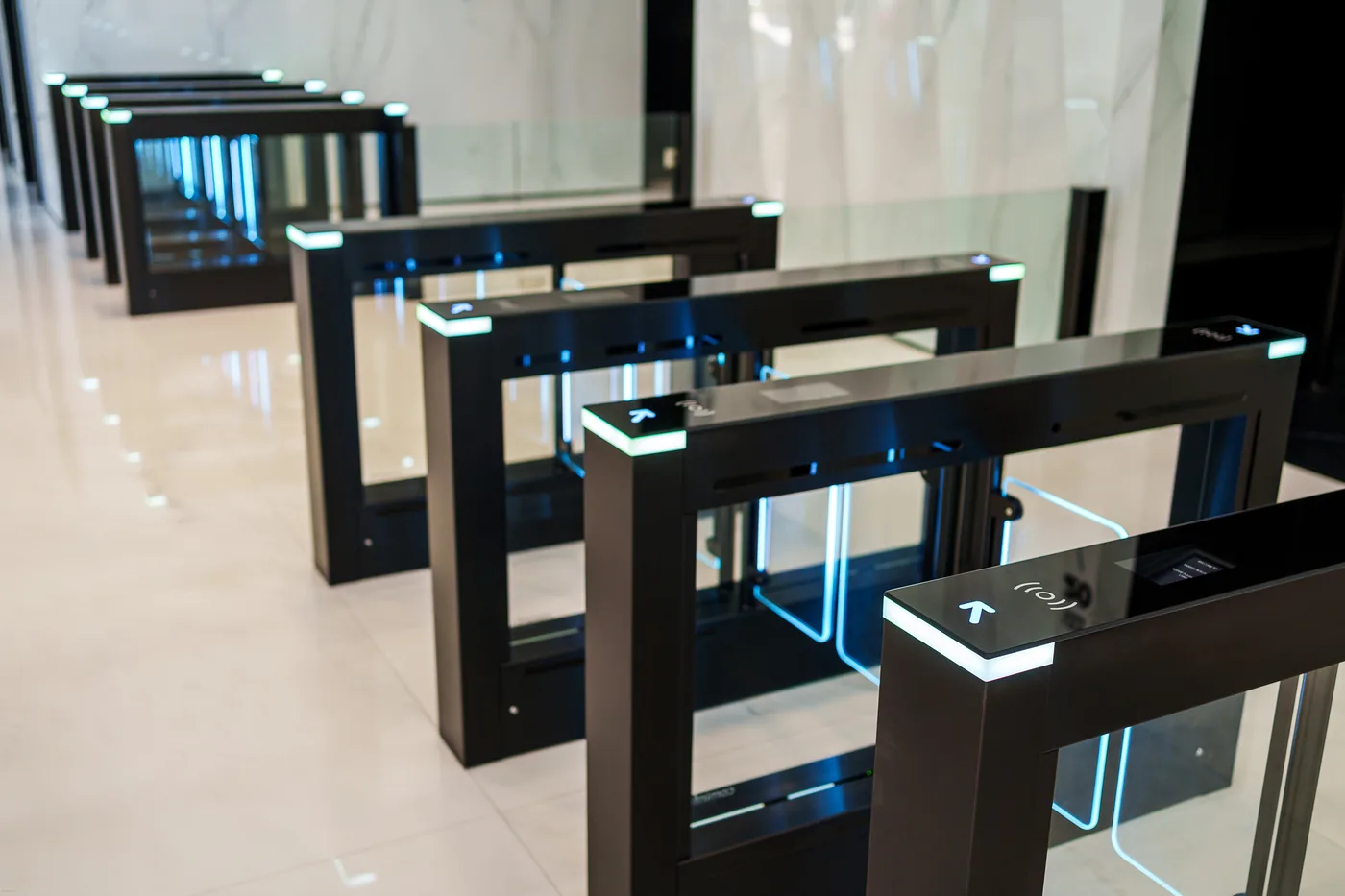
What an Access Control System Actually Is
The Locking Hardware & The Door’s Nervous System
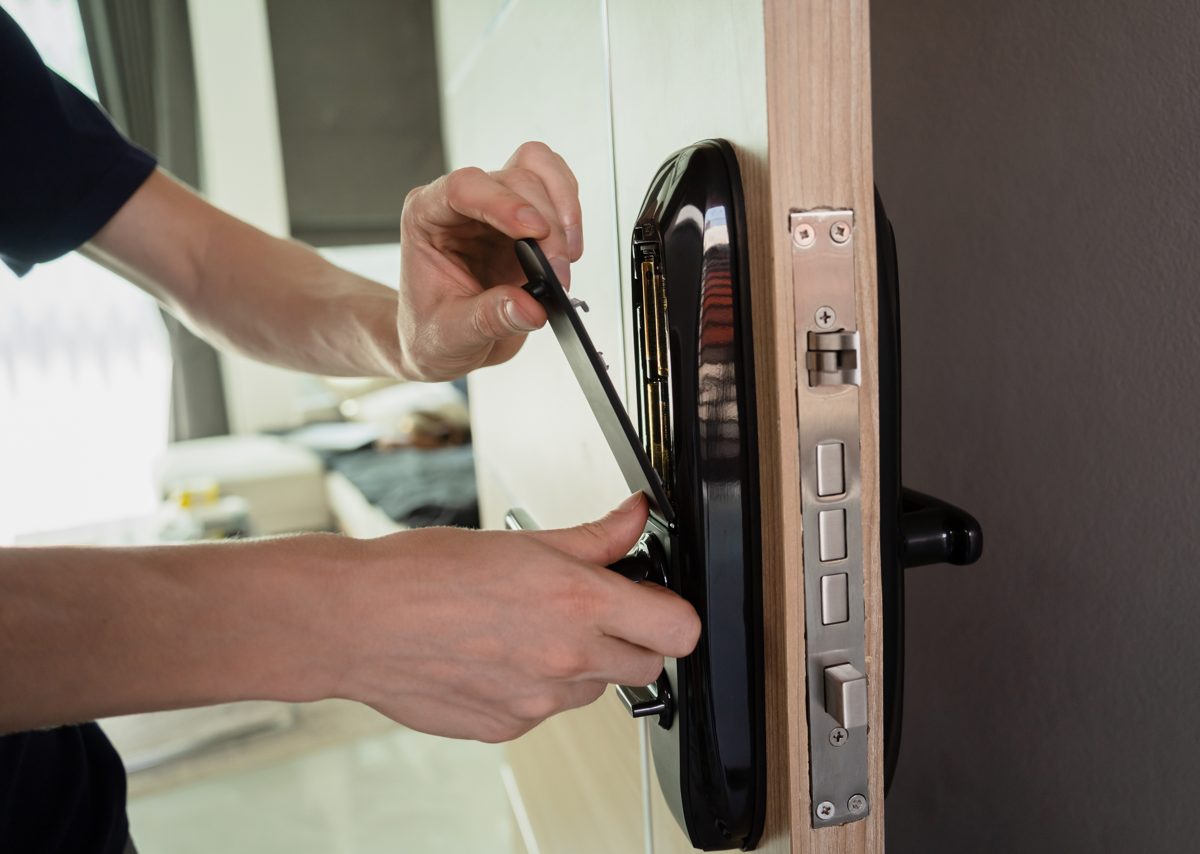
Electric strike, electrified lever, electrified panic device, or magnetic lock — the choice that decides whether your inspection passes. Around it: a door position switch, a request-to-exit device, and the wire transfer that gets power into a moving door. Without a door position switch you do not have access control. You have a door chime.
The Controller, The Platform & The Power
The panel that decides, the software that holds the rules, and a dedicated power supply with a sized battery and a fire alarm relay — that last item is the one deleted to win a bid. Cameras, recording and intrusion detection live on our commercial security and surveillance page. This page owns doors, credentials and locks.

- Fail-Safe Versus Fail-Secure. Where Cheap Installs Get Red-Tagged.
- What else fails inspection
- The REX distinction almost everyone gets wrong
- Credentials — what to actually deploy
- Cloud-managed versus on-premise
- The Coordination Burden. This Is Where Projects Actually Fail.
- Cold-Weather Doors, Hard Winters.
Fail-Safe Versus Fail-Secure. Where Cheap Installs Get Red-Tagged.
Fail-safe means the lock releases when power is removed — a magnetic lock, by definition. Fail-secure means the lock stays locked without power, and the door opens from the inside by mechanically turning the lever.
Here is the part that matters: free egress is a mechanical requirement, not an electrical one. On an electrified lever or a compliant electric strike, the inside lever always retracts the latch, powered or not. Credentials control the outside only. That satisfies egress code without any electronics having to work.
A maglock is different. It holds the door with 600 to 1,200 pounds of force, and the only way out is for something to cut power — a sensor plus a push-to-exit button that drops power independent of the access panel, and a hardwired release on fire alarm. It is doable. It also draws the hardest scrutiny in the building. If a bidder’s first answer to every opening is “we’ll put a mag on it,” get a second opinion.
What else fails inspection
- Two operations to exit. A thumb-turn deadbolt plus a lever is two motions. It fails, every time.
- Field-modifying a fire-rated door. You cannot drill one on site; it needs listed prep, ordered ahead.
Size the power supply before you buy it: a maglock holds at roughly 500 mA, an electric strike pulls 300 to 500 mA energized, an electrified lever 200 to 350 mA. A four-door supply with a 7Ah battery does not cover eight doors, and the fire alarm interface has to drop power to every lock in the egress path.
The REX distinction almost everyone gets wrong
A request-to-exit device does not unlock the door. It shunts the door-forced-open alarm so the system knows the exit was legitimate. A PIR motion REX does not release a lock, and an egress path that depends on a motion sensor seeing you is a design we will not sign. On a fire exit, the answer is panic hardware with an integral request-to-exit switch.
Credentials — what to actually deploy
- 125 kHz proximity and MIFARE Classic. Cloneable and cryptographically broken. Do not deploy new; plan the migration off what you have.
- 13.56 MHz smart credentials — Seos, DESFire EV3, iCLASS SE. The floor for a new install.
- Mobile credentials. The best offboarding story available: no card stock, revoked instantly, and they work through a mitten in January. They carry a per-user annual license and need a charged phone, so deploy mobile with a card fallback.
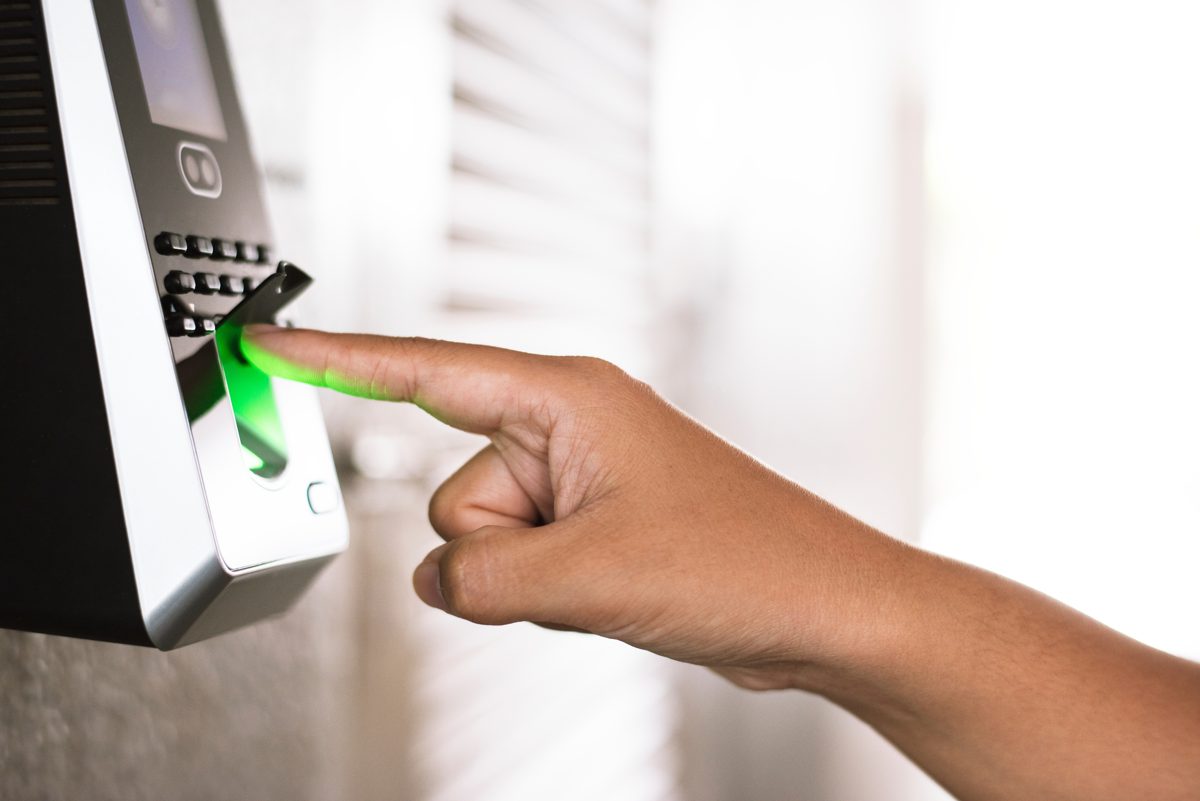
- Biometric. Justified on a server room, pharmacy or cash room. Not on a shop floor, where dry, dirty and gloved hands defeat fingerprint readers and you take the calls.
Cloud-managed versus on-premise
Cloud removes the server, updates itself, and revokes a credential from a phone in a parking lot. On-premise has no recurring fee and puts the database in your building along with the patching and backups. Under about thirty doors with no IT staff, cloud wins. Above sixty doors, on-premise is worth a look.
The Coordination Burden. This Is Where Projects Actually Fail.
Access control is the only low-voltage trade that has to be right inside four other trades’ scopes.
The door hardware supplier furnishes the lock. Whether it arrives electrified, at the right voltage, handing and function is decided on the hardware submittal — months before we are on site.
The hollow metal frame needs an electric hinge or raceway prep, and that prep has to be on the frame order. Missing that window is the most common access control change order in commercial construction — you cannot add a raceway to a frame already grouted in.
The electrician provides line voltage at the panel locations, the GC owns sequence — frames before drywall, rough-in before the ceiling closes — and the fire alarm contractor provides the relay, whose test sits on the critical path to your CO.
Every opening goes on a numbered door schedule in the submittal set: hardware function, lock type, power draw, wire type and count, furnish-and-install responsibility. That one document prevents change orders.
Cold-Weather Doors, Hard Winters.
Gloves. The most underrated design factor in a cold climate. Keypads and fingerprint readers fail from November through March because nobody removes a glove in a 12-degree wind. A card on a lanyard and a phone in a pocket work through a mitten.
Frost heave and swollen sweeps. A door that latches perfectly in July does not in January, when the slab moves and the weatherstripping swells. The result is a winter of door-held-open alarms everyone learns to ignore, which defeats the audit trail. Fix the door before blaming the access system. We check strike alignment and closer tension after the first hard freeze.
1970s and 80s office corridor stock. Hollow metal frames with no raceway and no pathway above a hard-lid ceiling. Retrofitting a strike into an unprepped frame means a frame kit, surface raceway or a new door.
Multi-tenant buildings. The landlord’s system controls the perimeter and elevator; your suite doors are yours. Negotiate badge integration at lease signing — afterward the base building integrator sets the terms.
How The Work Actually Goes.
Door survey
Free and on site. We number every opening and identify which frames have prep. The unprepped ones are your budget risk.
Door schedule and submittal set
Lock function, hardware, power draw, wire type and count, furnish-and-install responsibility, opening by opening.
Hardware coordination meeting
With the hardware supplier, the GC and the electrician, before the frame order goes out. The highest-leverage hour on the job.
Rough-in, device install and wire transfer
Scheduled early because it gates your CO.
Training and handoff
As-builts, final door schedule, credential administration training, a lockdown drill, and administrator credentials in your name.
Onboarding, Offboarding and the Audit Trail.
Access control earns its cost in administration, not hardware.
Assign groups, never individuals — “Warehouse Staff,” not forty one-off permission sets.
Sync with your directory — Active Directory, Entra, Okta, or a scheduled HR import. Terminate in HR and the badge dies at the next sync. That is what prevents the March-departure-September-fob problem, and most systems are never configured to do it.
Expire contractor and visitor credentials automatically, and run the reports that matter: door forced, door held, after-hours access by person, and credentials unused in ninety days — the last one finds ghost badges.
Lockdown. One button, scoped by door group, tested quarterly. Egress is never affected.
New Build Versus Occupied Space
- New construction and vanilla box. The win is sequencing: frame prep on the hardware order, conduit and backboxes at rough-in, panel locations coordinated before walls close, fire alarm interface designed in rather than bolted on.
- Tenant improvement and occupied space. Doors get cut over one at a time, after hours, so nobody arrives to a building they cannot enter. Unprepped frames get surface raceway or a frame kit, scoped up front rather than found as a change order.
FREQUENTLY ASKED QUESTIONS
Questions We Get Before Every Access Control Project
Sometimes, with a compliant release arrangement — a sensor and push-to-exit button that drop power independent of the access panel, plus release on fire alarm. But maglocks draw the hardest scrutiny of any locking device. An electrified lever or electric strike gives you mechanical free egress with no power at all, and moves through review far more easily.
Under about thirty doors with no dedicated IT staff, cloud wins — no server, automatic updates, and you can revoke a credential from your phone. Above sixty doors with an IT department, on-premise is worth a look: no per-door subscription, but you own the patching and backups.
Us, at one number, and the technician who answers has your door schedule in front of them. On our 24/7/365 service plans, after-hours calls are triaged that night — most controller, credential and platform issues resolve remotely. Anything needing hands on a door is scheduled first thing. Service-plan clients get priority response and proactive monitoring on controllers and power supplies. See our service plans.
That coordination is most of the job. We produce a numbered door schedule covering hardware function, power draw, wire type and furnish-and-install responsibility, sit in the coordination meeting before frames are ordered, answer RFIs in writing, and schedule the fire alarm interface test with the AHJ. Our own crews do the work.
One Door Schedule. One Crew. One Number.
Access control goes wrong in two places: the frame order you missed by eight weeks, and the badge you could not turn off. One accountable team, documenting every opening before hardware is ordered, solves both.
Book a free on-site consultation. We will walk every door and hand you a per-door number.