Climate Control Built For Homes With Real Winters
In a home with real winters, cooling is not the problem. Humidity is, and so is the February morning when a pipe in an exterior wall gives out while nobody is home.
Most houses run a thermostat app that talks to nobody, a humidifier nobody has adjusted since it was installed, and no sensor that would tell you the mechanical room hit 38 degrees at 4 a.m. Meanwhile the second floor is four degrees off the first, the hardwood is opening at the seams by January, and the only alert you get is the water damage.
Climate control is the layer that ties all of that together and tells you when something is going wrong.

What Smart Climate Control Actually Covers
Where Our Scope Starts and Stops.
We are not your HVAC contractor. We do not install furnaces, replace compressors, set line sets or size equipment. We do the control and integration layer, and we coordinate with the mechanical contractor who owns the iron. In practice: they install the humidifier, the dampers, the zone panel and the dehumidifier. We install and integrate the thermostats, the sensors and the logic that runs them, then commission the whole thing together. On new construction we sit in the same coordination meeting they do.
Thermostat Integration
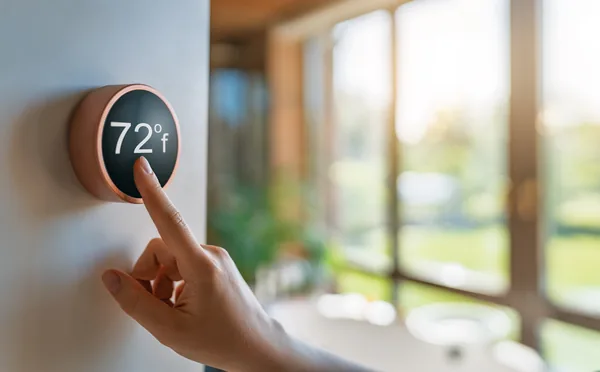
Thermostats that live inside your smart home automation platform rather than in their own app. Setpoints follow scenes and schedules, and the away mode you press at the back door actually reaches the mechanical system.
Freeze Protection, Leak Detection and Water Shutoff
Low-temperature alerts, leak sensors at every appliance, and an automatic shutoff valve that closes the main when it sees flow that does not belong.
Humidity, Both Directions
Whole-house humidifiers in winter and ducted dehumidifiers in summer, controlled together against outdoor conditions instead of a dial set once in 2014.

Remote Monitoring for the House You Leave
Temperature, humidity, water, power and camera check-in on a cottage or a house you leave for the winter, with alerts that reach you and us.
Specialty Environments
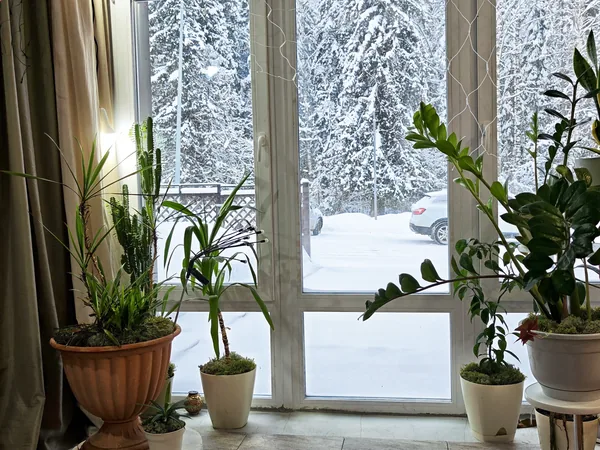
Wine cellars, humidors, instrument rooms, finished basements and heated driveways. All of them have setpoints somebody needs to watch.

Winter Humidity Is Not One Setting. It Is a Sliding Scale.
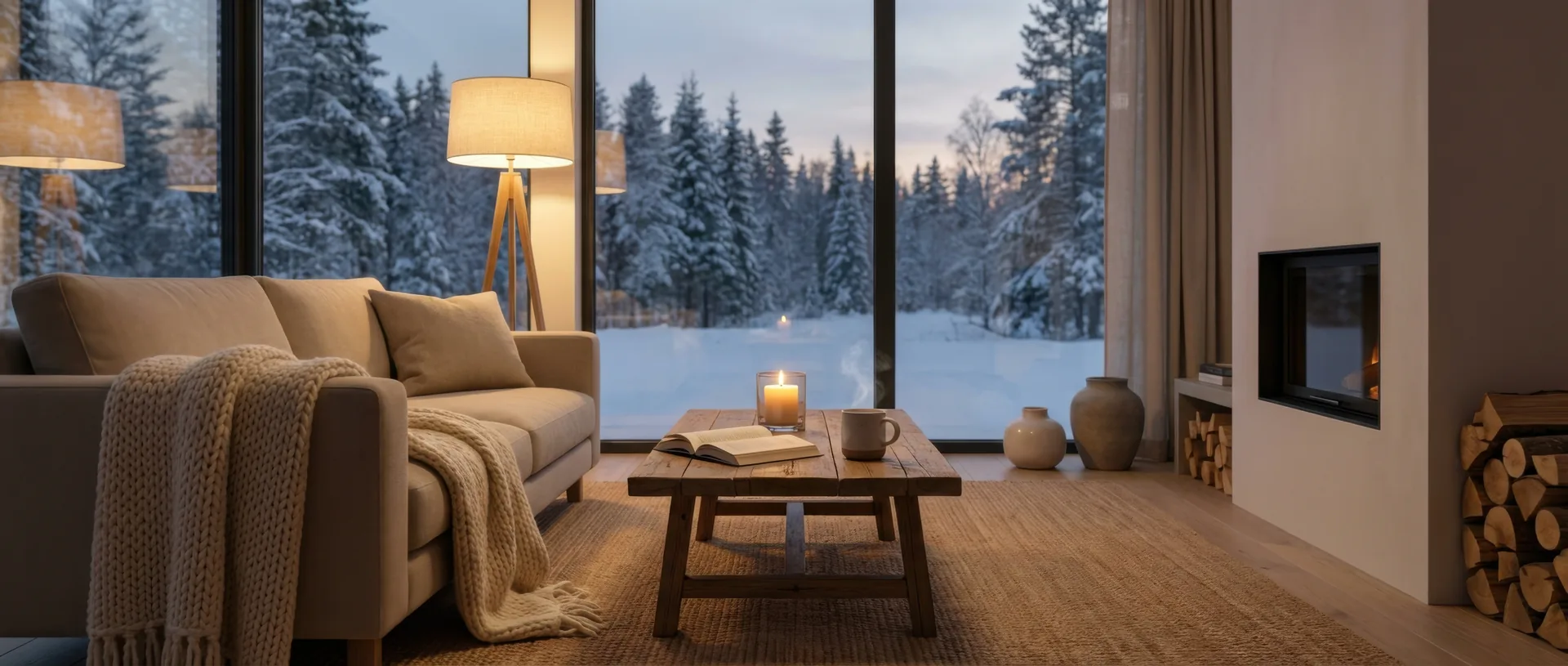
This is the most misunderstood thing about homes with winters. Set your humidistat to 45 percent in November and leave it there, and by the first hard cold snap you have water running down the windows and frost on the sills, which is moisture ending up in your wall cavities.
| Outside temperature | Percent indoors |
|---|---|
| 40°F | 40% – 45% |
| 20°F | 30% |
| 10°F | 30% |
| 0°F | 25% |
| -10°F | 20% or less |
Indoor humidity has to come down as the outdoor temperature falls:
Below 25 percent for weeks is where hardwood shrinks and gaps, panel doors crack, cabinetry joints open, and a piano goes out of tune and stays there. Above the line at the same outdoor temperature, you are condensing water on the coldest surfaces in the house.
No manual humidistat handles this, because it requires somebody to remember. A humidistat tied to an outdoor temperature sensor and driven by your automation system handles it every hour, all winter. It is the highest-value climate automation in a cold climate and almost nobody sells it.
Sizing Humidification Honestly.
A bypass humidifier moves roughly 12 gallons a day, a fan-powered unit about 17, a steam humidifier 20 to 35 or more. A 5,000 square foot house built in 1926 with original windows will not hold 30 percent in January on a bypass unit, no matter how it is programmed. Steam costs more to buy and more to run, and in that house it is the only thing that works.
Summer is the opposite problem. Basements in humid summers sit at 65 to 70 percent relative humidity in August, which is where musty smell and mold begin. A ducted dehumidifier rated 70 to 95 pints per day, held to a 55 percent target, solves it permanently.
Why the Second Floor Is Always Wrong.
Heat rises, the second floor takes more roof gain in summer, and most two-story colonials were built with one system, one thermostat and undersized returns upstairs. A 4 to 8 degree spread between floors is normal in an unzoned two-story house.
Zoning fixes it: dampers on the trunk lines, a zone panel, and a sensor in the rooms you occupy. Setpoint offsets and scheduled fan circulation buy some improvement on their own. What does not work is the retail smart vent, which chokes airflow and raises static pressure on a blower never designed for it.
Freeze Protection Is the Highest-Return Sensor in a Cold Climate.
A half-inch supply line that lets go can put more than 200 gallons an hour into a house, and in cold climates most of those failures happen between December and March.
The prevention stack is not expensive:
- Low-temperature alerts set at 45 to 50 degrees, in the mechanical room, the crawlspace and any bay with plumbing in an exterior wall
- Leak sensors at the water heater, washer, dishwasher, ice maker, sump and boiler, reporting alongside your cameras and alarm monitoring
- An automatic shutoff valve on the main that learns normal usage and closes on an anomaly
- Cellular failover, so the alert still leaves the house when the internet is out
Talking to the Mechanical System.
Conventional 24-volt equipment accepts almost any thermostat, provided there is a common wire, which many older houses do not have. Communicating systems are different: Carrier Infinity, Trane ComfortLink and Lennox iComfort run proprietary buses, and a third-party thermostat on one strips out variable-speed and multi-stage control. We tell you which case you are in before you buy anything.
What Winter Actually Does To A House
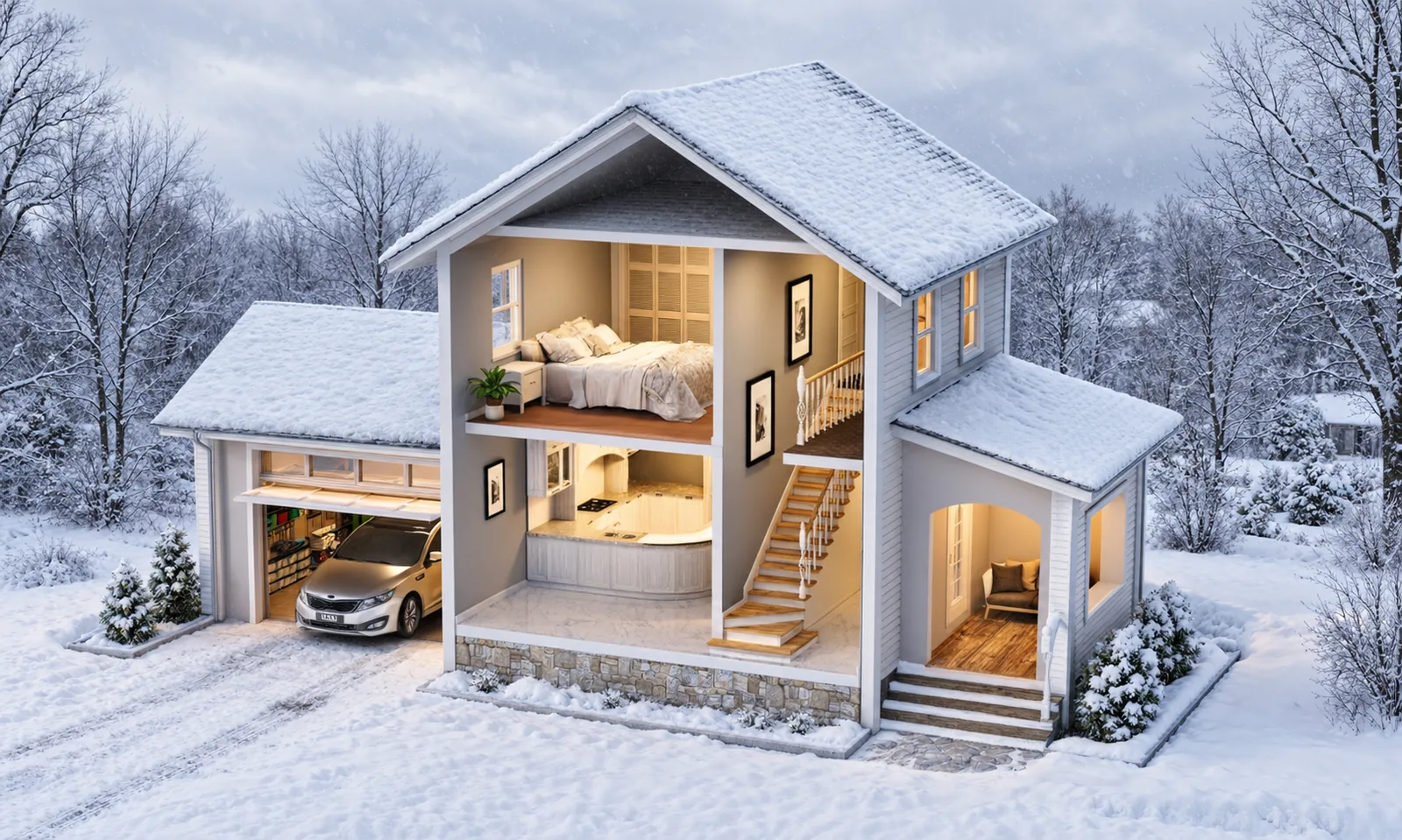
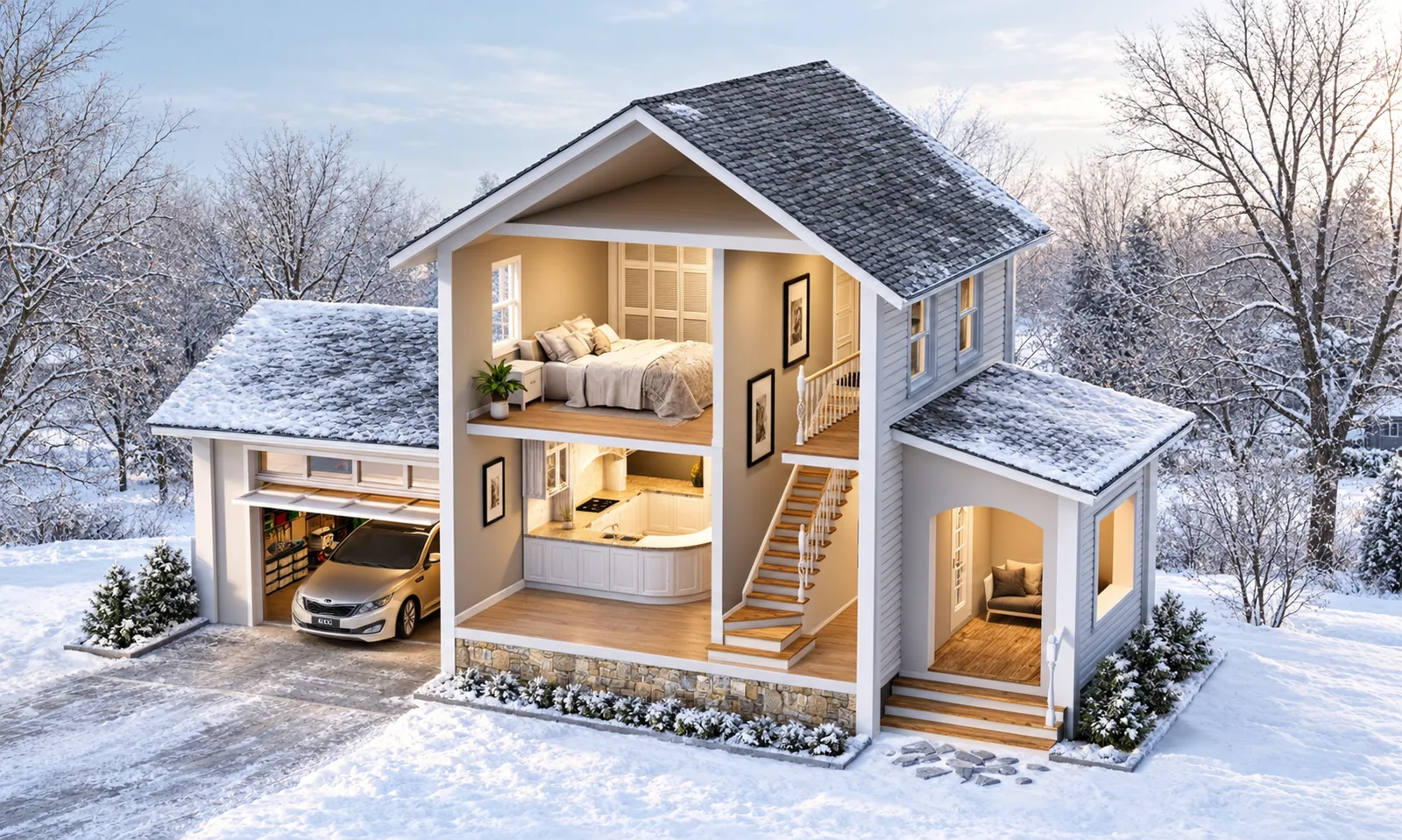
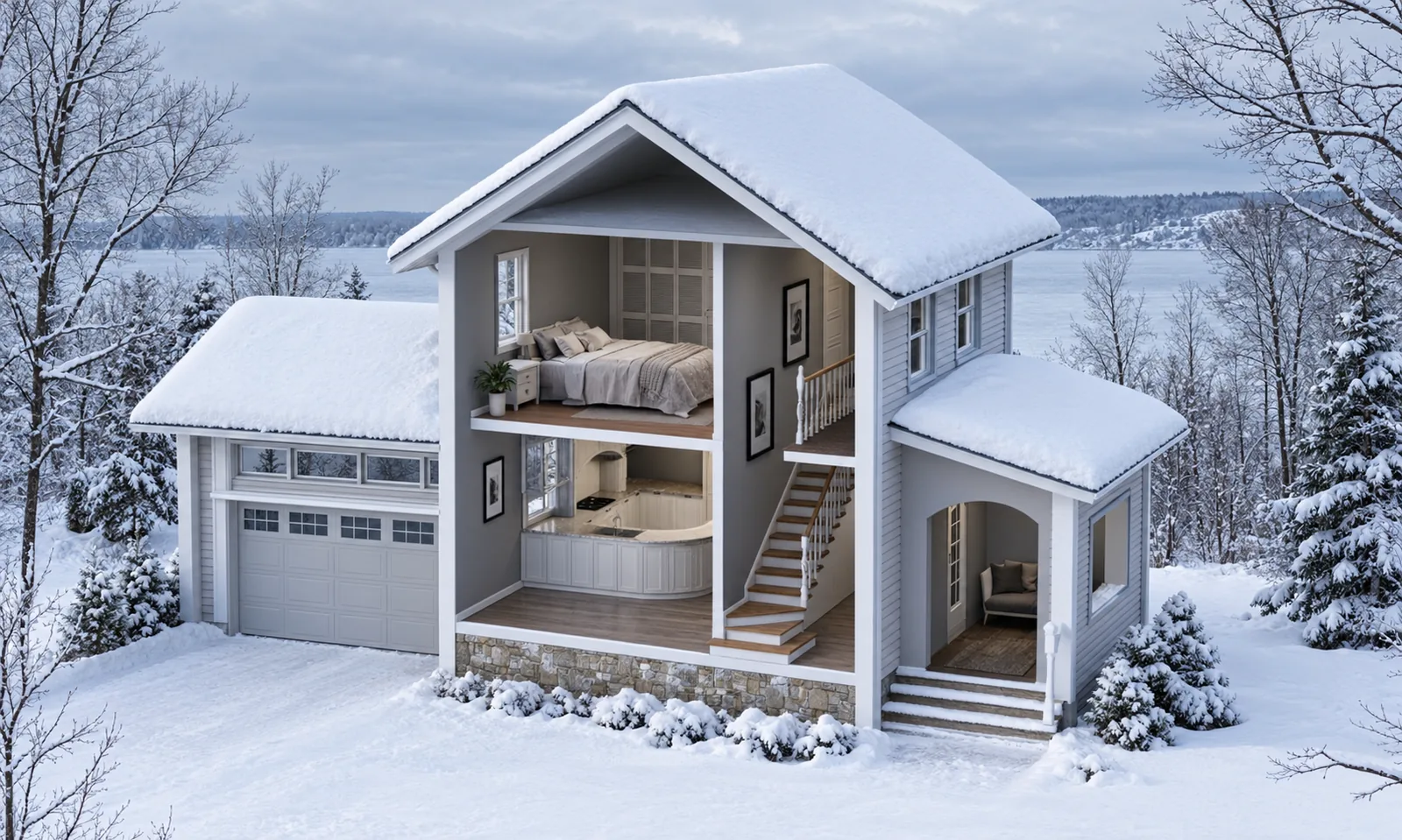
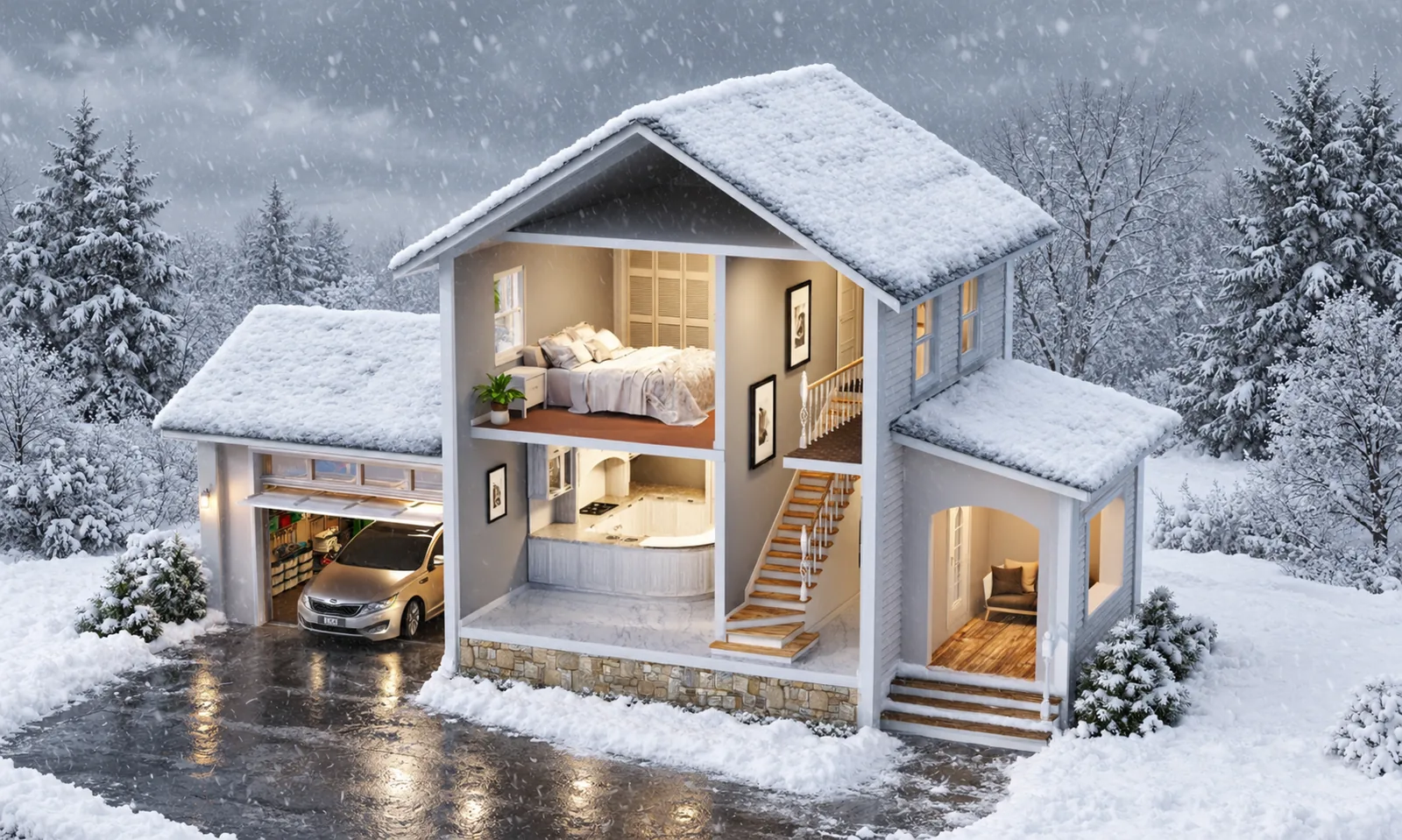
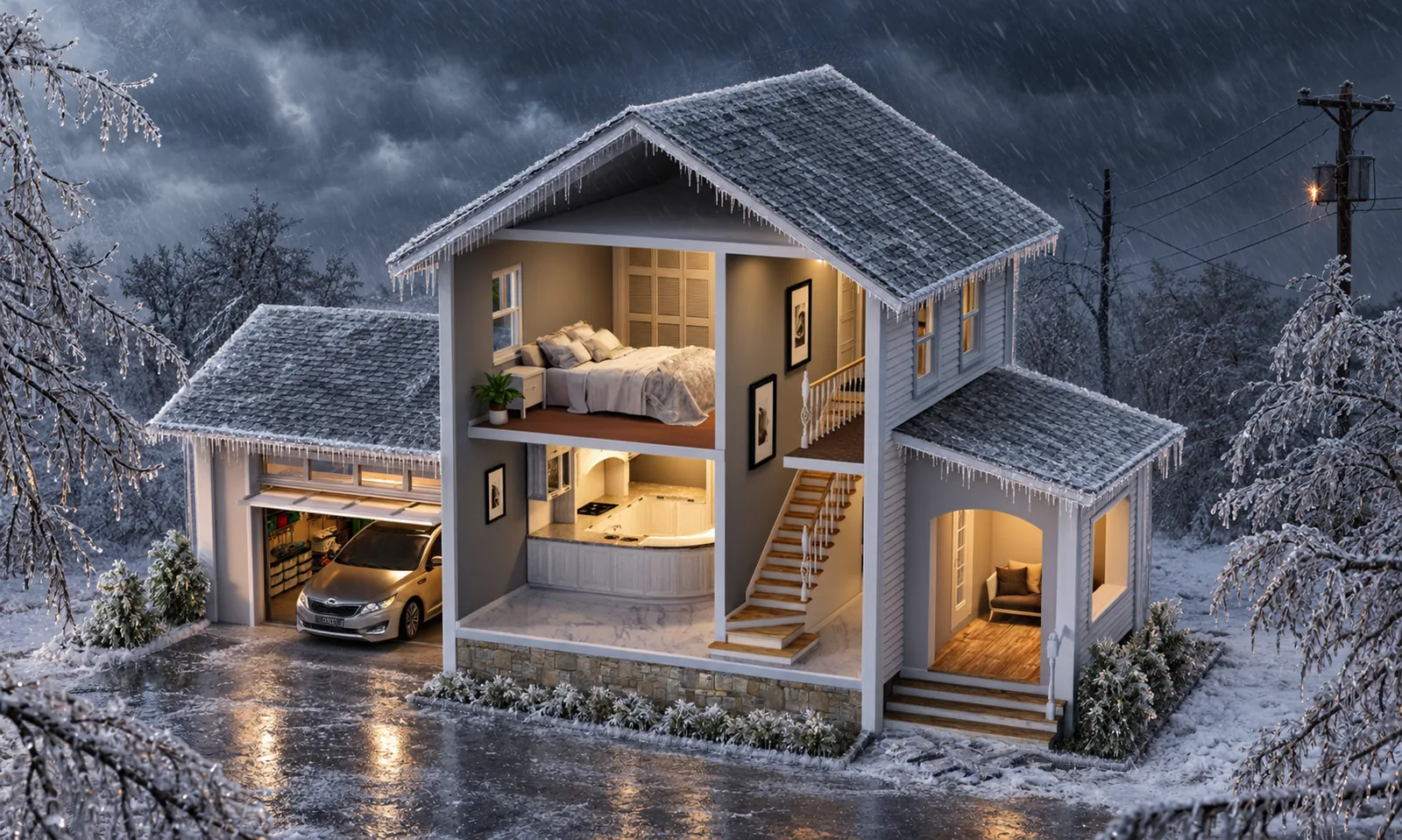
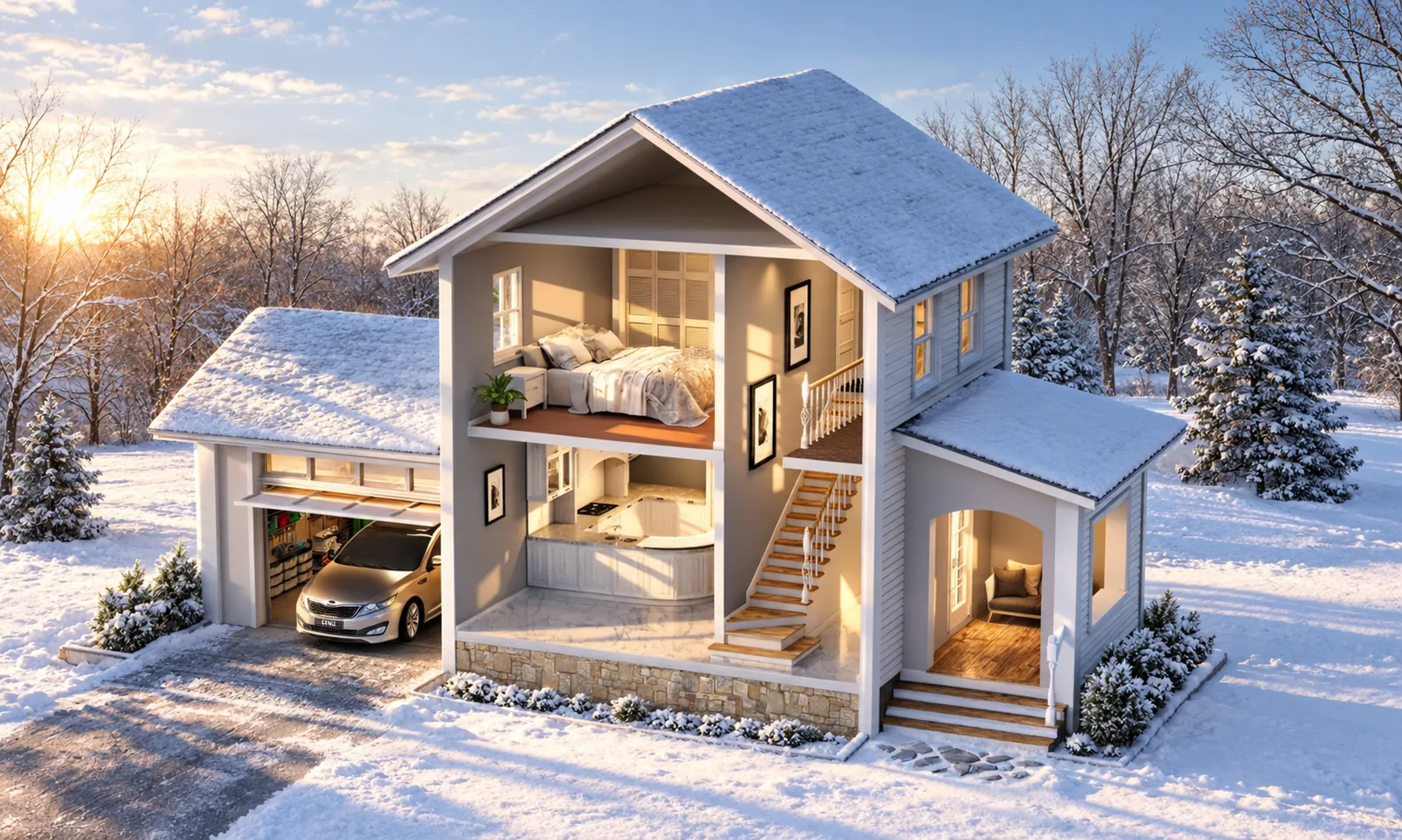
A long heating season
Often October through April, with shoulder seasons that swing hard enough to break a fixed schedule twice a year.
Dry air on hardwood and millwork
Second homes and cottages
Snowmelt and heated drives
Ice, storms and power blips
Low winter sun
How The Work Actually Goes.
Consultation
Free, on site. We look at the mechanicals, the thermostat locations, the window glass, the plumbing runs in exterior walls, and where the house is actually uncomfortable.
Design and coordination
Sensor schedule, thermostat placement, control logic, and a written division of scope between us and your HVAC contractor so nothing lands in the gap between trades.
Rough-in
Thermostat and sensor wiring pulled during framing, or fished around finished plaster on a retrofit. Low-voltage runs home run to the mechanical room and labeled.
Trim and integration
Devices mounted level and flush, valve and sensors installed, everything joined to the platform.
Commissioning
We run the system through winter and summer logic on purpose, verify humidity response against outdoor temperature, trip a leak sensor to confirm the valve closes, and test every alert path.
Training and support
You learn what each alert means and what to do about it. Remote support is available around the clock on our 24/7/365 service plans, with after-hours issues triaged that night. Most issues resolve remotely. See our service plans.
New Construction vs. Retrofit
New construction is where climate control gets cheap. Thermostat and sensor wire goes in during framing, zoning is designed into the duct layout instead of added later, and the shutoff valve goes in while the main is still exposed. We coordinate with the mechanical contractor at rough-in so dampers, panel and sensors are located before the ceiling closes.
Retrofit is about what is reachable. Many older houses lack a common wire at the thermostat, solved with an adapter or a new run. Zoning a finished colonial means opening ceilings where the trunk lines are accessible, and we walk that with you before anything is committed. Sensors, leak detection and shutoff valves retrofit into almost any house in a day.
FREQUENTLY ASKED QUESTIONS
Questions Homeowners Actually Ask
It changes with the outdoor temperature. Roughly 40 to 45 percent when it is 40 degrees outside, 35 percent at 20 degrees, 30 percent at 10, and 25 percent or lower at zero. Hold a single high setting through a cold snap and you will condense water on your windows and inside your wall cavities.
No. We are the control and integration layer, not the mechanical contractor. Your HVAC company supplies and installs the equipment, dampers, humidifier and dehumidifier. We install and integrate the thermostats, sensors, valves and logic, then commission the system with them so it behaves as one. We are happy to coordinate directly with whoever you use.
Not always. Carrier Infinity, Trane ComfortLink and Lennox iComfort use proprietary communication, and replacing the manufacturer thermostat with a third-party unit gives up variable-speed and multi-stage control. In those homes we integrate through the manufacturer gateway or control the native thermostat. We check what you have before anything is ordered.
The system tells us. Monitored climate systems raise an alert when a sensor stops checking in, which is how a dead battery gets replaced before the freeze it was supposed to catch. On our 24/7/365 service plans, after-hours issues are triaged that night. Most issues resolve remotely, and hardware swaps are scheduled first thing the next morning.
Need help? Visit our Service and Support page to explore our residential support plans.
It is the best money in this category. A house sitting empty from November to April with no low-temp alert and no automatic shutoff is one furnace lockout away from a five-figure repair. The monitoring package costs a fraction of one burst-pipe claim, and it works whether the house is an hour away or four.
Comfort You Stop
Thinking About.
Alerts You Never Ignore.
Bring us the cold bedroom, the gapping floors, the cottage nobody checks in January. We will walk the house, coordinate with your HVAC contractor, and quote it as a clear package with no design fee.