Smart Home Automation. Built As One System.
From lighting and audio to climate, security, and entertainment. We install whole-home systems that work the way you live, hide where they should, and surface only when you need them.
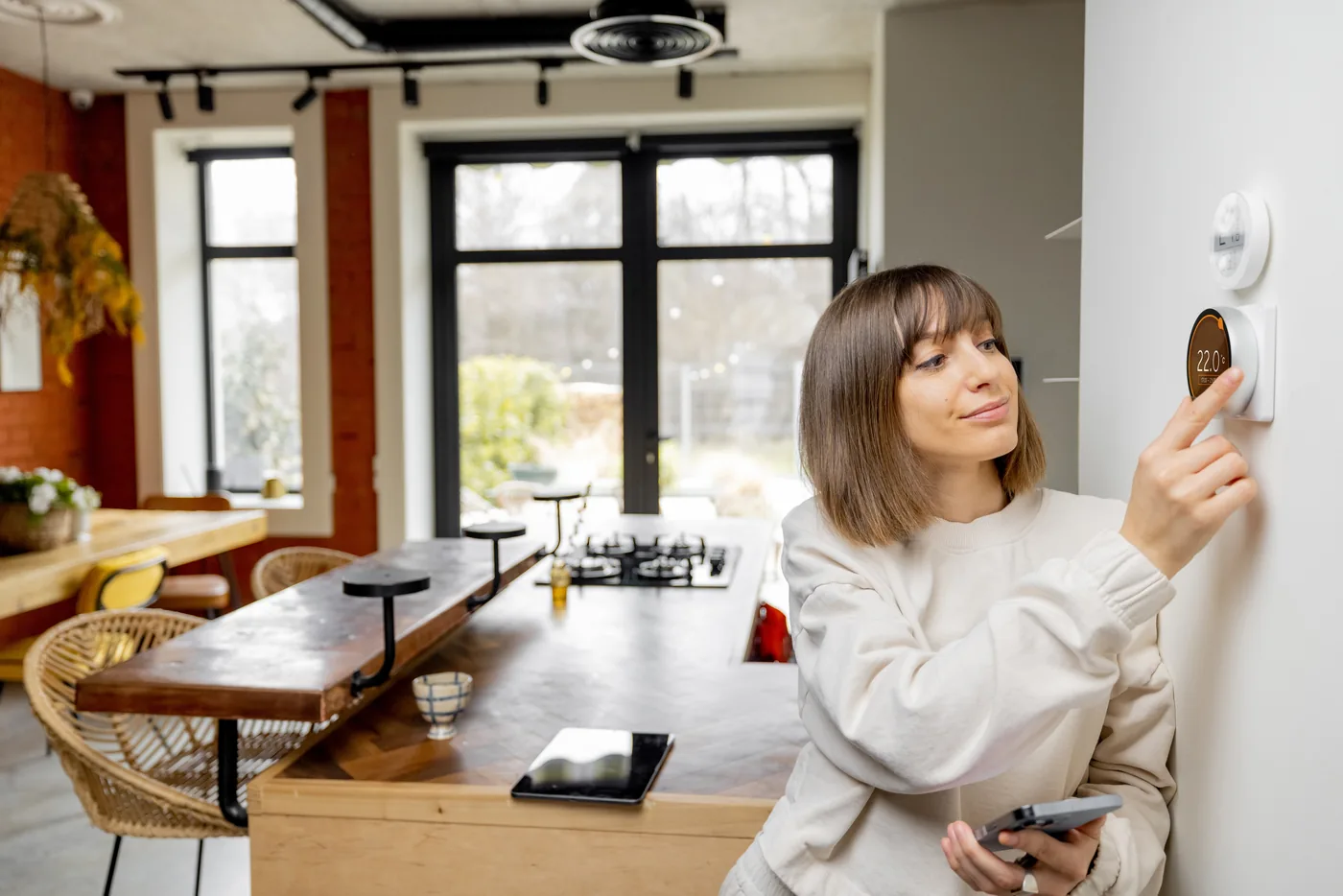
Smart Home Automation. Built As One System.
Most smart homes get bought one device at a time. A video doorbell in the spring. Smart bulbs the next fall. A thermostat the furnace tech left behind. Every piece works. None of them work together.
So you end up with nine apps, two voice assistants that disagree, and a family that went back to the wall switch.
Automation is not a pile of smart devices. It is a control layer that puts lighting, shades, audio, climate, cameras and locks under one system, one interface, and one company that answers the phone.
What Automation Actually Is
A smart device talks to its manufacturer’s cloud. An automation system is a processor in your rack that talks to all of those products locally, holds the logic, and keeps running when your internet does not.

The Processor Is the System.
Control4 EA and CORE controllers. Josh.ai. Crestron processors. The box holds every driver and runs the logic on your own network. When the ISP drops in a February ice storm, your keypads, scenes and shades still work. Cloud-dependent devices go stupid until the internet returns.

Scenes and Schedules, Not Switches.
Nobody wants to adjust twelve things. They want the room to be right. Good Night takes the first floor to off, arms the perimeter, locks the doors and sets the thermostats back four degrees. One press. That is the feature people still use two years later.
Fixed timers fail twice a year and everybody blames the system, so we run astronomic scheduling instead. Path lighting that tracks sunset is right in December and right in June.
RESIDENTIAL
One App, And Everything Around It.
The app is the least important interface in a good system. Engraved keypads on the wall. A touchscreen at the back door. Voice where it helps. A system that needs a smartphone to turn on a light has failed the guest test and the grandparent test.
Lighting control
Load-side dimming and engraved keypads replacing four-gang switch banks. It changes how a house feels more than anything else here. See lighting control and keypad design.
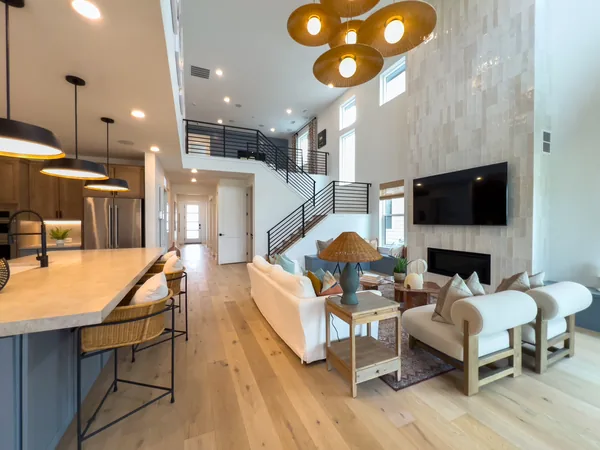
Audio and video
Distributed audio through the house and out to the patio, video routed to every display from a shared rack. Everything outside the theater room is on the whole-home audio and video page.
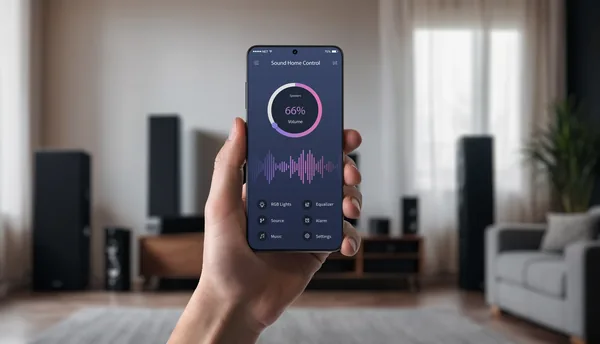
Security and surveillance
Cameras, recorder, retention, doorbells, intrusion, glass break, water and freeze sensors. See security and surveillance.

WiFi and networking
The foundation everything above rides on. Get it wrong and the automation takes the blame. See home WiFi and network design.

RESIDENTIAL SERVICES
The Subsystems, And Where Each One Lives.
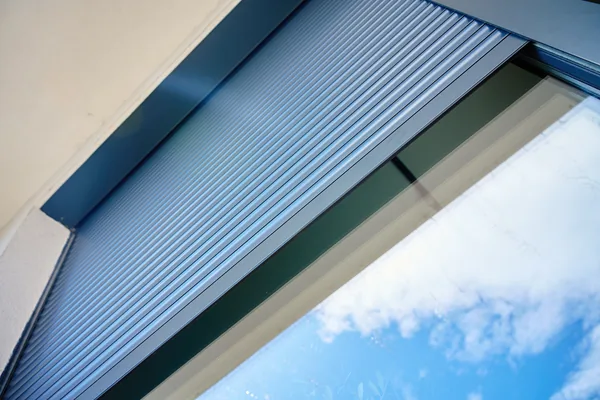
Motorized shades
Hardwired or battery drives, fabric chosen for what the glass is doing rather than what looked good in the swatch book. See motorized shades and window treatments.
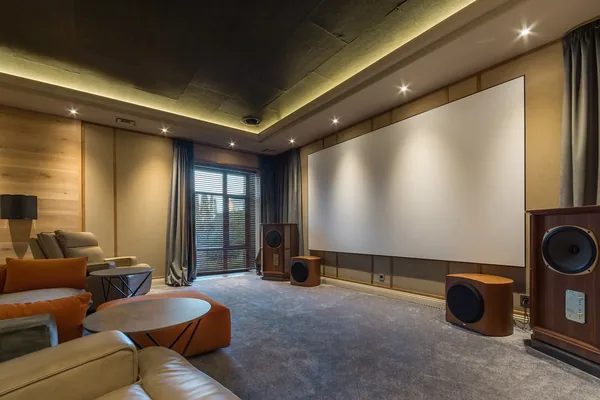
Home theater
The dedicated room. Seating rows, riser, acoustic treatment, projector, screen, Atmos layout built for your ceiling height. See dedicated home theater installation.
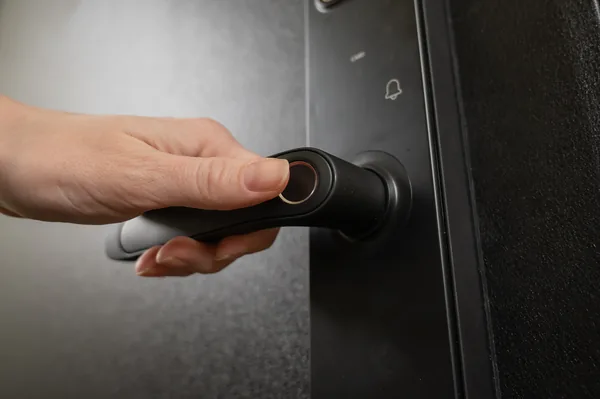
Access control
Who gets through which door, when, and with a record of it. Locks, readers, credentials, intercom, gates. See residential access control.
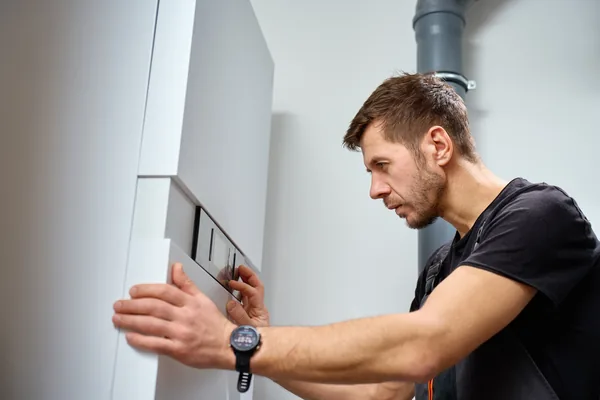
Climate control
Thermostats, zoning, whole-house humidity and freeze protection for the house you leave empty. See smart climate control.
Platforms Compared. Honestly.
We are dealers for several platforms and there is no house favorite.
We don’t push gear that pays us. Here is how they sort out in a typical home.

Control4
The workhorse. Several thousand third-party drivers, so it talks to the odd projector and the pool controller nobody else supports. Local processing, hard keypads, deep dealer network. The interface is functional rather than beautiful.

Crestron
Technically the deepest platform in the room, and the one that loses most often in a house. Programming is proprietary and time-billed, so a change eighteen months after commissioning needs a programmer, not a technician. In a 4,000 sq ft colonial where the owner wants three revisions in year one, that flexibility becomes a bill. It belongs on estates and in commercial work. On a typical residential job, it is the wrong tool at the right spec.

josh.ai
A natural-language voice and control layer, better at conversation than the mass-market assistants and stronger on privacy. It pairs with Control4 or Crestron to put the whole house a sentence away.
Protocols, And Why Your Devices Argue
Piecemeal homes misbehave because the devices speak four languages with no translator. IP over Ethernet is the backbone for anything that matters. Zigbee runs on 2.4 GHz and fights your WiFi if the channel plan is lazy. Z-Wave is a lower-bandwidth mesh, roughly 100 feet per hop line of sight and far less through plaster. Matter and Thread cover lighting, locks, sensors and thermostats today, not audio or video or surveillance. RS-232, IR and contact closure still run half the rack.
A processor with a driver library speaks all of them. A phone app speaks one.
What Your House Does To An Automation Plan
The house you live in shapes the system more than the brochure does.
Plaster and lath. Many older homes have wire mesh in the plaster. A fine Faraday cage. Wireless keypads and battery shade motors that behave in a 2015 build go unreliable three rooms away.
Brick and stone exteriors. Masonry kills signal on the way out. Detached garages and pool houses need a wired run or a point-to-point link, not a repeater.
Low winter sun. Low winter sun through south and west glass causes glare and fade that July never does. Shade schedules have to be seasonal, or you override them by March and stop trusting the system.
A long heating season. In a home with real winters, humidity is the climate problem. Automation that ties humidity, zoning and freeze alerts together is worth more there than almost anything else.
The second home. A cottage or vacation house that sits empty for months. Low-temp alerts, water shutoff and camera check-in are the highest-return automation dollars you can spend on it.
How The Work Actually Goes
Consultation. Free, on site. We walk the rooms, look at the panel, and ask what annoys you now.
Design and proposal. A clear scope, room by room, quoted as a package.
Pre-wire or rough-in. Before drywall. Home runs to one location, labeled at both ends, drops for keypads, speakers, shades, thermostats and access points. In a retrofit, this is the fishing and patching phase.
Trim-out. Devices in, terminated, flush-mounted, straight and level. Equipment racks built to be opened, not buried.
Commissioning and training. Programming, scene tuning, naming everything the way your family talks about the house, then walking the finished system with you. Photos, labels and as-builts at closeout.
Support. On our 24/7/365 service plans, after-hours calls are triaged that night. Most issues resolve remotely. If someone has to come out, it is scheduled first thing the next morning. See our service plans.
New Construction vs. Retrofit
New construction is cheaper per outcome and always will be. Wire is inexpensive when the walls are open and brutal after. We want to be in at framing, before insulation. A recent prewire project included 12 data drops, dedicated home theater rough-in, and a whole-home audio backbone, all mapped, labeled, and documented for the homeowner before closeout. That documentation is what makes year five easy.
Retrofit is a design problem, not a wiring problem. Late-90s and early-2000s builds often have coax and Cat5e worth repurposing, so we assess before we rip. In plaster homes we route through closets and chases, and we tell you up front where plaster has to open.
FREQUENTLY ASKED QUESTIONS
Questions Homeowners Actually Ask
You call, and a person answers. On our 24/7/365 service plans, after-hours calls are triaged that night. Most problems resolve remotely because we monitor the systems we install. If it needs hands on site, we schedule first thing rather than putting you in a ticket queue. Service-plan clients get priority response.
Need help? Visit our Service and Support page to explore our residential support plans.
Usually not all of them. Locks, thermostats, cameras and mainstream streaming speakers often integrate directly. Cloud-only devices from smaller brands frequently do not, and we will tell you which ones are dead ends before you pay us to try. We assess what you own during the consultation.
Control4 has the larger driver library, so it handles unusual third-party equipment well and fits most homes. Crestron is the deepest platform and suits estates and large projects where programming is planned up front. Josh.ai adds natural-language voice control on top. We recommend based on your home, not on what pays us.
Yes, with updates. The wire will, which is why we over-pull it, and processors, apps and devices receive firmware and software updates that keep the system current. Keeping your system updated is part of our service plans.