Lighting Control. One Press Instead of Nine Switches.
Walk into most great rooms and count the switches. Five gangs on one wall, three on another, and nobody knows which does what except the person who lives there. Then somebody installs LED cans and half the room flickers at the bottom of the dial.
Lighting control fixes both. Fewer devices on the wall, more control behind it, dimming that works from 100 percent down to 1.
We are a Lutron house, and we will tell you which tier you actually need. Most of the time it is not the expensive one.
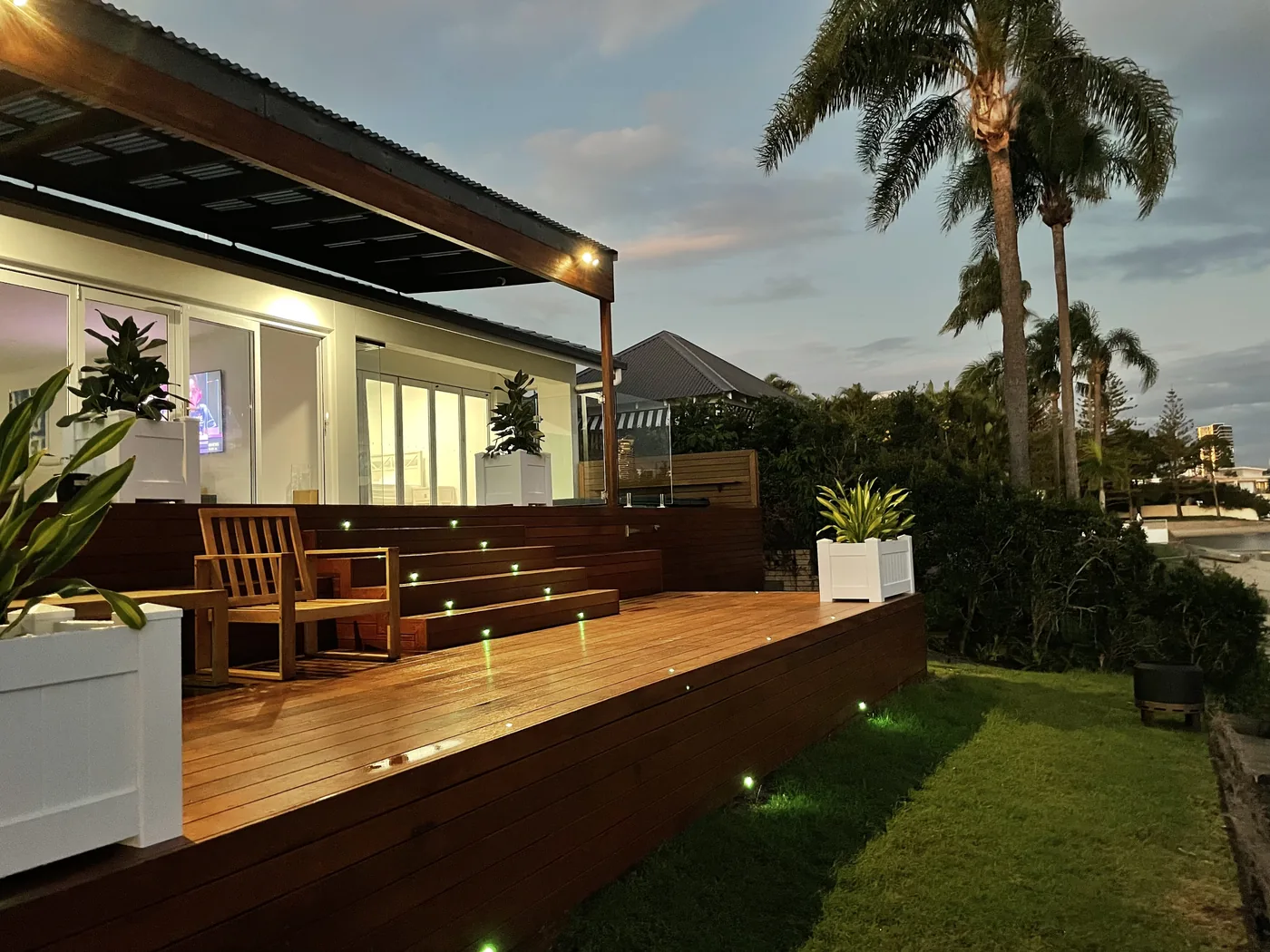
What a Lighting Control System Actually Is
Loads & keypads
Every circuit of lights is a load. In a wireless system the dimmer sits in the wall box where the old switch was. In a panelized system the load is dimmed in a mechanical-room panel and the wall device becomes a keypad with engraved buttons that run scenes, not circuits.
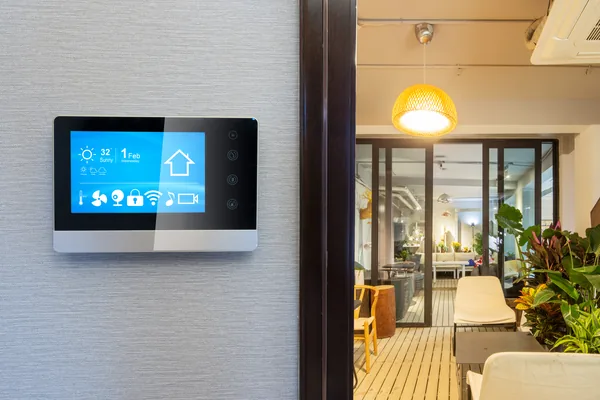
The processor & the fixtures
The processor holds the scenes, schedules and timeclock, and it runs whether or not the internet is up. Then the fixtures, which most integrators treat as somebody else’s job. A dimmer is only as good as the driver it is dimming.
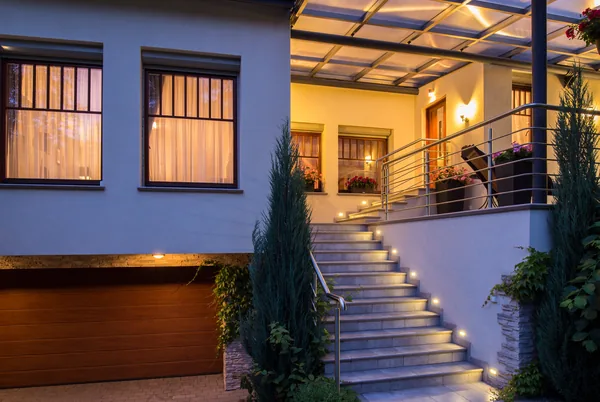
The Lutron Tiers, Honestly.
Caseta, the retrofit entry point
Wall-box dimmers, Pico remotes, a bridge and an app. Roughly 1 to 25 loads. Critically, many Caseta models do not require a neutral wire, which is why Caseta wins in pre-war houses more often than anyone expects.
Where it stops: no engraved keypads, limited scene depth, no Ketra, no scaling past a floor or two.
RadioRA 3, where most homes land
Forty to two hundred loads. Wireless dimmers with a processor behind them, engraved Sunnata keypads, occupancy and daylight sensors, an astronomical timeclock, and native integration with Control4, Crestron and Josh.ai.
Right for most retrofits and most new builds under about 6,000 square feet.
HomeWorks, the panelized tier
Loads move out of the wall boxes into mechanical-room panels and the wall devices become pure keypads. Every load type, ELV, MLV, 0-10V, DALI and Ketra, with 250-plus loads and full engraving.
HomeWorks starts roughly where RadioRA 3 tops out. It also solves the neutral problem outright, because the wall device carries no load.
Loads, Drivers, Flicker and Neutrals.
Matching the dimmer to the driver
Incandescent, halogen and magnetic low voltage are forward phase. Electronic low voltage is reverse phase. LED behaves like any of them depending on the driver inside the fixture. Put an ELV driver on a forward-phase dimmer and you get flicker, buzz, dropout at the bottom of the range, and eventually a cooked dimmer.
The cheap-driver problem
The most common lighting complaint we get called about is flicker and a dial that stops at 20 percent. It is almost never the dimmer. It is the driver in the fixture.
Eighteen-dollar big-box downlights with unbranded drivers will not dim below roughly 15 to 20 percent, will not dim smoothly, and will not match each other across a run of eight cans.
What good looks like: a named driver, Lutron Hi-lume, eldoLED or Philips Xitanium, rated to 1 percent dimming. We spec off Lutron’s verified pairings.
The other failure people miss is minimum load. A 6-watt LED on a dimmer with a 40-watt minimum will flicker or refuse to shut off cleanly. The fix is a correctly specified ELV dimmer, not a load resistor.
The neutral wire in older homes
In many pre-war houses, switch legs were commonly run without a neutral, and most smart dimmers need one.
Three honest options. Caseta, which does not need a neutral on many models. Pull a neutral, which in plaster and lath means opening and patching walls. Or go panelized, which eliminates the problem but is a rewire, not an upgrade.
Tunable white and Ketra
Ketra is full-spectrum LED with per-fixture control of color temperature and intensity, roughly 1,400K to 10,000K, dimming below 1 percent. It is a premium fixture, so it goes in the kitchen, great room, primary bath and art walls, not the laundry room. The middle path most integrators skip is tunable white or dim-to-warm.
Keypads, app and voice, in that order
The keypad wins and it is not close. It works when the internet is down, and anyone can use it without an account.
Three to five buttons per keypad, never nine. Engraved in plain words, same button order in every room. The app is for editing scenes and checking the house from away, voice is for hands-full moments, and neither should be the primary interface. The failure to avoid is a button labeled Scene 4.
Sensors, daylight and the timeclock
Occupancy sensing turns lights on when you walk in. Vacancy sensing requires a manual on and handles the off. Vacancy is right in bedrooms, closets and offices; occupancy belongs in the mudroom, laundry, pantry, garage and basement stair.
Daylight harvesting holds a room at a target level with a photosensor, dimming the electric light as daylight fills in. The astronomical timeclock calculates sunrise and sunset for your latitude and date, so exterior lighting tracks the season.
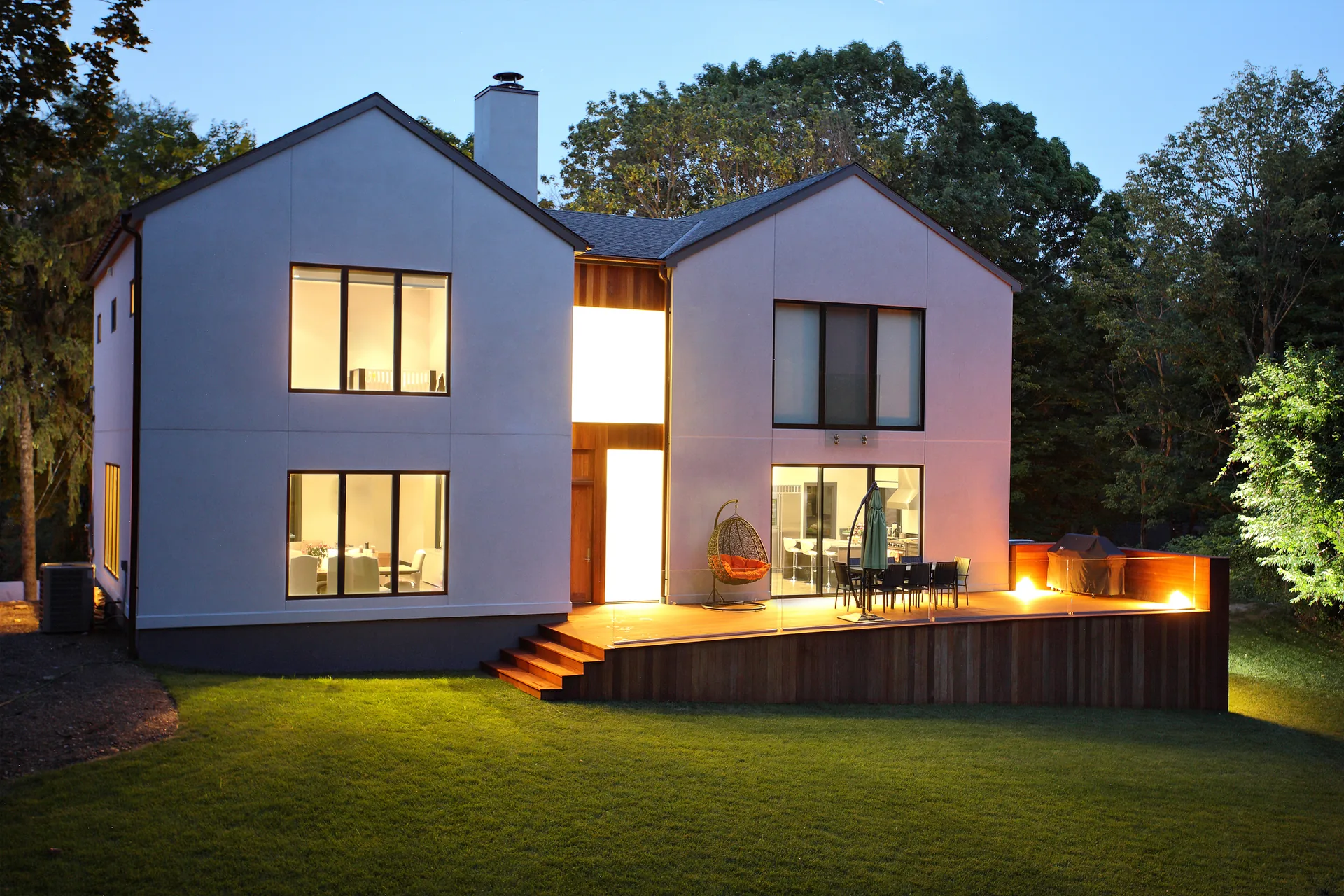
Lighting Through the Seasons
In a northern home, the late-December sun peaks only around 24 degrees above the horizon.
Low winter sun drives straight through south and west glass. Summer sun does none of that, so a fixed shade schedule is wrong half the year and shade timing has to follow sun position, not a clock. That is why we design lighting scenes and motorized shades together.
Then there is the dark. In early December the sun sets around 5pm, and from late October through early April you are pulling into the driveway after dark five days a week. That seven-month stretch is when lighting control stops being a luxury and becomes the thing that makes the house usable. An arrival scene tied to actual sunset: path lighting on before you turn in, garage keypad brings up the mudroom and the kitchen at 40 percent, nothing else.
Snow reflects hard, so landscape levels that look right in October are glaring in February. Two seasonal presets, not one. And exterior transformers get mounted above expected drift, because one that spends four months in a snowbank is one you replace.
How The Work Actually Goes.
Survey and design
We walk the house at night as well as by day, count loads and open a switch box to check for neutrals. You approve a load schedule, keypad locations, engraving text and a written scene list before anything is ordered.
Fixture coordination
We reconcile your designer’s fixture schedule against the dimming plan. This is the step that prevents flicker, and the step most integrators skip.
Rough-in and trim
Home runs, keypad boxes and sensor rough-ins coordinated with the electrician; device swaps and neutral pulls in retrofit, patched by our crew. Flush-mounted keypads, properly terminated cables.
Programming and training
Scenes tuned room by room at night, timeouts adjusted, timeclock set, every load tested at the bottom of its range. Every keypad is engraved in plain words, so anyone in the house knows what each button does without asking. Then we walk you through it, and our service plans keep it running. See our service plans.
New Construction vs. Retrofit
New construction is the cheap moment. Fixture selection, dimming compatibility and load schedules get settled before the electrician pulls wire, so home runs and keypad boxes land where they should.
Retrofit goes better than people expect. Wireless RadioRA 3 devices drop into existing boxes, so a whole-house system usually goes in without opening a wall. The two complications are missing neutrals and bad drivers, and both get found at survey rather than on installation day.
FREQUENTLY ASKED QUESTIONS
Lighting Control Questions, Answered.
Caseta is a wireless retrofit system for roughly 1 to 25 loads, and many models need no neutral wire. RadioRA 3 adds a processor, engraved keypads, sensors and whole-house integration. HomeWorks moves dimming into mechanical-room panels for the largest homes and every load type.
Three. Use Caseta, which does not require a neutral on many models, and accept its scale limits. Pull a neutral, which in plaster-and-lath homes means opening and patching walls. Or go panelized with HomeWorks, where the switching happens in a panel and the wall device is low voltage, which removes the problem entirely.
Almost always the fixture, not the dimmer. Inexpensive downlights use unbranded drivers that will not dim below roughly 15 to 20 percent and will not match each other across a run. The fix is fixtures with named drivers rated to 1 percent dimming, paired with the matching dimmer topology.
Yes. Keypads, dimmers, scenes, sensors and the astronomical timeclock all run on the local processor and need no internet connection. What you lose is remote access from your phone and voice control. Every switch and keypad in the house keeps working, which is why we design around keypads rather than apps. See our service plans.
On our 24/7/365 service plans, after-hours calls are triaged that night rather than sitting in a ticket queue. Most lighting issues resolve remotely because the processor is monitored and the programming is documented. Anything needing a technician is scheduled first thing, and service-plan clients get priority response and proactive monitoring.
Need help? Visit our Service and Support page to explore our residential support plans.
Fewer Switches.
A Better House.
Bring us the lighting plan, or bring us the wall of nine switches. We will tell you which Lutron tier fits, what your existing fixtures do at 10 percent, and give you a clear package quote.