How to Land a High-Paying Job in the Alarm Monitoring Industry
Start a Career in Alarm Monitoring
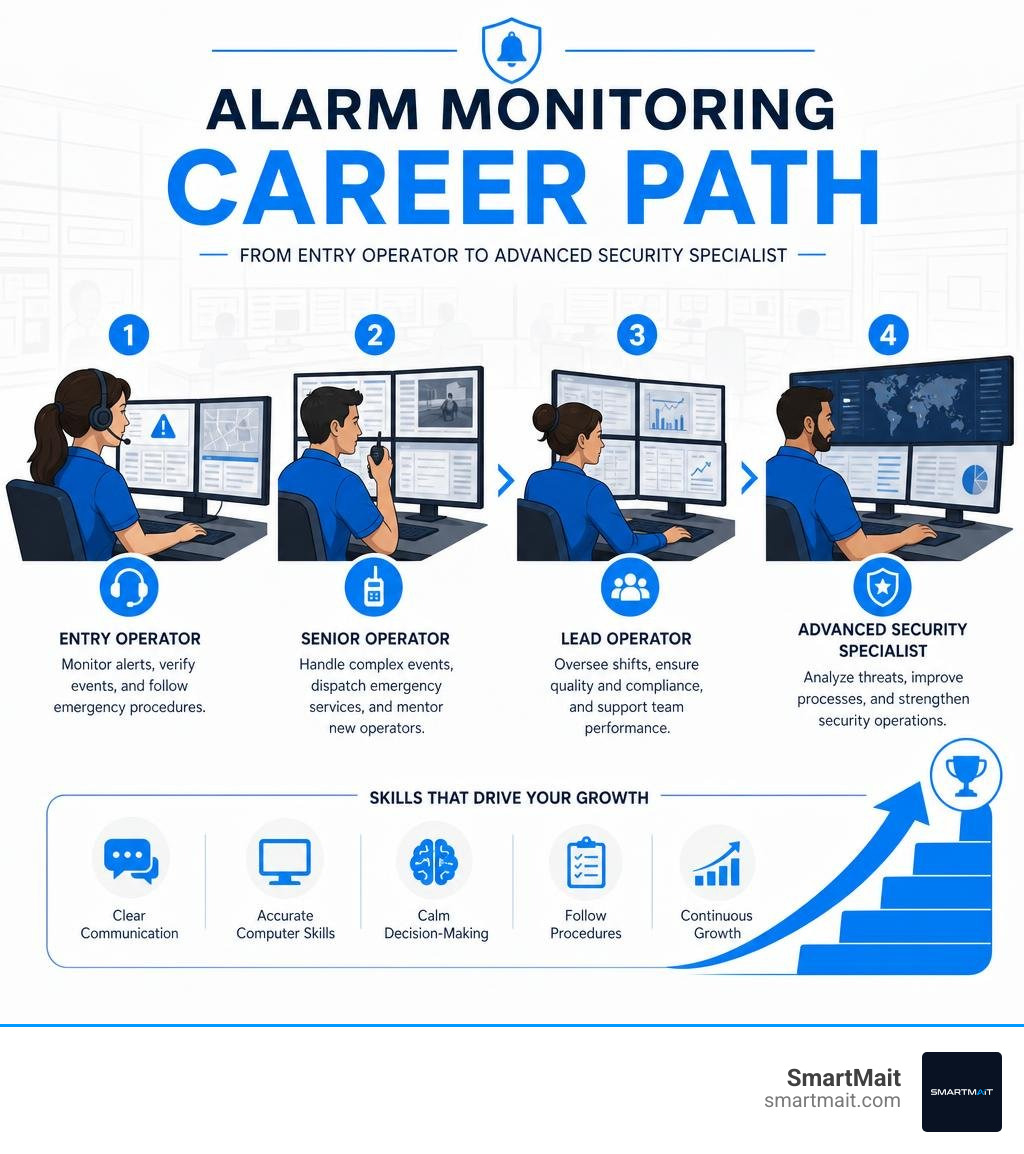
To land alarm monitoring jobs, focus first on the skills employers use every shift: clear phone communication, accurate computer work, calm decision-making, and the ability to follow emergency procedures. Many entry-level security dispatch roles require a high school diploma or GED, basic typing and software skills, a background check, and paid training. Night, weekend, and holiday availability can also improve your hiring options and pay through shift differentials.
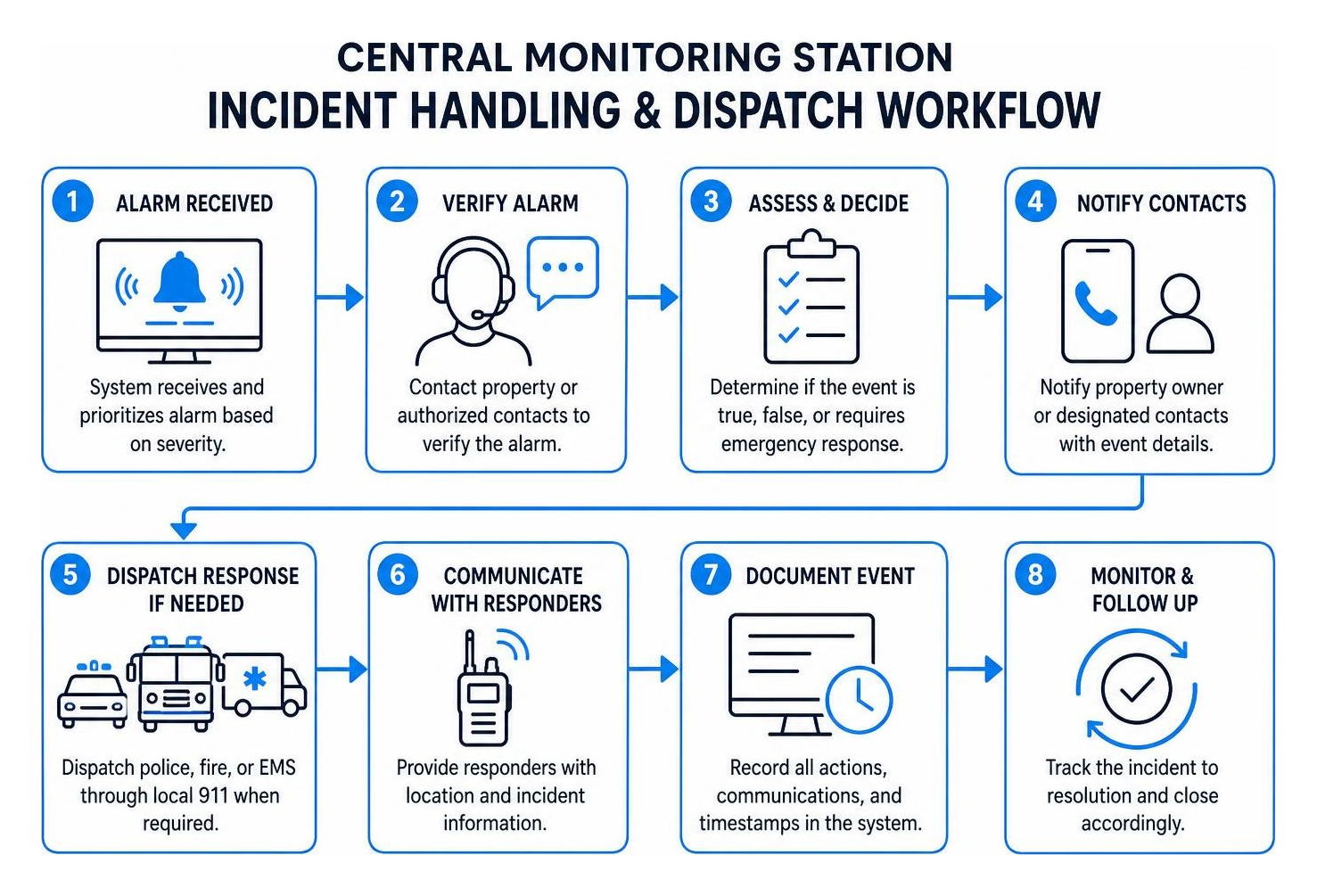
The work is important and direct. Operators receive fire, intrusion, panic, and video alerts; verify what is happening; notify customers or designated contacts; dispatch police or fire when required; and document every step. As you gain experience with commercial systems, video monitoring, incident reporting, and security operations platforms, you can move into higher-paying specialist, lead operator, or GSOC roles.
I am Dominic Hesano, founder of SmartMait, and my hands-on work with security systems, structured wiring, and smart home integrations gives me a practical view of the technology behind alarm monitoring jobs. The same details that make a security system reliable in a Southeast Michigan home or business also shape what monitoring employers need from their teams.
Learn more about alarm monitoring jobs:
Core Responsibilities and Daily Workflow in Central Stations
Working inside a central monitoring station is an active, detail-driven role where seconds count. Operators manage multi-screen consoles that process incoming signals from thousands of residential and commercial properties. When a sensor triggers, software automatically prioritizes the event on the operator’s queue based on severity—fire and panic alarms surface first, followed by perimeter breaches, interior motion detections, and system trouble signals.

Every action taken during an alarm event follows strict standard operating procedures. Our comprehensive guide to alarm central monitoring explains the intricate balance between hardware communication and human oversight. Operators must:
- Verify the authenticity of an alarm by contacting the property owner or primary contacts via two-way voice or phone.
- Cancel false dispatches when authorized users provide valid passcodes.
- Coordinate directly with local 911 dispatchers, fire departments, or emergency medical responders when threats are confirmed or unverified.
- Maintain meticulous digital records of timestamps, communication logs, and dispatch requests to ensure clear accountability.
- Adhere strictly to regional requirements, such as Bloomfield Hills municipal alarm monitoring standards, which dictate proper registration and false alarm prevention protocols.
Understanding Entry-Level Alarm Monitoring Jobs
Entry-level roles—often titled Dispatch Operator, Alarm Monitoring Operator I, or Monitoring Specialist—focus heavily on triage and customer communication. In these positions, team members build the foundation of their careers by handling routine security events and customer touchpoints.
Primary duties for entry-level dispatch operators include:
- Handling high volumes of incoming alarm signals and inbound phone calls across multi-line telephone systems.
- Conducting immediate customer verification calls using polite, professional, and clear voice communication.
- Reviewing system alerts for battery trouble, power failures, or communication line drops and logging service tickets.
- Contacting emergency service dispatchers (police, fire, EMS) when an alarm condition requires on-site intervention.
- Entering accurate notes, resolution codes, and customer interaction details into the central automation database.
High-Paying Advanced Alarm Monitoring Jobs
As operators develop deeper technical proficiency and operational calm, they can advance into higher-tier roles such as Global Security Operations Center (GSOC) Operator, Commercial Fire Specialist, or Remote Video Guarding Agent. These positions command higher compensation because they involve managing complex commercial facilities, active threat intelligence, and high-value physical assets.
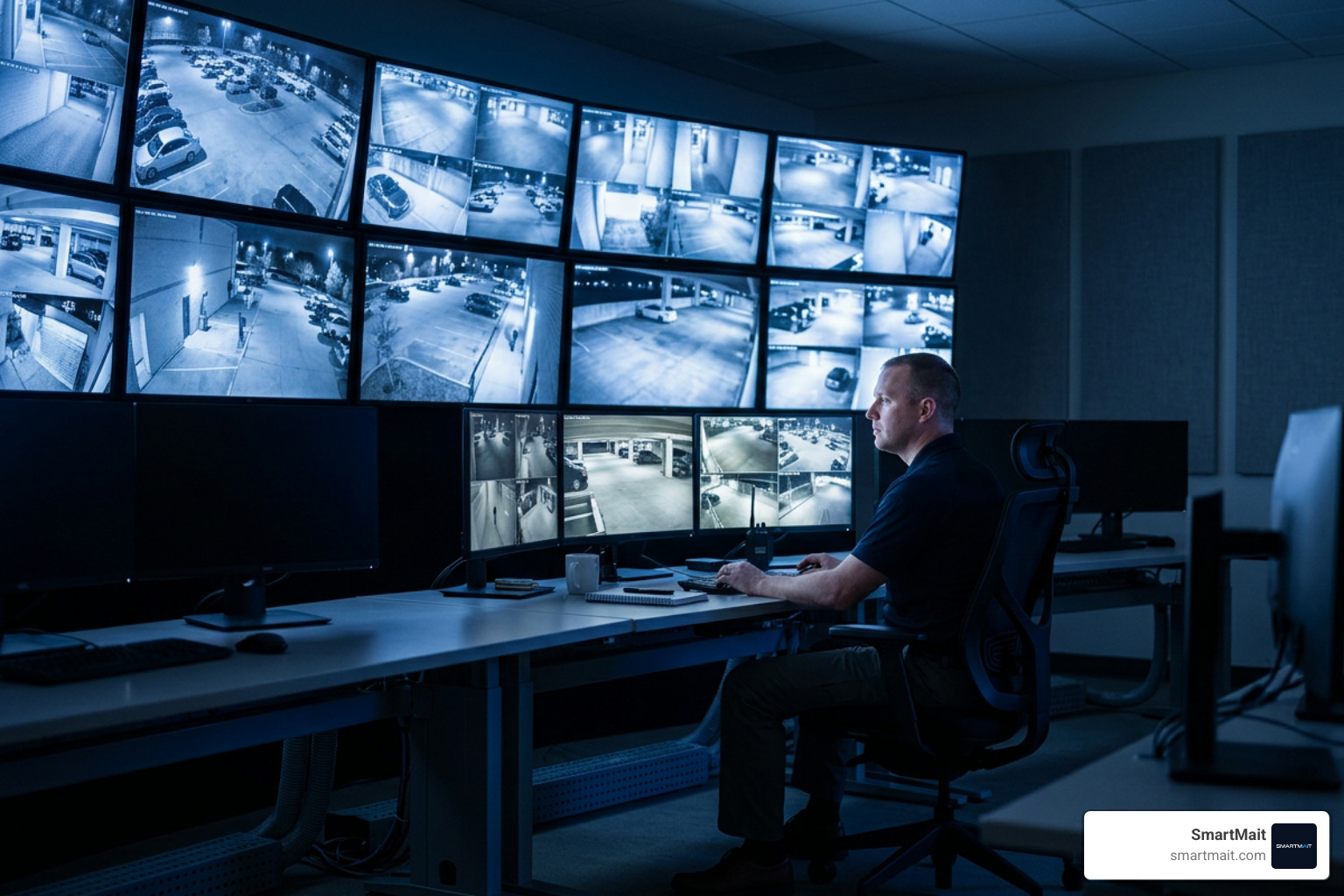
Advanced specialists frequently manage enterprise-grade video monitoring systems to perform real-time threat assessments. Responsibilities at this level include:
- Conducting scheduled virtual patrols across commercial properties, parking structures, and corporate campuses.
- Providing virtual escorts for employees walking to vehicles after hours using networked PTZ surveillance cameras.
- Tracking enterprise critical events, such as multi-site access control breaches, perimeter fence compromises, and commercial life-safety activations.
- Interfacing with corporate security directors and local law enforcement during ongoing, active incidents.
Essential Qualifications, Certifications, and Skill Sets
Central stations seek candidates who combine technical computer literacy with emotional stability. You do not need an engineering degree, but you must demonstrate rapid information processing and clear verbal communication under pressure.
| Requirement Area | Entry-Level Operator (Tier 1) | Advanced GSOC / Video Specialist |
|---|---|---|
| Education | High School Diploma or GED | Associate degree, technical certificate, or equivalent experience |
| Experience | 0–1 year customer service or dispatch | 2–5 years central station, dispatch, or security monitoring |
| Typing & Software | 35+ WPM; Microsoft Office basics | 45+ WPM; specialized GSOC software, VMS, access control platforms |
| Licensing | State security/alarm license (often paid sponsor) | TOPS certification, advanced state permits, specialized system credentials |
| Core Skills | Active listening, calm phone manner, rapid data entry | Multi-camera tracking, incident escalation, crisis management |
All candidates must pass comprehensive pre-employment background checks, multi-panel drug screenings, and pre-hire skills assessments before working live consoles.
Professional Licensing and Industry Training Programs
Professional certification elevates your resume and demonstrates commitment to life-safety standards. Many states require alarm monitoring operators to hold specific credentials, such as a TOPS (Texas Online Partner Services) monitoring license or regional security permits.
Employers typically provide paid training programs lasting two to six weeks, covering emergency codes, verification techniques, and central automation software. For those interested in expanding into the technical and field side of security operations, aligning your training with established county standards, such as Oakland County technical security career standards, provides a direct path toward infrastructure management and field engineering roles.
Compensation, Shift Structures, and Benefits in Alarm Monitoring Jobs
Because security events do not adhere to standard business hours, central stations operate 24 hours a day, 365 days a year. This continuous operating model creates flexible scheduling opportunities, steady overtime potential, and competitive hourly wage structures.
Compensation ranges across the industry reflect shift requirements and technical specialization:
- Base Wages: Entry-level operators generally earn between $16.00 and $19.00 per hour, with specialized and advanced GSOC roles starting at $21.00 per hour or more.
- Shift Premiums: Working second shift (afternoon/evening) or third shift (overnight, typically 11:00 PM to 7:00 AM) often includes a shift differential of $1.00 to $3.00 extra per hour.
- Scheduling Models: Common shift patterns include fixed 8-hour shifts, rotating 12-hour schedules (such as 3 days on, 4 days off), and weekend-only shifts tailored for students or second-income seekers.
- Benefits Packages: Full-time monitoring positions provide comprehensive medical, dental, and vision insurance, 401(k) matching programs, paid time off (PTO), paid training, and tuition assistance.
Maintaining continuous 24 hour home security infrastructure requires consistent staffing, which is why employers invest heavily in pay progression programs and annual merit increases to retain experienced dispatchers.
How Modern Technology and Smart Home Protocols Are Reshaping the Field
The alarm monitoring landscape has evolved beyond simple dial-up telephone communicators. Modern central stations interact with intelligent ecosystems that deliver richer data, automated signal filtering, and real-time visual verification.
Key technological developments changing daily monitoring workflows include:
- Z-Wave Wireless Protocols: Professional smart home and security platforms rely on Z-Wave mesh networks for reliable, interference-resistant communication between sensors, smart locks, thermostats, and control panels.
- Back to Base Data Transmission: Modern back to base monitoring protocols utilize encrypted cellular and IP pathways, giving operators sub-second signal delivery and granular diagnostic information.
- AI-Driven Video Analytics: Computer vision software automatically filters out environmental noise—like swaying trees or wandering wildlife—presenting operators only with verified human or vehicle activity.
- Cloud Dispatch Platforms: Integrated cloud software allows operators to view mapped sensor locations, stream real-time clip verifications, and communicate with customers via secure mobile app channels.
5 Proven Steps to Land Your Next Security Monitoring Role
- Highlight Transferable Customer Service and Crisis Skills: Tailor your resume to showcase active listening, fast keyboard skills, and any experience working in call centers, customer service, healthcare, or municipal dispatch.
- Practice and Verify Your Typing Speed: Most central stations require a minimum typing speed of 35 to 45 WPM with high accuracy. Use free typing tools to test yourself before applying.
- Target Professional Job Listings: Search for roles using terms like “Alarm Monitoring Operator,” “Central Station Dispatcher,” “Monitoring Specialist,” and “GSOC Operator.”
- Prepare for Scenario-Based Interviews: Expect questions that test how you handle conflicting priorities, such as managing a high-priority commercial fire alarm while fielding a customer phone inquiry.
- Emphasize Schedule Flexibility: Being open to overnight shifts, weekend rotations, or holiday coverage significantly increases your hiring potential and earns you immediate shift premiums.
Frequently Asked Questions About Alarm Monitoring Careers
What does an alarm monitoring operator do daily?
An operator monitors security queues, verifies alarm signals with property owners, dispatches police and fire personnel when needed, documents event logs, and assists clients with system trouble alerts.
What is the typical starting pay for security dispatch positions?
Starting pay typically ranges from $16.00 to $19.00 per hour for entry-level dispatchers, with specialized night shifts offering additional hourly premiums and GSOC roles reaching $21.00+ per hour.
Are there remote or work-from-home alarm monitoring opportunities?
Yes, some companies offer virtual or hybrid dispatch roles. However, remote positions require a secure, quiet home office environment, high-speed wired internet, and compliance with central station licensing standards.
Conclusion
The alarm monitoring industry offers steady demand, excellent job stability, and clear upward mobility into advanced operations, technical support, and life-safety leadership. By developing strong dispatch habits, mastering modern automation platforms, and earning recognized industry certifications, you can build a long-term, rewarding career protecting families and commercial enterprises.
At SmartMait, we design, install, and integrate premium smart home and security systems across Oakland, Macomb, and Wayne counties. Whether connecting advanced Z-Wave sensor networks or providing continuous SmartService concierge support in communities like Bloomfield Hills, Troy, and Birmingham, we understand that professional monitoring and superior hardware work together to deliver real safety and peace of mind.