Securing Your View with a Glass Door Maglock
Mechanics, Safety, and Holding Force Ratings
At the heart of every glass door maglock is the principle of electromagnetism. Unlike a traditional deadbolt that uses a physical metal bolt to mechanicaly “stop” a door, a maglock uses an electromagnetic coil. When we apply electricity to this coil, it creates a powerful magnetic field that pulls an armature plate (a specially designed metal plate) toward the lock body. As long as the power is running, that door isn’t budging.
One of the most critical things to understand about these systems is that they are inherently fail-safe. This means that if the power goes out—whether due to a utility failure or a fire alarm being triggered—the magnet loses its “grip,” and the door unlocks automatically. This is a vital requirement for life safety codes in Michigan, particularly in commercial buildings across Oakland and Wayne Counties. In an emergency, we want people to be able to exit without fumbling for keys or waiting for a motor to turn.
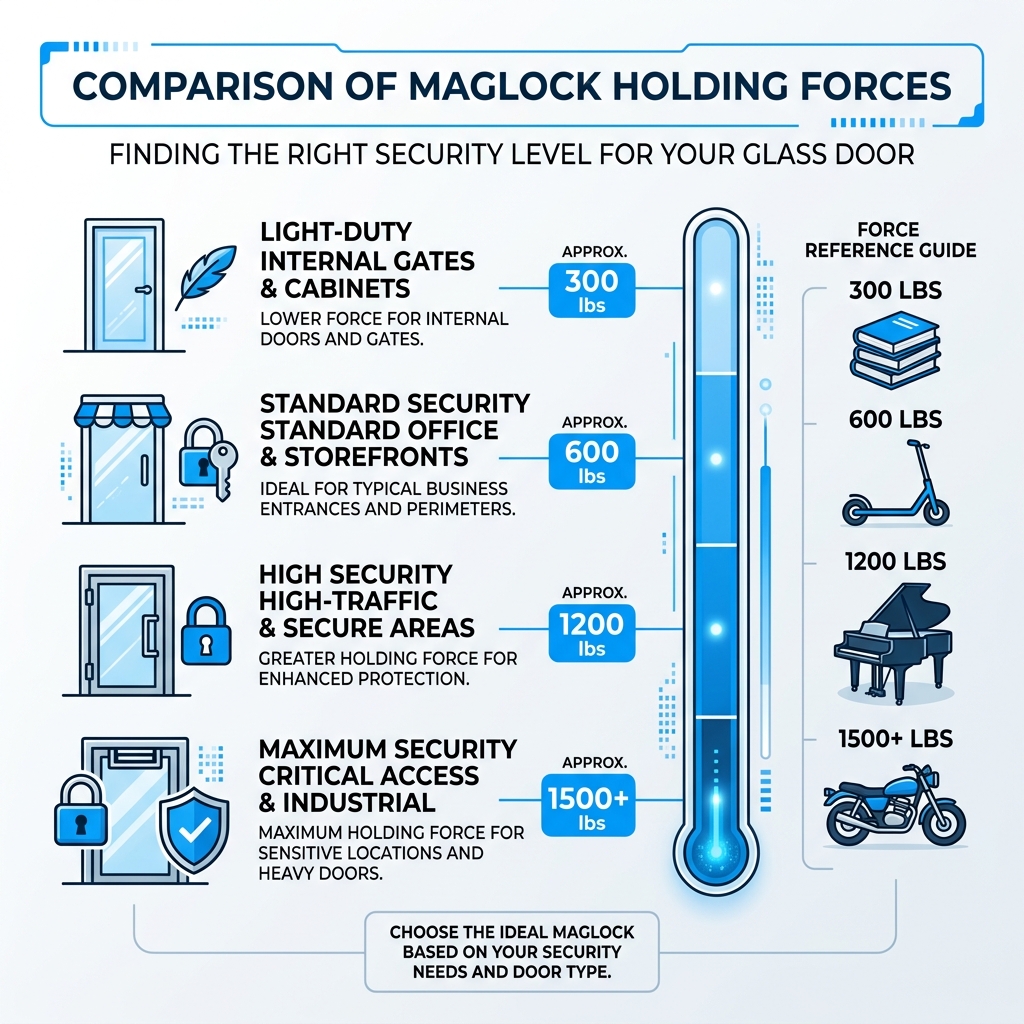
To ensure your entry is truly secure, you need to choose the right “holding force.” This is the amount of physical pressure required to break the magnetic bond.
Holding Force Comparison Table
| Holding Force | Recommended Application | Security Level |
|---|---|---|
| 300 – 600 lbs | Interior glass office doors, cabinets, or low-traffic residential partitions. | Low to Medium |
| 1200 lbs | Main storefront entries, high-traffic commercial glass doors, and perimeter security. | High |
| 1800+ lbs | High-security areas, data centers, or doors prone to “excessive force” attempts. | Maximum |
According to industry statistics, maglocks with 1200 lbs of holding force or higher are the standard for high-security openings to protect against potential attacks. For instance, the M62 Maglock provides a 1200 lb holding force, while specialized models like the MM15 can provide up to 4,000 lbs for extreme applications.
Selecting a glass door maglock for Sliding vs. Swinging Doors
The way your door moves dictates the type of glass door maglock you need.
- Swinging Doors: These typically use “surface mount” maglocks. The lock sits on the underside of the header (the top of the door frame), and the armature plate sits on the face of the glass door. When the door closes, the two faces meet flat against each other.
- Sliding Doors: Standard surface maglocks don’t always work here because the door slides across the face of the magnet rather than pulling away from it. For these, we often recommend shear locks. A shear lock, like the SDC 1562SC, uses both magnetic force and physical “tabs” or pins that lock into place. This provides up to 2,000 lbs of holding force and is perfect for Glass Door Security: Combining Mag Locks for Enhanced Access Control.
- Storefront Entries: These often have “narrow line” frames. Models like the SDC 350 are designed specifically for these slim profiles, ensuring the lock doesn’t hang over the glass and ruin the aesthetic.
Essential Hardware and Installation for a glass door maglock
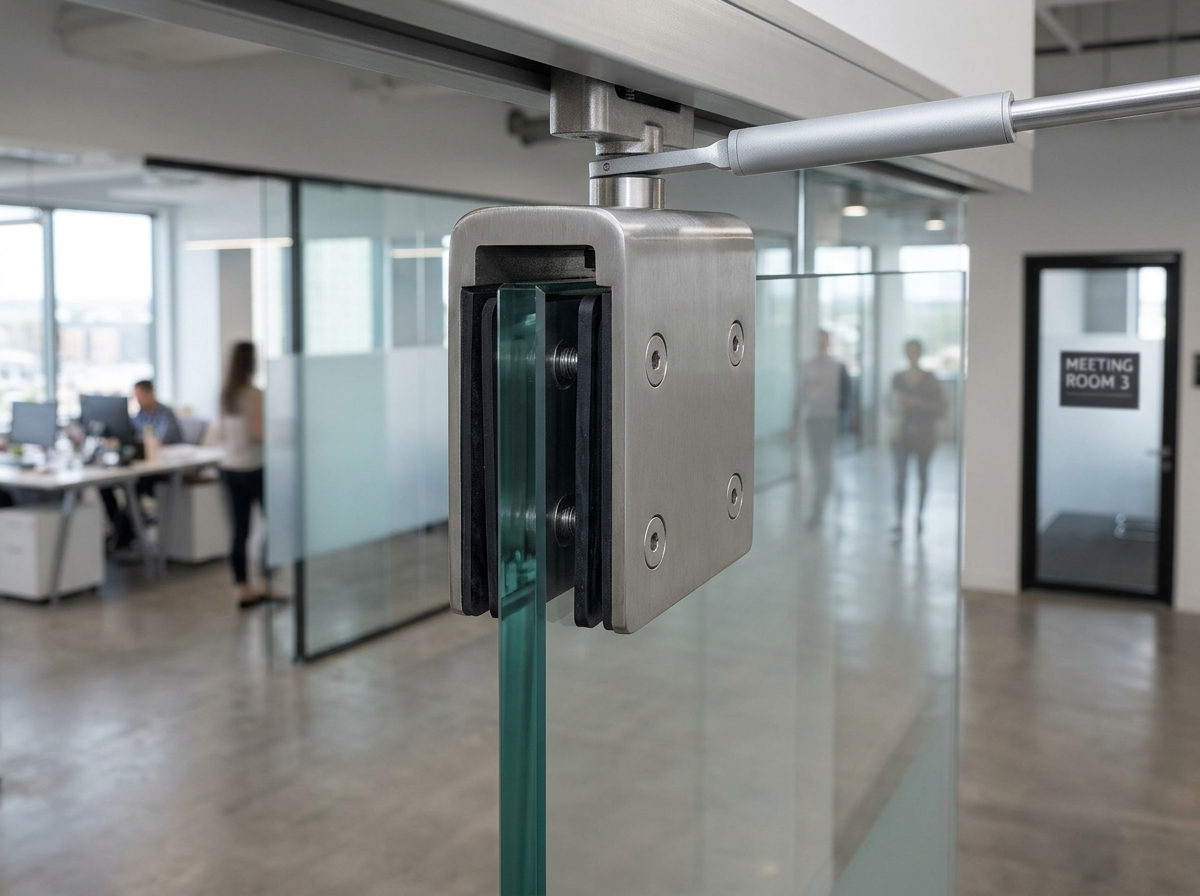
Installing a lock on an all-glass door presents a unique challenge: you cannot drill into tempered glass. If you try to drill a hole in a tempered glass door in Troy or Bloomfield Hills, the whole thing will shatter into thousands of tiny pieces.
To get around this, we use specialized “no-drill” solutions. The most common is the U-bracket (sometimes called a glass door bracket). This bracket “claps” over the top edge of the glass. High-strength rubber shims and specialized adhesives ensure the bracket stays put without damaging the glass.
Key Hardware Components
- U-Brackets: These are essential for “herculite” or frameless doors. They provide a solid mounting point for the armature plate.
- Adhesive Kits: For a truly seamless look, some professionals use the Securitron GDB Glass Door Maglock Brackets for Armature Mouting, which uses a fly-cut surface and a specially engineered adhesive kit (like the AKG) to bond the bracket directly to the glass.
- Header Extension Brackets: If your door frame is too narrow to hold the bulk of the magnet, an “L” or “Z” bracket helps extend the mounting surface.
- Armature Plates: This is the metal plate that the magnet grabs. It must be installed with a “floating” mount—meaning it should wiggle slightly—to ensure it can align perfectly flat against the magnet every time the door closes.
While you are securing your entry with a maglock, it’s the perfect time to consider your overall visibility. Integrating Security Cameras near your glass entry allows you to see exactly who is requesting access before you trigger the release.
Maintaining Your glass door maglock for Long-Term Reliability
Maglocks are famous for their durability because they have no moving parts to wear out. However, they aren’t “set it and forget it” devices. To keep your system running smoothly in the Michigan climate—where humidity and temperature shifts can cause door frames to expand or contract—follow these tips:
- Check Alignment: If the armature plate and the magnet don’t meet perfectly flat, the holding force drops significantly. Even a tiny gap can turn a 1200 lb lock into a 200 lb lock.
- Clean the Surfaces: Dust, oil from fingers, or rust can interfere with the magnetic bond. Wipe the faces of the magnet and the armature plate with a clean cloth and a light degreaser once a season.
- Test the Power Supply: Since these locks are fail-safe, they rely on a constant stream of power. Check your battery backup regularly to ensure the door stays locked during a brief power flicker, but releases correctly during a full outage.
- Inspect Adhesive Integrity: If you used an adhesive-based bracket, check for any signs of peeling or shifting, especially on high-traffic doors in retail environments.
Advanced Integration with Access Control Systems
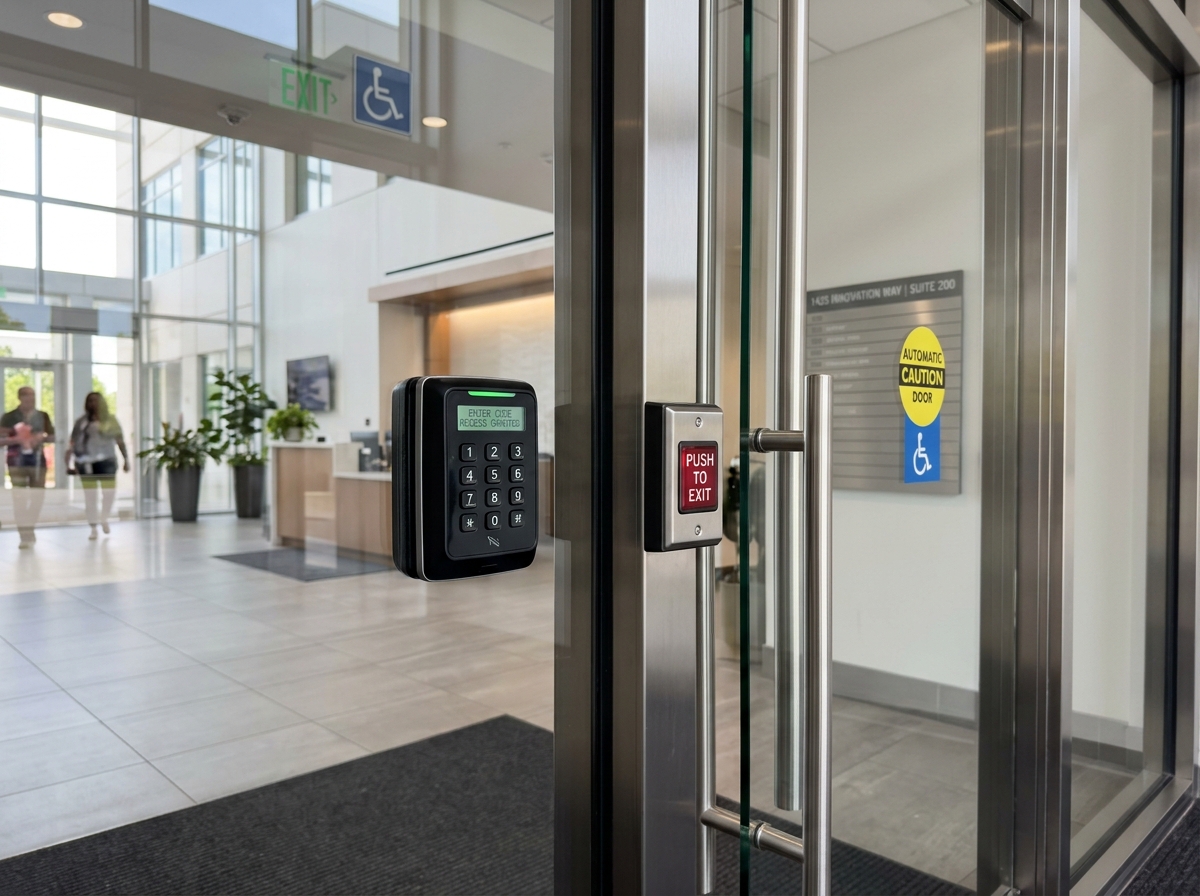
A glass door maglock is only as smart as the system controlling it. At SmartMait, we specialize in taking these powerful magnets and turning them into a seamless part of your smart home or business ecosystem.
Using Z-Wave integration, we can connect your glass entry to your mobile phone, allowing you to lock or unlock the door from anywhere in the world. Imagine being in Farmington Hills and letting a delivery driver into your Walled Lake office with a single tap on your smartphone.
Components of a Complete System
- Keypads and Card Readers: These are the “brains” on the outside. Users enter a code or tap a card to temporarily cut power to the maglock, allowing them to enter.
- Request-to-Exit (REX) Sensors: Since the door is locked from the inside, you need a way to get out! A REX sensor (usually a motion detector or a push-button) detects when someone is approaching the door from the inside and automatically releases the magnet.
- Wireless Fobs: Perfect for receptionists in West Bloomfield or Rochester Hills who need to “buzz” someone in without leaving their desk.
- Power Supply Controllers: These units take your standard 110V wall power and convert it to the 12V or 24V DC power the maglock needs. They also include fire alarm tie-ins so the doors unlock automatically if the smoke detectors go off.
Customizing Your Security Ecosystem
Modern maglock technology has come a long way. You can now choose “intelligent” locks like the EcoMag series, which reduces energy consumption by up to 80%. These locks are smart enough to sense when a door is propped open and will lower their power draw accordingly.
We also recommend locks with LED status indicators. A small light on the lock will glow green when the door is secure and red when it is released (or if there is an alignment issue). This gives your staff or family an instant visual confirmation that the building is safe.
Frequently Asked Questions about Glass Door Security
When should I avoid using a maglock on a glass door?
While we love maglocks, they aren’t for every situation. You should avoid them if you have a “fail-secure” requirement—meaning you need the door to stay locked even if the power is cut (like a high-security jewelry vault). In those cases, a specialized electric strike or a mechanical lock might be better. Also, if your building’s local fire marshal in cities like Warren or Livonia has strict rules against electromagnetic locks on specific exit paths, you must follow those codes.
Can I install a maglock on a door that is 100% glass?
Yes! As we discussed, you simply use a U-bracket or an adhesive mounting kit. The main concern is the “header” (the area above the door). You need a solid frame or a glass transom with a header bar to mount the heavy magnet. If the entire wall and door are glass with no metal frame at the top, the installation becomes much more complex and may require a specialized “shear lock” mounted in the floor or a custom-built vestibule.
What is the difference between fail-safe and fail-secure?
This is the most common question we get in Macomb and Oakland County.
- Fail-safe: The lock requires power to stay locked. If power fails, the door opens. (Standard for maglocks).
- Fail-secure: The lock requires power to unlock. If power fails, the door stays locked. (Standard for electric strikes). For glass doors used as primary exits, fail-safe is almost always the required choice to meet fire and life safety codes.
Conclusion
Securing a glass entry doesn’t mean you have to sacrifice the “open” feel of your architecture. A glass door maglock offers the perfect blend of high-strength security and minimalist design. By choosing the right holding force, using the correct no-drill mounting hardware, and integrating the system with a smart Z-Wave controller, you can enjoy a secure view with total peace of mind.
Whether you are looking to secure a storefront in Royal Oak or a modern home in Bloomfield Hills, professional installation is key to ensuring your system meets local Michigan fire codes and operates reliably for years to come. At SmartMait, we take the guesswork out of the process, providing expert integration of access control, alarms, and automation.
Ready to upgrade your entry? More info about commercial security services is just a click away. Let us help you build a security ecosystem that is as transparent as it is tough.