Top Rated Central and Cellular Home Security Systems Reviewed
Why Finding the Best Home Alarm Could Be the Most Important Decision You Make This Year
The best home alarm systems of 2026 should be judged by a few core qualities:
- Reliable professional monitoring
- Fast emergency response workflows
- Flexible installation options
- Strong smart home compatibility
- Affordable monthly monitoring
- High-quality video security
- Cellular backup and battery protection
- Easy expansion for larger properties
Homes without a security system are 300% more likely to be burglarized. That single statistic changes how most homeowners think about protection.
But choosing the right system isn’t simple. There are dozens of brands, conflicting claims, and a wide range of prices. Some systems lock you into multi-year contracts. Others require professional installation. Some are fully DIY.
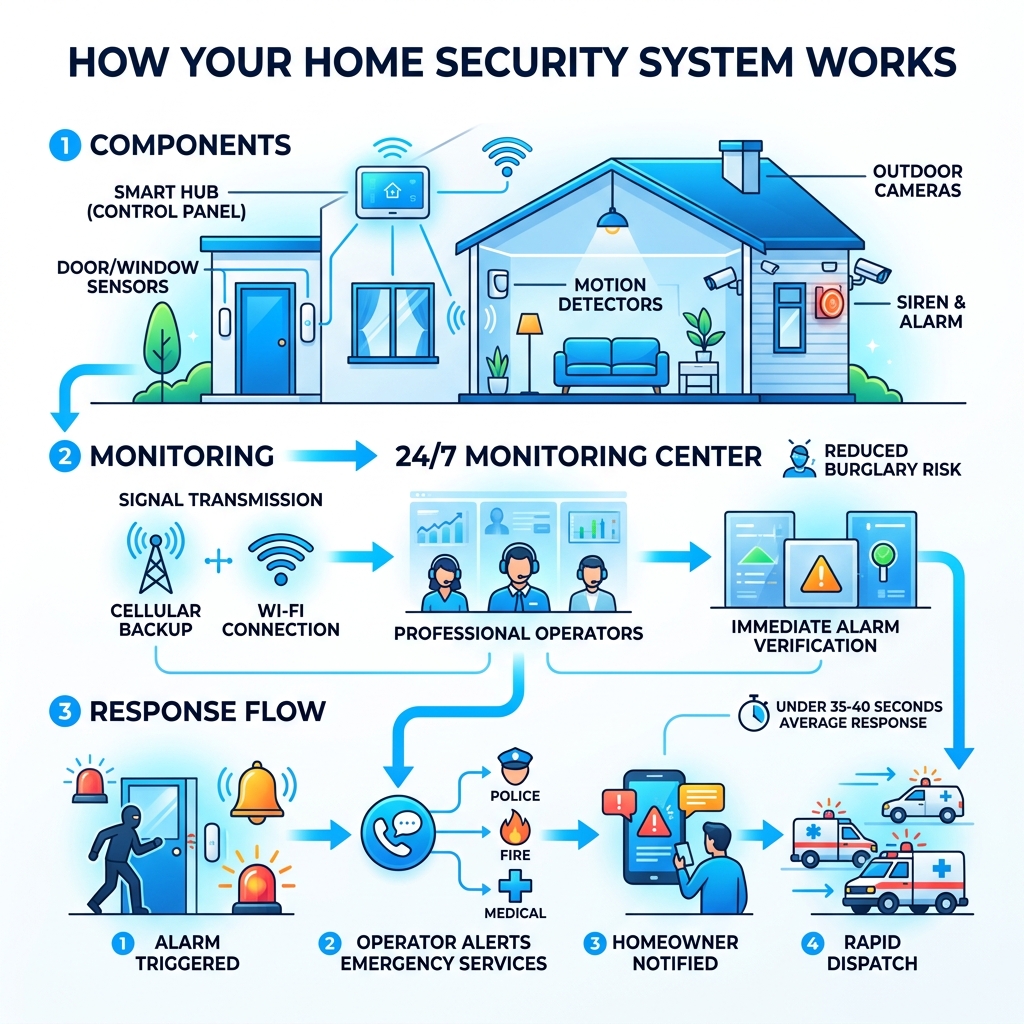
The good news? Modern home security has never been more capable – or more accessible. Today’s top systems combine 24/7 professional monitoring, AI-powered cameras, smart home integration, and response times that beat the industry average of 45 seconds. Leading providers now respond in under 35-40 seconds on average.
Whether you own a large property, run a small business, or simply want peace of mind at night, there’s a system built for your situation.
This guide reviews and compares the top-rated central and cellular home security systems available right now – so you can make a confident, informed decision.
Easy best home alarm glossary:
Choosing the Best Home Alarm for Your Property
When we look at the landscape of home security in 2026, the first fork in the road is deciding between professional installation and a Do-It-Yourself (DIY) setup. For homeowners in Oakland, Macomb, and Wayne County, this choice often depends on the complexity of your property and how much “tech-stress” you’re willing to handle.
Professional installation ensures that every sensor is properly calibrated and every camera has the optimal field of view. On the other hand, DIY systems allow you to skip the installation fee – which can range from $99 to over $200 – and get your system running in under 30 minutes using simple adhesive mounts.
The Cost of Protection
Budgeting for the best home alarm involves three main pillars: equipment, installation, and monthly monitoring.
- Equipment: Starter kits generally range from $200 to $600. Higher-end systems with AI cameras can exceed $1,000.
- Installation: DIY is $0; Professional typically starts around $99.
- Monitoring: This is your ongoing “peace of mind” tax. Expect to pay between $20 and $60 per month.
| Feature | Professional installation | DIY installation |
|---|---|---|
| Setup | Expert technician | User-installed (adhesive) |
| Contract | Often long-term | No contract / Month-to-month |
| Upfront Cost | Lower (equipment may be subsidized) | Higher (pay for gear upfront) |
| Customization | High (tailored by pro) | Moderate (modular kits) |
Recent crime trends in U.S. cities suggest that while some types of residential burglaries have stabilized, “porch piracy” and vehicle-related thefts are on the rise. This makes residential security more about perimeter protection than just a siren on the front door.
Smart home integration is another massive factor. If you want your lights to turn on when the alarm is triggered or your doors to lock automatically when you leave (geofencing), you’ll want a system that plays nice with platforms like Alexa, Google Home, or Z-Wave.
Key Features of a Top-Tier Best Home Alarm
What separates a “noise maker” from a true security system? It comes down to the tech under the hood.
Professional Monitoring and Cellular Backup A siren is great, but if no one is listening, it’s just a loud annoyance for your neighbors. Professional monitoring means that when a sensor trips, a real human at a monitoring center (UL-certified) is alerted. If they can’t reach you, they dispatch emergency services. Furthermore, the best home alarm systems include cellular backup. If a burglar snips your internet line or a Michigan winter knocks out your power, the system uses a 4G/LTE signal to stay connected.
AI-Powered Detection and Video Verification We’ve moved past cameras that just record grainy footage. Modern security cameras use AI to distinguish between a person, a pet, and a swaying tree branch. This is vital for reducing false alarms. Some systems even offer “video verification,” which allows monitoring agents to view a clip of the trigger event to confirm a crime is in progress, often leading to faster police response times.
Sensors That Do More
- Glass Break Sensors: These listen for the specific frequency of breaking glass, covering a range of 2 to 25 feet.
- Motion Detection: Modern sensors are “pet-friendly,” meaning they won’t trigger for your 50lb Golden Retriever but will catch a human intruder.
- Two-Way Talk: Allows you to shout at a delivery driver or an intruder directly through your camera or base station.
Is it worth having all this tech? Do you have CCTV on your house and is it worth it? Most experts agree that the deterrence factor alone – knowing that 74% of users feel more secure after installation – justifies the cost.
Best Home Alarm Options for Renters and Budget Buyers
If you’re renting an apartment in Royal Oak or a condo in Troy, you probably can’t drill holes into the walls. This is where DIY systems shine.
- Adhesive Sensors: Most DIY kits use high-strength 3M Command strips. They stay put for years but peel off cleanly when you move.
- Portable Hubs: Your “brain” of the system just plugs into a wall outlet. When you move, you pack it in a box and set it up at the new place in minutes.
- No-Contract Flexibility: Budget buyers often prefer month-to-month monitoring. If money is tight one month, you can often downgrade to “self-monitoring” without a penalty.
For those looking for high-end features without the high-end price tag, everything you need to know about Alarm.com video monitoring highlights how third-party platforms can provide professional-grade surveillance for affordable, self-installed kits.
Top-Rated Home Security Systems of 2026 Reviewed
1. Professionally Installed and Monitored Systems
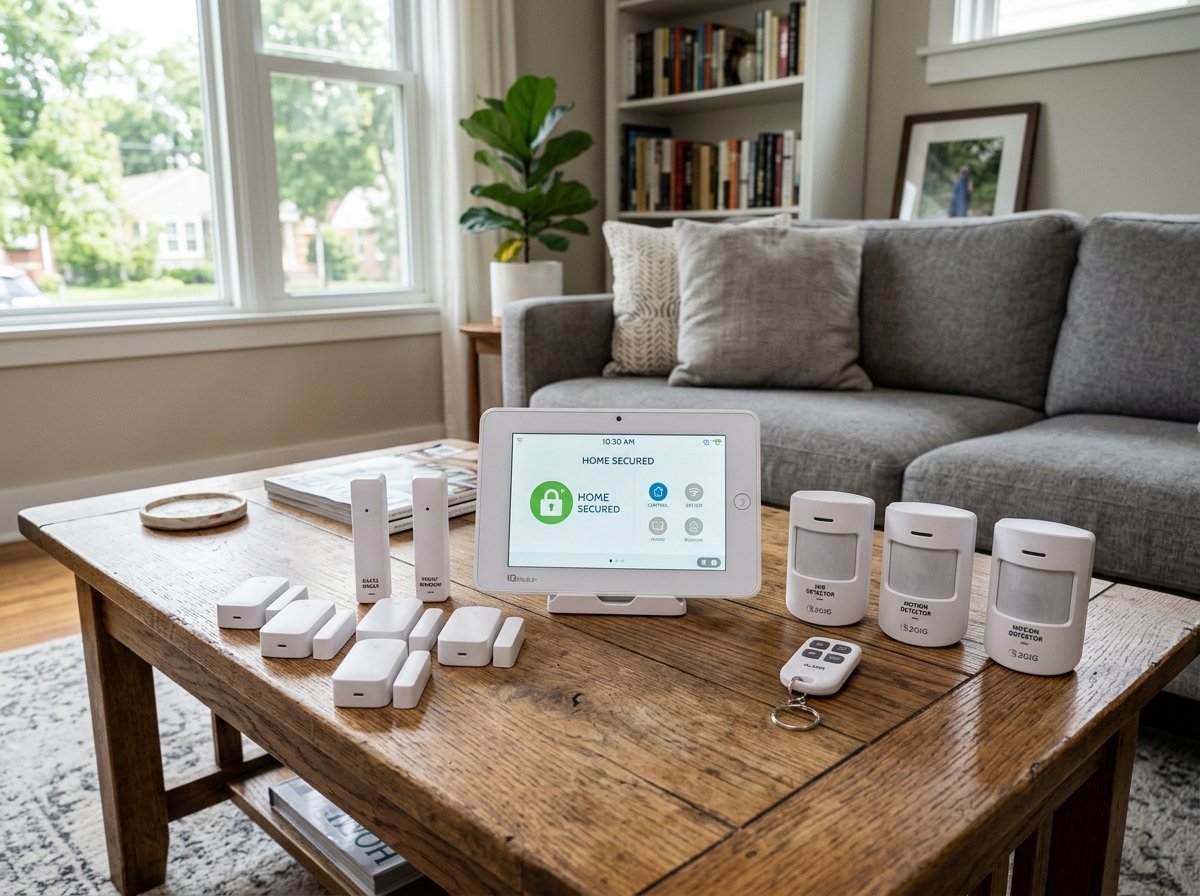
For homeowners who want a technician to handle setup, professionally installed systems remain a strong choice. These platforms are often best for larger homes, more advanced automation, and households that want every device calibrated from day one.
- Pros: Expert installation, strong reliability, and polished whole-home integration.
- Cons: Higher monthly costs are common, and long-term agreements may apply.
- Response Time: Many leading providers now average under 35-40 seconds.
2. No-Contract DIY Systems
DIY security systems continue to lead the market for flexibility. These are ideal for homeowners and renters who want quick setup, affordable monitoring, and the freedom to cancel without penalties.
- Pros: No contracts, easy setup, and lower ongoing commitment.
- Cons: Equipment is usually purchased upfront.
- Unique Feature: Some plans now include live agent intervention through compatible cameras.
3. Smart Home Automation-Focused Platforms
If you want your alarm system to work closely with lighting, thermostats, locks, and video doorbells, automation-focused systems stand out. These are often chosen by homeowners who want a connected home experience in addition to intrusion protection.
- Pros: Strong app controls, advanced automation routines, and premium hardware.
- Cons: Equipment and installation can be more expensive.
- Why your home needs an alarm system with video surveillance: Smart cameras that use lights and audio warnings can deter intruders before they attempt entry.
4. Budget-Friendly Monitoring Options
Value-oriented systems are ideal for buyers who want dependable monitoring without premium pricing. Many offer discounted starter equipment and easy expansion over time.
- Pros: Low upfront costs, affordable monthly plans, and simple installation.
- Cons: Fewer advanced automation features than premium systems.
Advanced Technology: Active Guard and Smart Deter
The best home alarm systems of 2026 are no longer reactive; they are proactive. In the past, an alarm went off after the door was kicked in. Today, we have “Intruder Intervention.”
Active Guard and Smart Deter Modern systems now use AI to identify a person loitering on your porch. Before they can even try the handle, the camera can trigger a red LED ring and a whistle sound, or a live monitoring agent can speak through the camera: “I can see you in the red hoodie. The police have been notified.” This real-time deterrence is incredibly effective at preventing crime before damage occurs.
Video Verification and Privacy To prevent the police from ignoring “false alarms,” video verification benefits are huge. It provides proof to dispatchers that a human is actually on-site. For those worried about “Big Brother,” many indoor cameras now include physical privacy shutters that click shut when the system is disarmed, ensuring no one – not even the monitoring company – can see into your home when you’re there.
Future Standards: Matter and Thread As we move through 2026, the industry is adopting “Matter.” This is a new universal language for smart devices. It means your security system will eventually talk to your smart fridge, your lights, and your TV regardless of the brand. This is a core part of modern smart home technology.
Frequently Asked Questions About Home Security
Do home security systems require long-term contracts?
It depends on the provider. Some professionally installed systems typically require a 36 to 60-month contract, especially if they are financing your equipment costs. However, many DIY options offer month-to-month plans. You can often cancel at any time without a fee because you own the equipment outright.
What is the difference between wired and wireless alarms?
Wired systems are often built into the home during construction. They are incredibly reliable but difficult to upgrade. Wireless systems use radio frequencies and Wi-Fi to communicate. They are much easier to install and can be moved. The best home alarm systems today are “hybrid” – they use wireless sensors for easy setup but include cellular and battery backups to ensure they work even if the power or Wi-Fi goes out.
Can I install a security system myself?
Absolutely. Most DIY systems are designed to be “tool-free.” You simply pull a battery tab, “pair” the sensor to the base station via an app, and stick it to the wall. Average setup time for a standard 3-bedroom home is about 30 to 45 minutes. If you feel uncomfortable, many brands now offer “virtual assistance” where a pro walks you through the setup via a video call.
Conclusion
Choosing the best home alarm is about more than just buying a box of sensors; it’s about creating a shield around your family. Whether you are in Bloomfield Hills, Livonia, or Farmington Hills, the right system provides a layer of defense that works even when you are asleep or miles away on vacation.
At SmartMait, we believe security should be seamless. We specialize in comprehensive smart tech integration, using Z-Wave technology to ensure your security system, audio/visual gear, and mood lighting all work in perfect harmony. We don’t just install alarms; we build intelligent environments that respond to your needs.
If you are ready to move beyond basic DIY kits and want a professional, integrated residential security solution that covers everything from access control to smart automation, we are here to help.
Protect what matters most with a system that’s as smart as you are.
Learn more at https://smartmait.com/