How to Hire the Best Pros for Door Entry Systems Near Me
Find Reliable Door Entry System Installers Near You
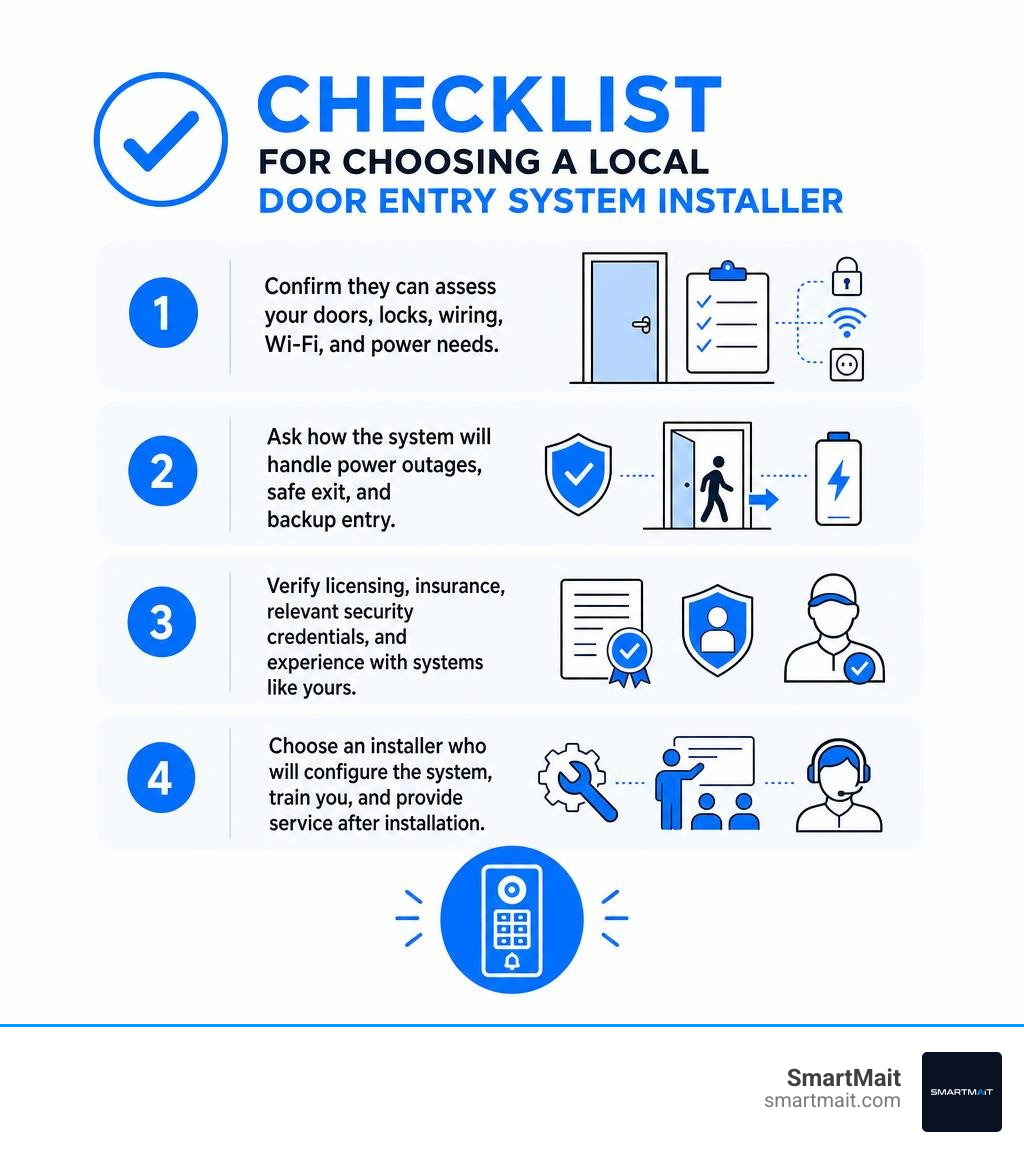
To find the best pros for door entry systems near me, start by requesting an on-site assessment from local low-voltage or access-control specialists. Then compare more than price:
- Confirm they can assess your existing doors, locks, wiring, Wi-Fi, and power needs.
- Ask how the system will handle power outages, safe exit, and backup entry.
- Verify licensing, insurance, relevant security credentials, and experience with systems like yours.
- Choose an installer who will configure the system, train you, and provide service after installation.
The right system may be a video intercom for visitor screening, a keypad or fob reader for simple keyless access, or a connected access-control setup that works with cameras, gates, alarms, and your phone. A good installer helps you choose based on the door, the people using it, and how much reliability matters – not just which device looks best online.
I’m Dominic Hesano, and I’ve spent years installing and troubleshooting low-voltage wiring, security, and smart-home systems across Southeast Michigan. If you are searching for door entry systems near me, this guide will help you spot the professionals who can build a dependable system and stay accountable after it is installed.
Simple guide to door entry systems near me:
6 Essential Steps to Hire Pros for Door Entry Systems Near Me

Hiring the right team requires a structured approach. Knowing how to choose your next door access control system starts with evaluating your architectural requirements and vetting local integrators thoroughly.
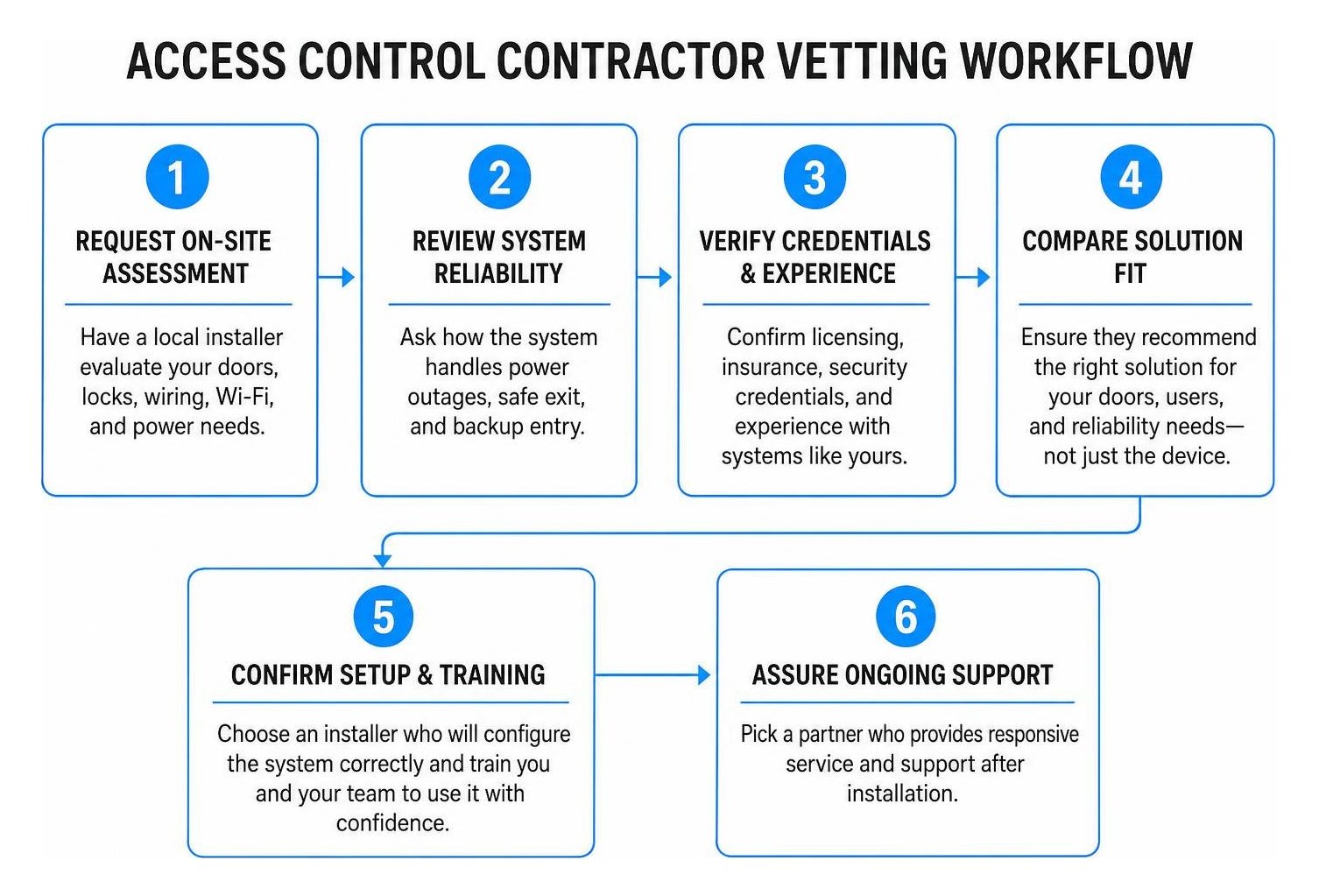
Step 1: Audit Your Entry Thresholds and Property Layout
Every entry point has distinct structural and traffic requirements. A primary front entrance, a side utility door, and a perimeter driveway gate each demand specific locking hardware and weather ratings.
When evaluating residential estates or upgrading to door entry systems for business, an installer must audit every physical opening. For properties requiring specialized hardware, working with experienced integrators ensures that heavy-duty frames and mortise preps match the new electronic hardware perfectly.
Step 2: Determine Credential Types and Ecosystem Compatibility
Decide how you and your users want to unlock the door. Options range from PIN codes and encrypted proximity cards to mobile smartphone passes and biometrics.
At the perimeter, understanding why every modern property needs a gate card reader helps create a cohesive multi-tiered security perimeter. If you manage older infrastructure, realizing why your building access systems need a digital upgrade allows you to move away from unencrypted, cloneable legacy keys.
We ensure that all entryway hardware integrates into an architect-grade Z-Wave ecosystem. Z-Wave operates on an isolated sub-gigahertz frequency band, eliminating the signal congestion and latency common with consumer-grade Wi-Fi gadgets while creating a responsive mesh network across your property.
Step 3: Verify Contractor Accreditations and Local Licensing
Access control bridges low-voltage electrical engineering, mechanical door hardware, data networking, and building safety codes. Always verify that your installer holds:
- State low-voltage electrical licensing and comprehensive general liability insurance.
- Factory certifications for commercial access control platforms.
- Clear alignment with regional low-voltage and security system standards.
Trade certifications confirm an integrator’s ability to wire, program, and maintain commercial-grade hardware safely and effectively. You can also review consumer feedback through local directories like Yelp to evaluate real-world client experiences across Southeast Michigan.
Step 4: Check Compatibility with Existing Doors and Locks
Retrofitting access hardware onto existing doors requires precision craftsmanship. A solid mahogany door on an estate in Bloomfield Hills or Franklin requires a vastly different installation approach than an aluminum storefront in Troy or Royal Oak.
Reviewing how to install a door access control system highlights the importance of checking frame depths, door swing tolerances, and header alignment before mounting magnetic locks or cutting into architectural jambs for electric strikes.
Step 5: Ensure Fail-Safe Locks, Battery Backups, and Code Compliance
Life safety always comes first. Lock configurations fall into two distinct engineering categories:
- Fail-Safe Locks: The locking mechanism releases automatically when power is removed (e.g., standard electromagnetic locks). These are mandatory on emergency fire exits to allow unhindered egress.
- Fail-Secure Locks: The mechanism remains locked from the outside during power loss but permits mechanical egress from the inside (e.g., typical electric strikes).
A professional installer must integrate a dedicated 12V or 24V DC power supply with backup batteries to keep the system operational during localized power cuts, ensuring the setup strictly follows NFPA life safety and local egress codes.
Step 6: Review Ongoing Maintenance and Service Contracts
Most access control problems arise months after installation due to neglected firmware updates, power supply degradation, or seasonal frame shift.
Rather than working with a “truck-roll” contractor who installs hardware and vanishes, partner with an integrator offering recurring concierge service. At SmartMait, our SmartService program provides scheduled hardware diagnostics, annual backup battery replacements, and continuous system optimization across Birmingham, Rochester Hills, and surrounding communities.
Comparing Hardware: Audio, Video, Keypads, and Biometrics
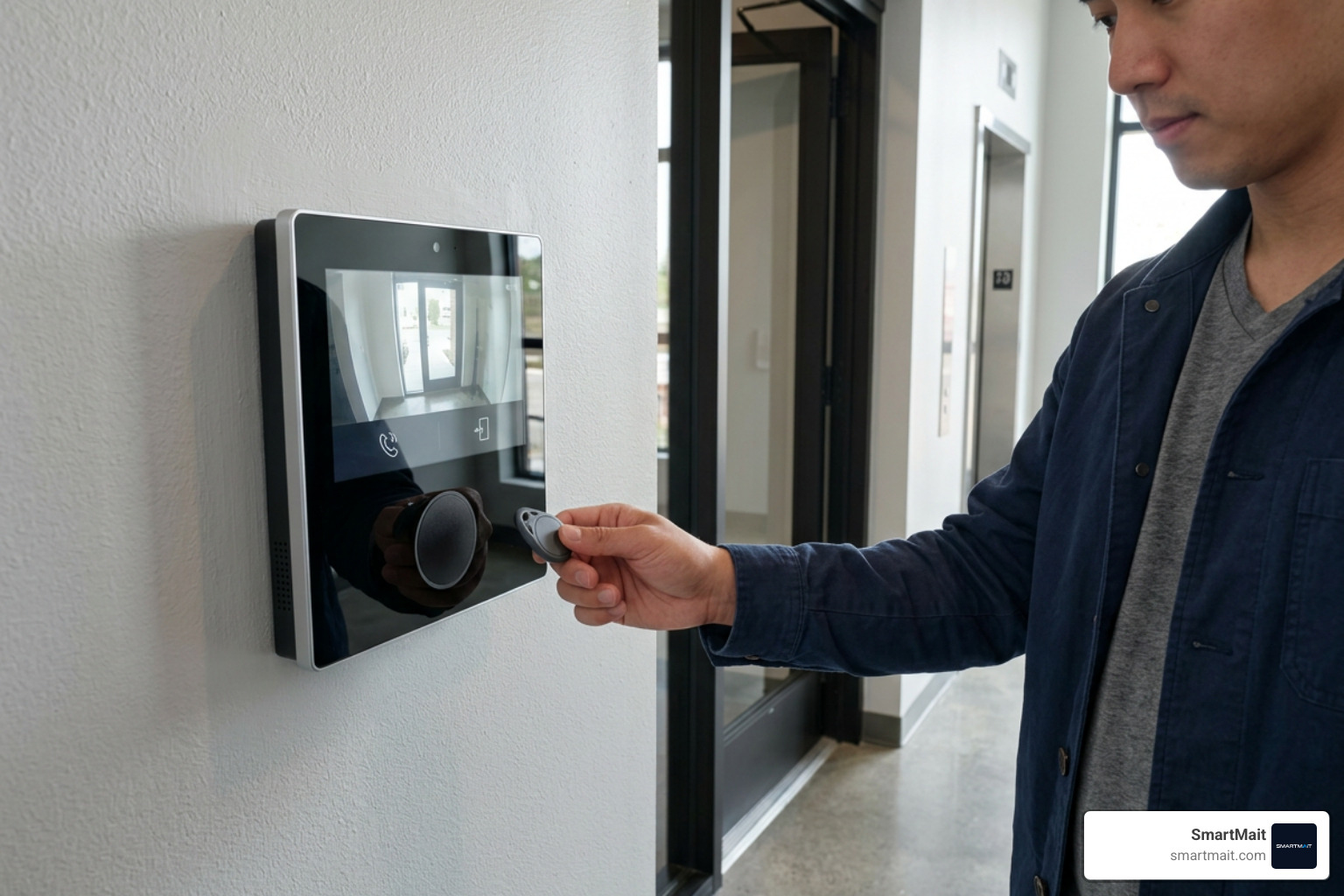
Selecting the right hardware platform requires balancing high security, day-to-day convenience, and architectural aesthetics.
| Hardware Type | Security Level | Convenience | Best Application | Primary Advantage |
|---|---|---|---|---|
| IP Video Intercom | High | High | Front entrances, gates, multi-tenant offices | Visual & audio visitor verification |
| Numeric Keypad | Medium | High | Side entrances, service doors, utility sheds | No physical credential required |
| RFID / Smart Card | High | High | Commercial offices, fitness rooms, gated estates | Rapid user provisioning & revocation |
| Biometric (Face/Print) | Very High | Very High | Executive suites, server rooms, private entries | Impossible to clone or loan credentials |
| Mobile Credential | High | Very High | Modern offices, co-working, residences | Uses encrypted smartphone BLE/NFC |
Video Intercoms vs Traditional Audio Systems
Audio-only intercoms are rapidly being phased out in favor of high-definition IP video systems. Modern video intercoms feature wide-angle optical sensors, infrared night vision, and two-way noise-canceling audio. When a visitor presses the call button, you receive a crisp, real-time video feed on dedicated indoor touchscreens or your smartphone, enabling visual identification before granting access.
Keypads and PIN Code Readers
Keypads offer unmatched simplicity. Understanding why every building needs a door entry keypad comes down to credential-free convenience: you never have to worry about leaving physical keys behind. Modern commercial-grade keypads feature backlit, anti-tamper capacitive touch surfaces and allow property owners to generate temporary, time-restricted PIN codes for guests, cleaners, or delivery couriers.
RFID Proximity Cards and Key Fobs
RFID credentials remain a staple of commercial security. In our key card access systems analysis and review of each fob door entry system, we emphasize modern 13.56 MHz high-frequency encrypted smart cards over easily cloned legacy 125 kHz proximity cards. When an employee departs or a tenant misplaces a fob, the credential can be revoked in seconds via software without rekeying physical locks.
Biometric Scanners and Touchless Mobile Entry
For maximum security and seamless convenience, stepping into the future means going hands-free with automatic door entry systems. Advanced optical facial recognition panels and capacitive fingerprint readers authenticate users in milliseconds. Mobile credentialing utilizing encrypted Bluetooth and NFC allows authorized users to unlock entryways simply by keeping their smartphone in their pocket.
What to Expect for Installation Costs and Timelines
What Is the Total Cost of Door Entry Systems Near Me?
Installation costs vary based on door construction, cabling runs, hardware specifications, and system scale:
- Single Residential Entryway (Smart Video Intercom & Z-Wave Lock): Typically ranges from $800 to $2,200 installed, depending on cabling difficulty and existing frame condition.
- Light Commercial Single-Door System (Keypad/RFID Controller + Strike + Backup Battery): Generally falls between $1,500 and $3,500.
- Multi-Door Commercial or Multi-Tenant Intercom System (4+ Doors, Cloud Management): Projects scale from $4,500 to $12,000+ based on the number of monitored openings and software infrastructure.
Typical Installation Timelines from Survey to Handover
A standard single-door or residential setup takes 1 to 2 days from initial wire pull to final commissioning. Multi-door commercial systems typically require 3 to 5 business days, encompassing structural cable routing (shielded CAT6 cabling), controller wall mounting, strike mortising, administrative permission programming, and client app onboarding.
Frequently Asked Questions About Access Control
How Do I Choose Local Contractors for Door Entry Systems Near Me?
Look for specialized low-voltage and access control integrators with verifiable local experience across Oakland, Wayne, and Macomb counties. Request itemized proposals that detail hardware brands, power supply specs, emergency battery capacities, and post-installation support.
What Happens to Electronic Door Locks During a Power Outage?
Professional installations feature uninterruptible power supply (UPS) battery units providing multi-hour backup operation. In the event of total battery depletion, fail-secure locks still permit immediate mechanical exit from the inside, while fail-safe architectural locks release to preserve life safety.
Can a Modern Door Entry System Be Installed on Existing Doors?
Yes. Professional installers regularly retrofit electronic locking hardware onto solid wood, composite, hollow metal, and glass architectural doors without compromising structural integrity or aesthetics.
Conclusion
Securing your residential estate or commercial facility requires high-grade hardware, compliant installation, and ongoing technical support. SmartMait delivers end-to-end access control, security automation, and structured low-voltage solutions across Southeast Michigan—including Bloomfield Hills, Troy, Rochester Hills, Farmington Hills, Birmingham, and West Bloomfield.
Explore our commercial access control solutions to discover how our integrated Z-Wave ecosystems and recurring SmartService concierge maintenance keep your property secure for years to come.